

Key Takeaways
What a Vehicle History Report Actually Contains
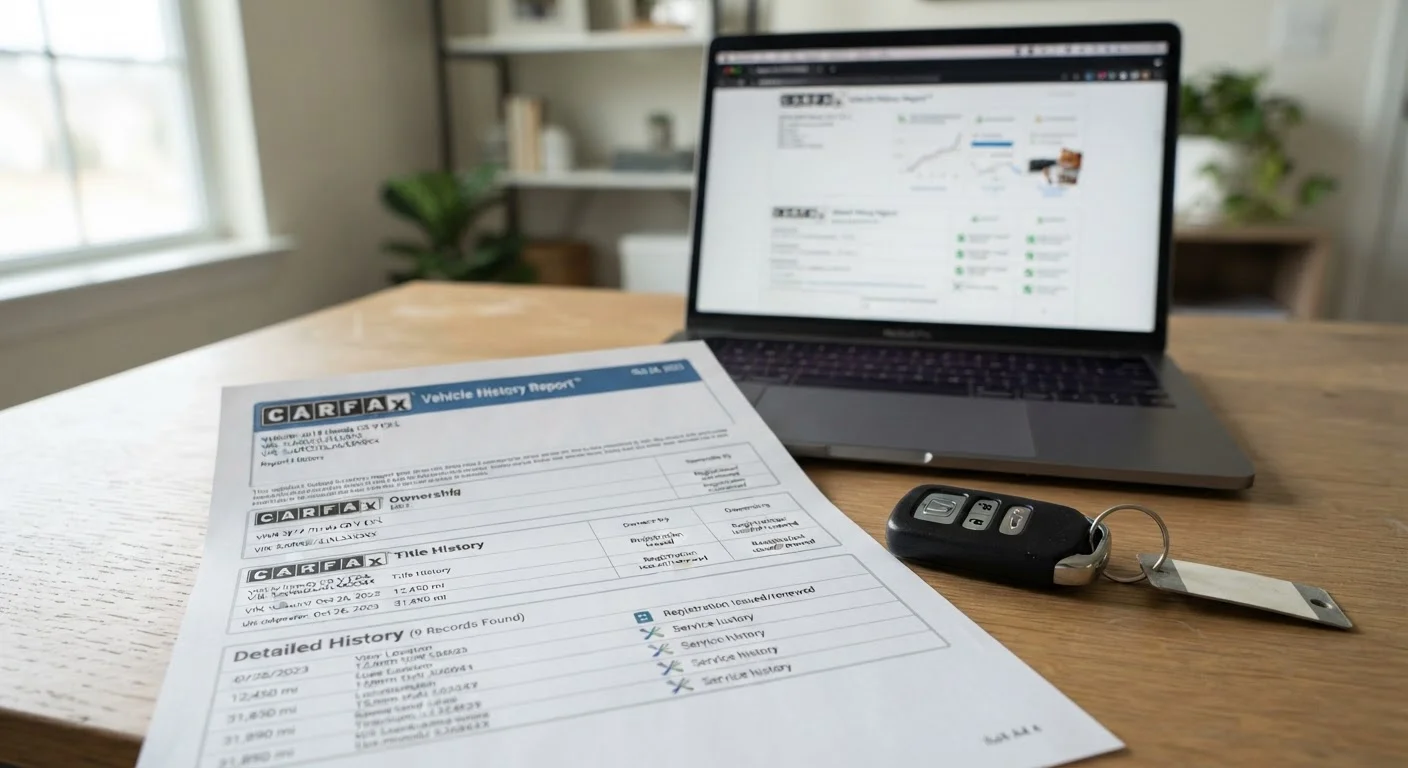
A vehicle history report is a compiled record drawn from a network of data sources: state DMV title and registration databases, law enforcement salvage and theft records, insurance company total-loss filings, wholesale auto auction records, and participating repair and service facilities. The result is a timeline of documented events tied to a single VIN.
Reports typically organize data into four major categories: title and ownership history, accident and damage records, odometer readings, and service history. Understanding what each section means - and what it can and cannot tell you - is the foundation of a useful pre-purchase review.
Pulling a history report is a standard step in the used-car buying process, and it fits into the broader arc of smart vehicle ownership described in our car ownership guide. Like a credit report, a vehicle history report is only as useful as your ability to interpret what you're reading.
What you will need
How to Read Each Section: Step-by-Step
Follow the steps below to work through a vehicle history report systematically. Each step targets a distinct section of the report and explains what to look for and what warrants concern.
17-Digit VIN
Required to pull the vehicle's history; every report is keyed to this unique identifier.
Vehicle History Report
The primary document compiling ownership, accident, title, and service data for the vehicle.
Independent Pre-Purchase Inspection
A mechanic's physical examination of the vehicle that can uncover issues the report may not capture.
Locate and Verify the VIN
The VIN (Vehicle Identification Number) is a 17-character code unique to every vehicle sold in the U.S. since 1981. Find it in at least two locations and confirm they match:
- Lower-left corner of the windshield (visible from outside)
- Driver's side door jamb sticker
- The vehicle title and registration documents
Mismatched VINs across these locations can indicate frame replacement or title fraud - a significant red flag before you even pull a report.
Review the Title History and Ownership Count
The title history section shows every state where the vehicle has been titled and how many owners it has had. Look for:
- Title brands - designations such as salvage, rebuilt/reconstructed, flood, lemon law buyback, or junk that indicate significant past events
- Short ownership cycles, which may suggest recurring problems prompted previous owners to sell
- Titles issued across multiple states in a short period, sometimes associated with title washing (a practice where a branded title is obscured by re-titling in a state with looser record-keeping)
Examine the Accident and Damage Records
Accident entries vary widely in severity. When reviewing this section, distinguish between:
- Minor incidents - cosmetic damage with no reported airbag deployment or structural involvement
- Moderate damage - repairs to body panels, bumpers, or frame-adjacent components
- Severe incidents - airbag deployment, structural/frame damage, or fire and flood involvement
Structural damage in particular can affect alignment, crash-test performance, and long-term reliability even after competent repair. An independent mechanic can use a frame-measuring tool to verify structural integrity.
Check the Odometer Readings for Consistency
Reports log odometer readings each time the vehicle is serviced, inspected, auctioned, or titled. Read these entries chronologically and confirm the mileage only increases over time. Warning signs include:
- A mileage figure that is lower than a prior recorded entry
- Large unexplained gaps between readings that could conceal high-use periods
- An odometer rollback notation, which some states report directly to the database
Odometer fraud is a federal offense under the Motor Vehicle Information and Cost Savings Act, but it still occurs. The mileage trail in a history report is one of the most reliable detection tools available to buyers.
Review Service and Maintenance Records
When dealerships, quick-lube chains, or repair shops report service visits, that data flows into the history report. A vehicle showing regular oil changes, inspections, and manufacturer-recommended service intervals suggests attentive ownership. Look for:
- Consistent service intervals relative to mileage
- Records from a single region (consistent with owner's location) versus scattered geography
- Any major repairs - transmission, engine, suspension - that should prompt follow-up questions about warranties or remaining part life
Keep in mind that private-party maintenance performed at home or at independent shops without electronic reporting will not appear here.
Identify Report Gaps and Plan Next Steps
No vehicle history report is exhaustive. Data reaches providers only when an event is reported to a participating source - police, insurers, auctions, or registered repair facilities. Unreported private accidents, cash repairs, and off-the-books odometer fraud will not appear. After reviewing the report:
- Request any available service records directly from the seller
- Have a trusted, independent mechanic perform a pre-purchase inspection
- Consider whether the reported history aligns with the asking price and the vehicle's condition
A clean report does not certify a clean car - it means no reported issues were found. Used alongside a physical inspection, it gives you a substantially clearer picture. For a broader look at how used-car risk factors compare to buying new, see our guide to new vs. used car trade-offs.
Title Washing Is a Real Risk
Title washing occurs when a branded title (such as salvage or flood) is obscured by re-titling the vehicle in a state that does not recognize the prior brand. Some history report databases detect cross-state discrepancies, but not all cases are caught. Always verify the title status with the issuing state's DMV if you have any concerns about a vehicle's title brand history.
Understanding the Limits of the Report
Vehicle history reports are powerful but imperfect. An estimated significant share of accidents go unreported to insurance or law enforcement - meaning they may leave no trace in a history database. Similarly, a vehicle repaired by a private seller using cash and no insurance claim can have a spotless report and still carry hidden structural damage.
Think of the report as a documented floor, not a complete ceiling. It tells you the minimum verifiable history of the car. What it cannot do is confirm the condition of mechanical components, measure remaining brake pad life, or detect deferred maintenance that left no service record.
Pair the Report With a Physical Inspection
A vehicle history report and a mechanic's pre-purchase inspection answer different questions. The report reveals documented past events; the inspection reveals current physical condition. Using both together gives you the most complete picture available before buying a used vehicle.
This article is for general informational purposes only and does not constitute financial, legal, or professional automotive advice. Coverage availability and insurance terms vary by provider and state; consult a licensed insurance agent for guidance specific to your situation.