

Key Takeaways
Start With a Clear Picture of What You Actually Need
Before spending a single dollar, audit what you already own. Pull out every piece that could reasonably work in your workplace, then look honestly at the gaps. Do you have bottoms but no polished tops? Plenty of tops but nothing to layer over them on client days? Knowing your actual shortlist stops you from buying duplicates or chasing pieces that sound useful but won't get worn.
It also helps to understand your specific dress code. A creative agency's "business casual" looks very different from a law firm's. If you work a hybrid schedule, see how our guide on dressing for the office when you work from home twice a week can sharpen your thinking. Once you know exactly what you need, every purchase becomes intentional rather than impulsive - and that's where real budget discipline begins.
Build Around Versatile Foundational Pieces
The most cost-effective work wardrobe is built on pieces that can do double or triple duty. A well-cut navy blazer, for example, can anchor a formal presentation outfit, make a simple blouse feel more polished, or dress up dark jeans for a casual Friday. That single item earns its place in a way that a niche sequined top never will.
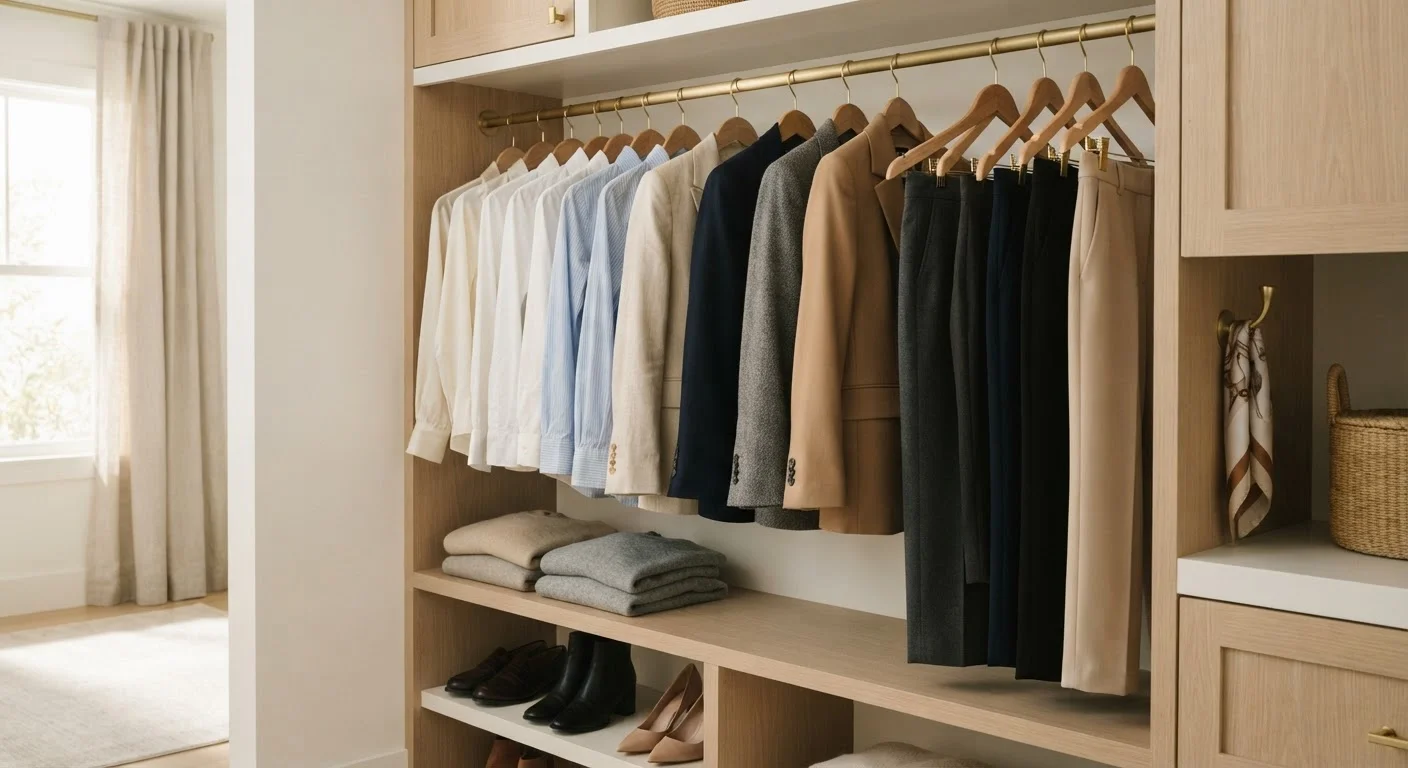
Think in terms of a small core - typically five to eight pieces - that all work together. Neutral tones (navy, black, camel, gray, white) make mixing and matching almost effortless. For a solid list of foundational starting points, our article on wardrobe basics every adult should own is a useful companion read. Once your foundation is solid, adding one or two accent pieces - a colored scarf, a patterned shirt - gives the illusion of a much larger wardrobe without the cost.
Smart Sourcing Without Settling
Budget wardrobe-building doesn't mean shopping exclusively at one type of store. Consignment shops and thrift stores often stock professional clothing in excellent condition, particularly in urban areas where people donate frequently. Clothing swaps among colleagues or friends are another genuinely underrated option - free, social, and often surprisingly productive.
End-of-season clearance sections at mainstream retailers are also worth watching. A classic wool-blend trousers bought in early spring (marked down from the winter season) costs a fraction of its original price and will wear just as well next fall. The key is shopping with a specific shortlist rather than browsing open-endedly, which tends to lead to impulse buys that don't integrate with what you already own. If the idea of shopping itself feels draining, the strategies in our everyday fashion guide for people who hate shopping can make the process far less exhausting.
Fit and Care Make Everything Look More Expensive
Here's an honest truth professional stylists repeat often: fit is the great equalizer. A $30 pair of trousers that skims the body cleanly will look sharper in a meeting than a $200 pair that's slightly boxy or too long. Minor tailoring - hemming trousers, taking in a blazer at the waist, replacing cheap buttons - can cost between $10 and $40 per alteration and entirely transforms a piece's perceived quality. Our guide on getting clothes altered explains what to expect from a tailor visit and which alterations deliver the most value.
Proper garment care extends the life of every piece you own, which is its own form of budget management. Following care label instructions, washing items inside out in cold water, and hanging or folding garments correctly keeps them looking newer longer - reducing how often you need to replace them.
The Fit Rule Worth Remembering
When you're deciding whether a budget piece is worth buying, try it on and ask one question: does this fit well enough that a tailor could make it look expensive? If the answer is yes and the alteration cost is modest, it's often a smart buy. If the construction is so poor that no alteration would help, move on - no amount of money spent on tailoring will fix a garment with bad bones.
If your body has changed recently, it's worth understanding how fit changes affect your overall look. Our article on why outfits stop working after weight changes offers helpful context for re-anchoring your wardrobe without starting over.