

Key Takeaways
Why Basics Actually Matter
The word "basics" gets tossed around in fashion circles so often it starts to feel meaningless. But there's a genuinely practical idea underneath the buzzword: certain pieces show up for you every single day, across wildly different situations, without demanding much thought. That's what makes them worth owning intentionally rather than stumbling into by accident.
This isn't about building a minimalist aesthetic or following anyone's style rules. It's about reducing daily friction. When your closet includes reliable, versatile pieces, getting dressed stops being a chore and starts being almost automatic. If you've ever stared at a full closet feeling like you have nothing to wear, the fix is usually fewer but smarter items - not more. (For a fuller look at that tension, the real costs and benefits of owning a lot of clothes is worth a read.)
The list below focuses on what each piece actually does for you - not just that it exists, but why it earns its closet space.
A White or Off-White Crew-Neck T-Shirt
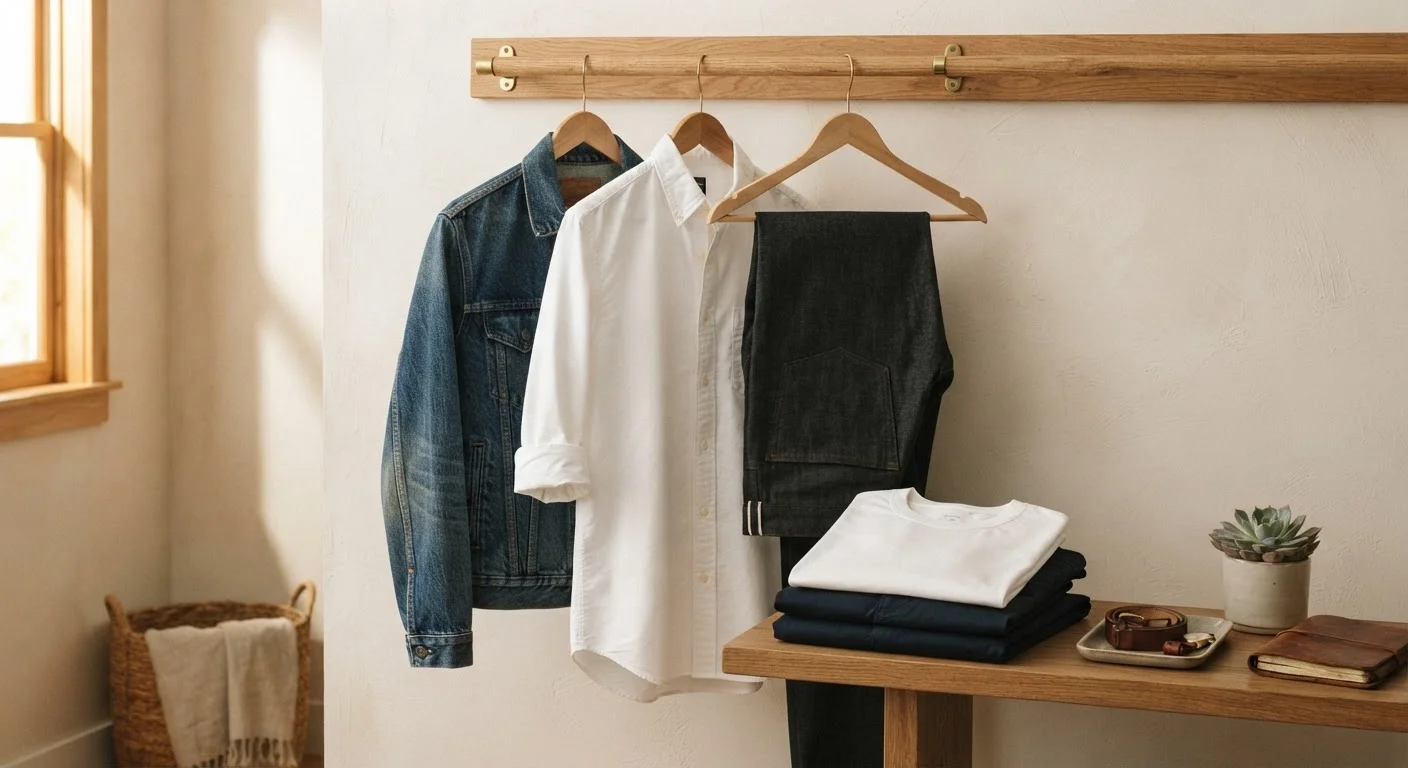
Few garments are as genuinely useful as a well-cut white tee. It layers under everything, stands alone in warm weather, and reads as intentional when the fit is right. Look for one with enough weight that it holds its shape after washing - lightweight versions tend to go sheer and lose structure quickly. A slightly longer hem helps with tucking and untucked styling alike.
A well-cut white tee layers under everything and still reads as intentional on its own.
A Dark-Wash or Black Straight-Leg Trouser
Trousers in a dark neutral are the single item most likely to make an outfit look finished rather than thrown together. They pair with sneakers for a casual-elevated look, with loafers or heeled boots for something more polished, and with virtually any top in your closet. The key fit detail: the rise. A mid-to-high rise is typically the most flattering and comfortable across different body types and proportions.
Dark trousers make almost any outfit look finished - the rise is the fit detail that matters most.
A Well-Fitted Pair of Jeans
Jeans do something trousers don't: they signal ease. A pair that fits your actual body (not the body you're hoping for someday) and holds its shape through regular wear is one of the most-reached-for items in most closets. Straight or slim cuts tend to be the most versatile for mixing with different silhouettes on top. Dark indigo reads dressier; mid-wash reads more casual - useful to have both eventually, but start with whichever fits your everyday life.
Jeans that fit your actual body today are always more useful than ones that almost fit.
A Tailored Blazer or Structured Jacket
A blazer is one of the fastest ways to elevate any outfit. Thrown over a tee and jeans, it signals intention. Paired with matching trousers, it becomes a suit. In a neutral like camel, charcoal, or navy, it works across seasons and settings. The fit check: shoulders should sit exactly at the edge of yours - nothing else about a blazer is harder to alter and more visually impactful.
A blazer thrown over jeans and a tee signals intention without looking like you tried too hard.
A Classic Button-Down Shirt
The button-down earns its place through sheer adaptability. Fully buttoned, it's polished. Left open over a tee, it's layered and relaxed. Tied at the waist, it changes the silhouette entirely. White and light blue are the most versatile colorways; a subtle pattern like a thin stripe or small check adds personality without limiting pairing options. A slightly oversized or relaxed cut has more styling range than a very fitted version.
A button-down can be polished, layered, or casual depending entirely on how you wear it.
A Comfortable, Supportive Everyday Sneaker
Footwear shapes the whole vibe of an outfit, and a clean, simple sneaker in white or a neutral tone is one of the most outfit-friendly shoes you can own. It works with dresses, trousers, jeans, and shorts - and it makes dressier pieces feel current rather than stiff. Prioritize comfort and construction: a sneaker that wears out in three months isn't a basic, it's a recurring expense.
A clean, neutral sneaker is one of the most outfit-friendly shoes you can own.
A Versatile Outer Layer
Whether it's a trench coat, a long cardigan, or a clean-lined puffer depends on your climate and lifestyle - but having one reliable outer layer that works with most of your wardrobe is essential. It's the piece you grab without thinking on the way out the door. A neutral color in a classic silhouette gives it the most longevity, since outerwear tends to be a longer-term investment than other basics.
One reliable outer layer in a neutral color works with almost everything and lasts for years.
Putting It All Together
Notice that none of these items are trends - they're workhorses. The real magic happens in combination: a white tee under a blazer is a different outfit than the same tee tucked into wide-leg trousers, which is different again from wearing it knotted over a midi skirt. Basics multiply your options without multiplying your closet.
Care Is Part of the Investment
Basics only stay useful if they hold up. Follow care labels closely - washing in cold water and air-drying extends the life of most fabrics significantly. Store knitwear folded rather than hung to prevent stretching, and keep white items away from fabrics that bleed. A little attention to maintenance means you won't have to replace basics nearly as often.
If you're building these pieces on a budget, strategy matters more than sacrifice. The guide to building a work wardrobe on a tight budget covers practical approaches that don't require spending big. And if you're uncertain how much color to introduce alongside your neutrals, deciding between neutrals and color for everyday wear can help you find the right balance for your own life.
The goal isn't a picture-perfect capsule wardrobe - it's a closet that makes your actual daily life a little easier and a little more put-together, without a lot of effort.