

Key Takeaways
Our Verdict
Neither neutrals nor color wins outright - each brings genuine utility to a working wardrobe. Neutrals deliver reliability and maximum mix-and-match versatility, while color adds expressiveness and can make a limited wardrobe feel more varied. For most people, a neutral foundation layered with selective pops of color is the most practical and satisfying daily approach.
| Best for | Recommended |
|---|---|
| Those who want low-effort, fuss-free daily dressing | Neutral-forward wardrobe |
| Those who find self-expression through clothing genuinely energizing | Color-forward wardrobe |
| Most everyday American consumers balancing work and casual life | Neutral foundation with intentional color accents |
Why This Decision Actually Matters
The clothes you reach for every morning have more impact on your day than you might expect. When your wardrobe works, getting dressed is nearly automatic - pieces layer easily, nothing clashes, and you leave the house feeling put together. When it doesn't work, even a closet full of clothes can feel like it has nothing to wear.
The neutrals-versus-color question is really a question about how you want your wardrobe to function. It's not a style personality test. It's a practical framework. Our guide to wardrobe basics covers which foundational pieces earn their place across dozens of situations - and this article extends that thinking into the color question most people quietly wrestle with.
The Case for Neutrals
Neutral tones - think white, black, navy, grey, cream, camel, and olive - have one defining advantage: they work with nearly everything else you own. Every piece you add in a neutral palette immediately multiplies the outfit combinations available to you. That kind of versatility has real dollar value, too, since each item pulls more weight.
Neutrals also reduce decision fatigue. When your closet runs on a consistent palette, you spend less mental energy worrying about whether pieces clash. This matters more on rushed weekday mornings than you'd think. For anyone building a professional wardrobe carefully, as outlined in our work wardrobe guide, neutrals are almost always the smartest investment layer.
The limitation? A fully neutral wardrobe can start to feel flat or monotonous, especially if you wear the same combinations often. It also shifts the burden of visual interest entirely onto fit, texture, and fabric - which requires some deliberate attention.
| Neutrals | Color | |
|---|---|---|
| Mix-and-match versatility | Very high - pairs with almost everything | Lower - depends on shade and saturation |
| Daily decision effort | Low - nearly foolproof combinations | Higher - requires more coordination thought |
| Expression and personality | Subtle - relies more on fit and texture | Immediate - communicates mood and style quickly |
| Trend longevity | More durable - classics age slowly | Faster-shifting - bold colors can date |
| Wardrobe variety feel | Can feel repetitive over time | Makes a smaller wardrobe feel more varied |
| Best starting point for | Anyone building from scratch | Those adding onto an established base |
The Case for Color
Color in a wardrobe isn't just decorative - it's genuinely functional. A bright or saturated piece makes an outfit feel intentional and finished even when it's simple underneath. It also makes your existing neutral pieces feel less repetitive; a single cobalt blue shirt can make your white-and-grey basics feel like three new outfits.
There's also the mood factor. Wearing color you genuinely like tends to make people feel more confident and present, though experiences vary. This isn't a guarantee - it's simply a pattern worth paying attention to in your own daily life.
Color does come with real challenges though. It narrows versatility: a bright orange blazer works with fewer things than a camel one. Trends in color shift faster than cut or silhouette, so bold pieces can date more quickly. And if you're building a leaner closet - something our guide for people who hate shopping addresses - color-heavy purchases require more careful thought upfront.
Test Color Before Committing
Before adding a saturated or bold piece to your wardrobe, lay it next to five or six items you already own. If it genuinely works with at least three of them, it earns its place. If it only works as a standalone statement, that's a useful reality check before you spend.
How to Find Your Own Balance
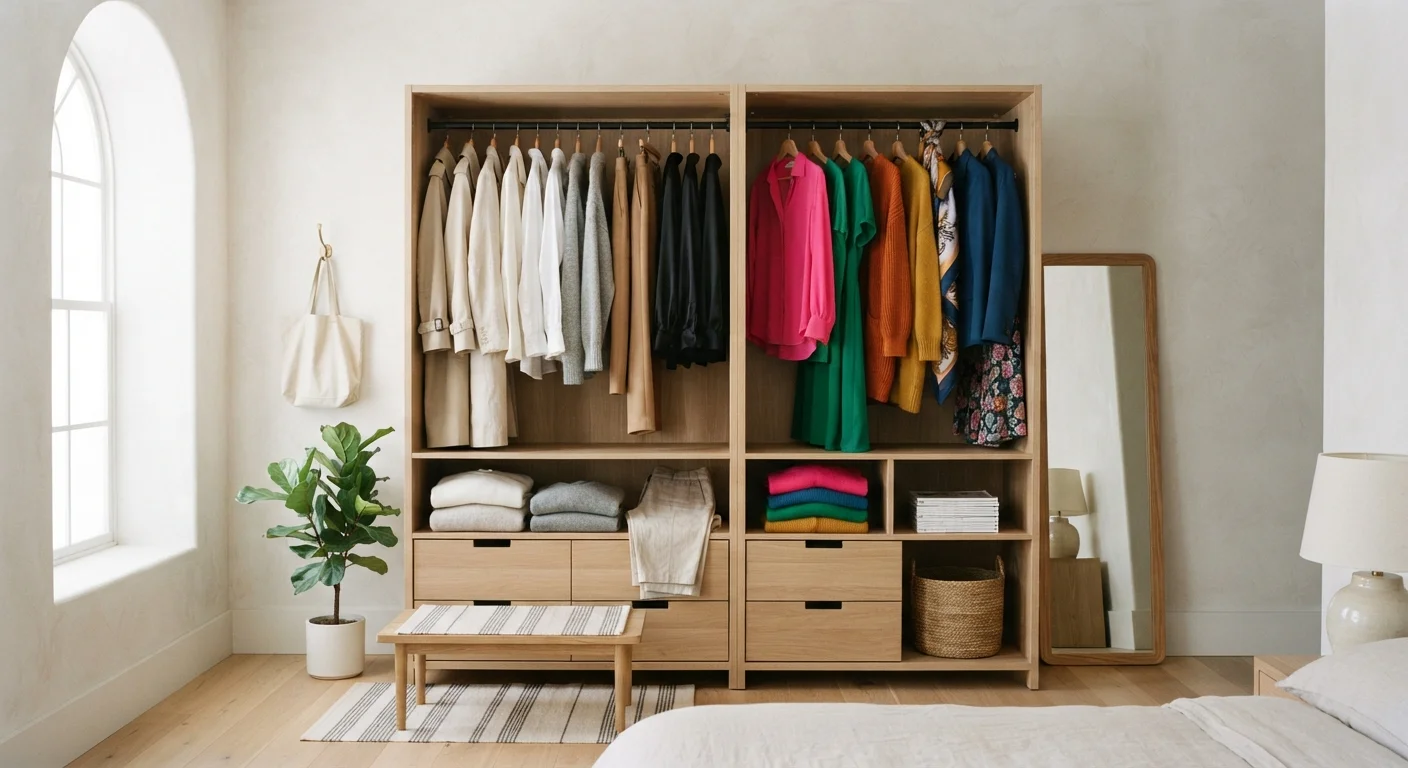
The most useful wardrobe approach for most people isn't a ratio - it's a logic. Build your neutral foundation first: the pants, trousers, tees, and layering pieces that work across all occasions. Then add color as a deliberate accent layer. This might mean colorful tops paired with neutral bottoms, or a single statement jacket that lifts a tonal outfit.
Ask yourself a few practical questions: Do I dress for an environment with an implicit color code? (Some workplaces lean conservative; others actively reward self-expression.) Do I enjoy getting dressed, or do I prefer it to be quick and automatic? Do I tend to rewear things endlessly, or do I like variety?
The answers shape your ideal balance more honestly than any blanket style rule. If you're also thinking about how your wardrobe changes across seasons, the seasonal rotation checklist can help you assess what's actually serving you versus what's just taking up space.
66%
Adults say clothing affects their confidence
A survey by the American Psychological Association found roughly two-thirds of adults report that what they wear influences how confident they feel on a given day.
~7 mins
Average daily time spent choosing an outfit
Research cited in behavioral studies on decision fatigue suggests the average adult spends several minutes each morning deciding what to wear, time that compounds across a year.