

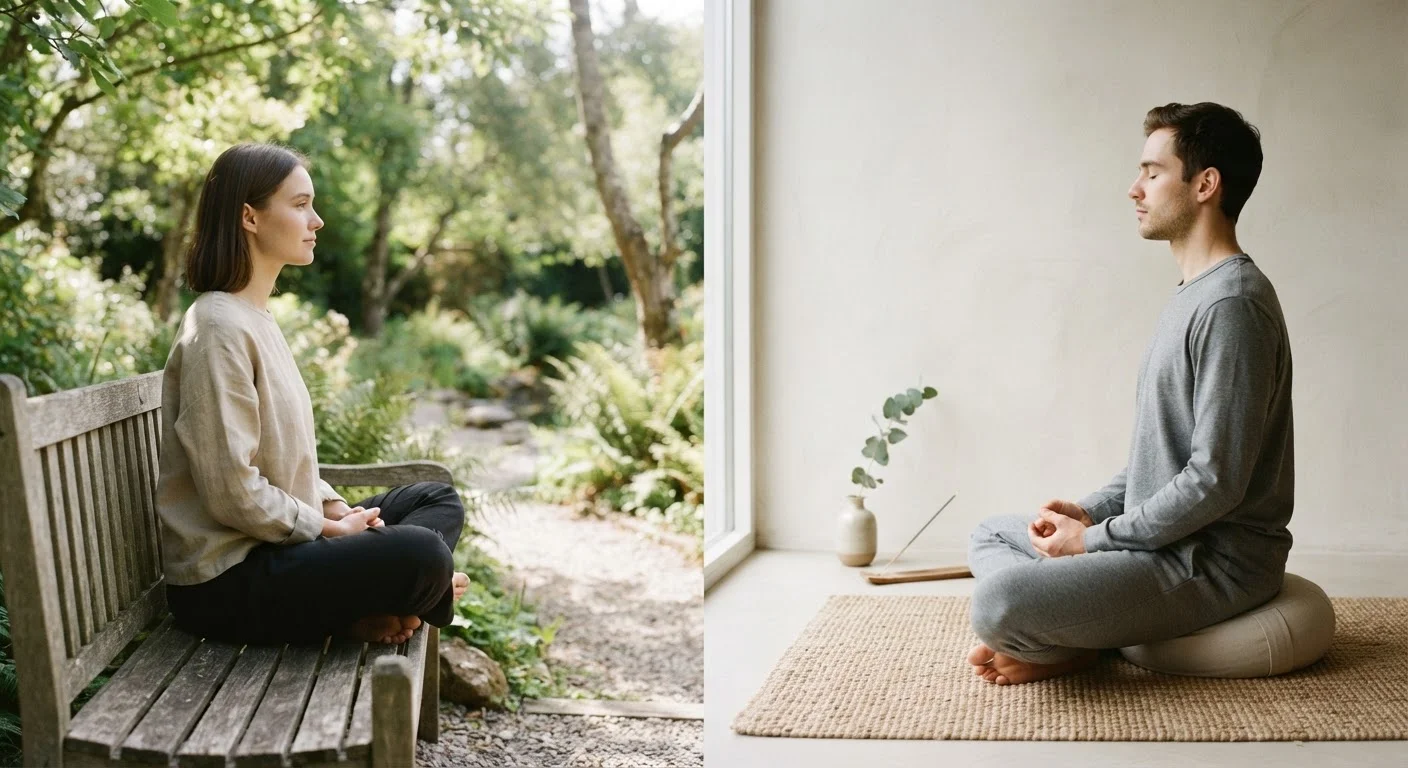
Key Takeaways
Option A
Mindfulness
The always-available awareness practice.
Best for: People who want to reduce stress and stay present during everyday activities without setting aside dedicated time.
Option B
Meditation
The structured, intentional mental training session.
Best for: People seeking a consistent, deliberate practice that builds mental skills over time through focused repetition.
If you want something you can practice anywhere, anytime
Mindfulness
Mindfulness requires no set-aside time or quiet space - it can be layered onto commuting, eating, or conversations with a simple shift in attention.
If you want to build a structured mental wellness habit
Meditation
A consistent daily meditation session creates a dedicated training ground for focus and emotional regulation that compounds over weeks and months.
If you are new to either practice and unsure where to start
Mindfulness
Starting with informal mindfulness during daily tasks lowers the barrier to entry and naturally leads many people toward a more formal meditation practice.
If you want the deepest long-term benefits for stress and focus
Meditation
Sustained meditation practice has been studied most extensively for effects on stress, attention, and emotional resilience over time.
Two Concepts, One Confusing Overlap
The words mindfulness and meditation are used interchangeably in wellness articles, apps, and casual conversation - but conflating them creates real confusion about what to actually do and when. Understanding the distinction makes it far easier to choose the approach that fits your life.
In plain terms: mindfulness is a mental state. It describes the act of paying deliberate, non-judgmental attention to the present moment - noticing what you see, feel, hear, or think without getting swept into reaction or analysis. You can be mindful while washing dishes, driving, or talking to a friend.
Meditation is a practice - a structured activity you sit down and do, with a clear beginning and end. Many forms of meditation train mindfulness, but meditation can also target other mental skills like compassion, visualization, or focus on a specific object or phrase. The two overlap significantly, but they are not interchangeable.
A Note on Mindfulness-Based Programs
Mindfulness-Based Stress Reduction (MBSR), developed at the University of Massachusetts Medical School, is a structured eight-week program that combines both mindfulness exercises and formal meditation. It is one of the most widely studied formats in clinical research. When studies reference "mindfulness" benefits, they are often examining participants in structured programs like MBSR rather than informal, solo practice - a distinction worth keeping in mind when evaluating the evidence.
How Each One Works in Practice
Mindfulness in everyday life looks like pausing before responding in a tense conversation, noticing the taste of your morning coffee instead of scrolling through your phone, or observing a wave of anxiety without immediately acting on it. It is informal, available at any moment, and requires no equipment - only intention.
Meditation typically involves setting aside a block of time - often 10 to 30 minutes - sitting or lying quietly, and directing attention in a systematic way. Common formats include focused-attention meditation (anchoring awareness on the breath), body scan meditation (moving attention through physical sensations), and loving-kindness meditation (cultivating goodwill toward self and others). Many guided meditation apps and programs are built around these formats.
Research published in journals such as JAMA Internal Medicine and Psychological Science has found evidence that both practices can support reductions in perceived stress and improvements in emotional regulation, though researchers note that study designs vary and effect sizes differ by individual. For a look at how physical activity similarly affects mood and cognition, see how exercise affects the brain.
| Criterion | Mindfulness | Meditation |
|---|---|---|
| What it is | A quality of present-moment awareness | A structured, timed mental practice |
| When you do it | Anytime, woven into daily life | During a dedicated session |
| Time required | None - any moment qualifies | Typically 5-30 minutes per session |
| Equipment or setting | None required | Quiet space helpful; apps optional |
| Learning curve | Low - concept is simple to grasp | Moderate - technique takes practice |
| Primary goal | Sustained present-moment awareness | Deliberate training of mental skills |
| Research support | Studied mostly in clinical MBSR programs | Broad range of formats studied |
Which One Should You Start With?
There is no single correct entry point, but most people find informal mindfulness easier to begin. Because it attaches to activities you already do - eating, walking, waiting in line - it does not require carving out new time in a busy schedule. It also gently builds the attentional awareness that makes formal meditation less frustrating when you eventually try it.
If you prefer structure and want a reliable way to track your mental wellness practice, starting with guided meditation sessions may suit you better. Even five to ten minutes daily has been associated with measurable changes in self-reported stress levels in a number of studies, though individual results vary considerably.
Many practitioners find that the two reinforce each other: regular meditation sharpens the awareness you bring into daily moments, and cultivating mindfulness during the day helps you settle more quickly when you sit to meditate. Pairing either approach with structured breathing techniques can deepen the effect, since breath control is a common anchor in both practices.
This article is for general informational purposes only and is not a substitute for professional mental health advice, diagnosis, or treatment. If you are managing a mental health condition, please consult a qualified healthcare provider before starting any new wellness practice.