

Key Takeaways
Dietary Fiber
Dietary fiber is a type of carbohydrate found in plant foods that the body cannot fully digest or absorb. Unlike sugars and starches, fiber passes relatively intact through the stomach and intestines. It plays a significant role in digestive health, blood sugar regulation, cholesterol management, and supporting a healthy gut microbiome.
Fiber is broadly classified as soluble (dissolves in water to form a gel-like substance) or insoluble (does not dissolve and adds bulk to stool). Both types are found together in most plant foods and each confers distinct physiological benefits.
What Fiber Actually Does in Your Body
Fiber is sometimes reduced to a simple story about digestive regularity, but its role in the body extends well beyond that. Once consumed, different types of fiber take distinct pathways through the gastrointestinal tract, each with meaningful effects on health.
Soluble fiber - found in oats, beans, apples, and psyllium - dissolves in water and forms a viscous gel in the gut. This gel slows the absorption of glucose, which helps moderate blood sugar responses after meals. The same gel binds to bile acids in the small intestine, prompting the body to use cholesterol to make more bile, which can modestly lower circulating LDL cholesterol levels over time.
Insoluble fiber - abundant in wheat bran, whole grains, and most vegetables - does not dissolve. It adds physical bulk to stool, accelerates transit time through the colon, and helps maintain regularity. This mechanical effect reduces the time potentially harmful compounds spend in contact with the intestinal lining.
“Dietary fiber is not a single substance but a family of compounds, each interacting differently with our gut environment. The diversity of fiber types in whole foods is part of what makes a varied plant-rich diet so beneficial.”
— Dr. David Katz, Preventive medicine specialist and nutrition researcher
A third category, prebiotic fiber, has attracted growing scientific attention. Certain fermentable fibers - including inulin, found in garlic and chicory root, and resistant starch, found in slightly underripe bananas and cooked-then-cooled potatoes - selectively feed beneficial gut bacteria such as Bifidobacterium and Lactobacillus species. The short-chain fatty acids produced during this fermentation process support the integrity of the gut lining and have been linked to reduced systemic inflammation.
Why the Fiber Gap Is So Wide
According to data from the Dietary Guidelines for Americans, fiber is consistently identified as a nutrient of public health concern. The average American adult consumes roughly 15 grams of fiber per day - far below the recommended 25-38 grams depending on age and sex.
~15g
Average daily fiber intake for U.S. adults
The Dietary Guidelines for Americans identifies fiber as a nutrient of public health concern due to chronic under-consumption.
25-38g
Recommended daily fiber intake for adults
The Academy of Nutrition and Dietetics recommends 25g/day for women and 38g/day for men, declining slightly after age 50.
>70%
Adults estimated to fall short of fiber recommendations
National nutrition survey data consistently show the majority of American adults do not meet recommended fiber intake targets.
The shortfall traces back largely to the structure of the modern American diet. Ultra-processed foods - which now account for a substantial share of daily calories for many households - are typically stripped of their natural fiber during manufacturing. White bread, refined pasta, packaged snacks, and many breakfast cereals offer minimal fiber compared to their whole-food counterparts.
Produce consumption also falls short of recommendations for most Americans. Vegetables and fruits supply a range of fiber types alongside vitamins and minerals; when they are replaced by processed convenience foods, fiber intake drops alongside micronutrient quality. This connection is explored further in our article on nutrients Americans commonly fall short on.
Increase Fiber Gradually to Avoid Discomfort
Adding large amounts of fiber too quickly can cause bloating, gas, and cramping. A more comfortable approach is to increase intake by a few grams per week while also drinking more water throughout the day. Adequate hydration helps fiber move efficiently through the digestive tract.
Practical Ways to Increase Fiber Intake
Closing the fiber gap does not require dramatic dietary changes. Small, consistent shifts toward whole, minimally processed plant foods can meaningfully increase daily intake over time.
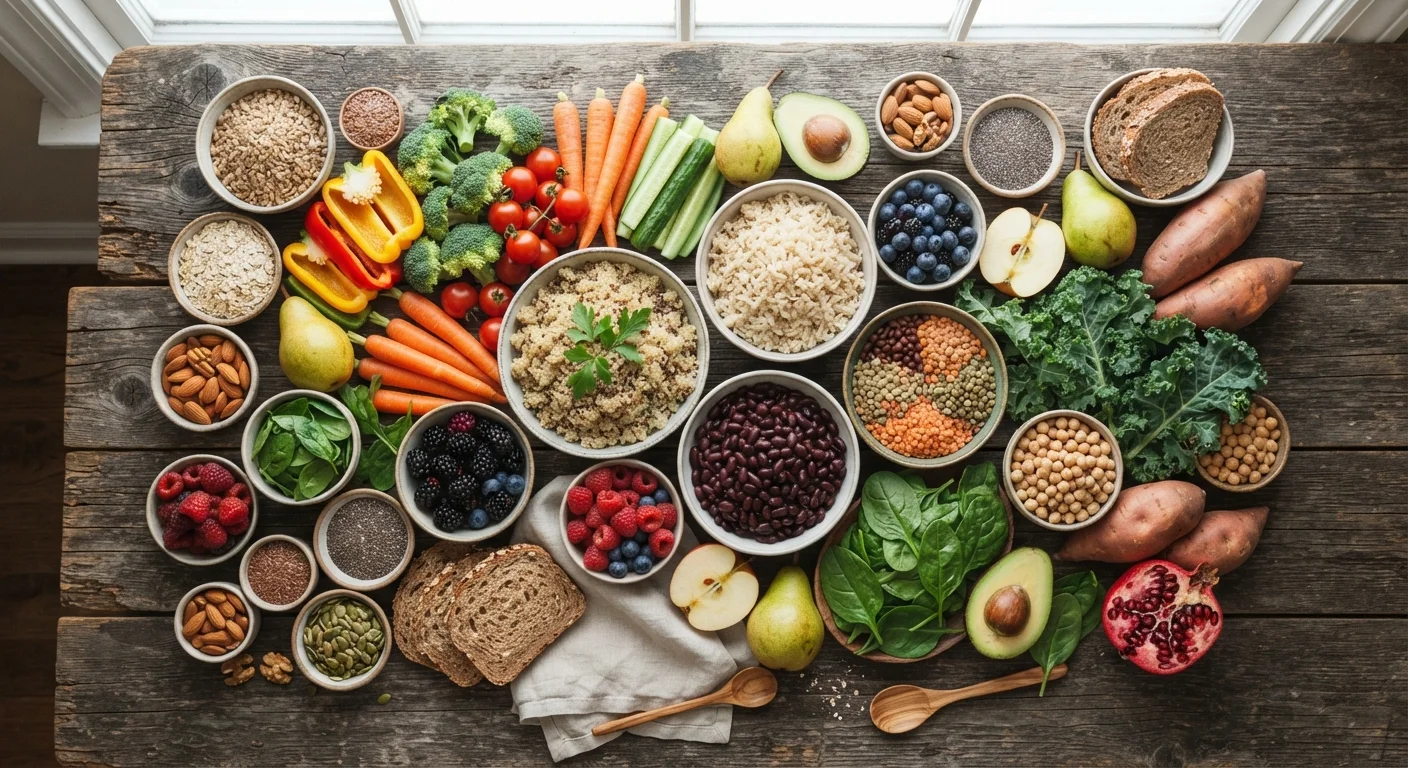
- Swap refined grains for whole grains: Choosing whole-wheat bread, brown rice, oats, or barley over their refined versions is one of the most straightforward upgrades.
- Include legumes regularly: Lentils, black beans, chickpeas, and split peas are among the most fiber-dense foods available, offering both soluble and insoluble fiber in a single serving.
- Leave the skin on produce: The skin of apples, potatoes, and cucumbers contains concentrated fiber. Washing thoroughly and eating skin-on preserves it.
- Add vegetables to mixed dishes: Stirring spinach into pasta, adding shredded carrots to soups, or mixing beans into grain bowls increases fiber without requiring separate preparation.
- Snack on nuts and seeds: Almonds, chia seeds, and flaxseeds provide fiber alongside healthy fats and are easy to incorporate into yogurt, oatmeal, or salads.
It is worth noting that some widely repeated claims about fiber - such as the idea that fiber from supplements is equivalent to food fiber in all respects - are not fully supported by evidence. For a broader look at nutrition misconceptions, see our piece on nutrition myths that persist despite the evidence.
This article is for general informational and educational purposes only and is not a substitute for professional medical or dietary advice. Consult a qualified healthcare provider or registered dietitian before making significant changes to your diet, especially if you have an existing health condition.