

Key Takeaways
Why Room-by-Room Organization Works
Trying to organize an entire home in one sweep is one of the most common reasons people give up before they start. A room-by-room approach breaks the project into manageable, rewarding segments - each one delivering a visible win that motivates the next.
The foundation of any effective system is the same regardless of the room: declutter first, then organize. Adding bins, racks, and baskets to clutter just hides the problem. Before introducing any storage solution, sort everything in the space into four groups - keep, donate, relocate, and discard. Only then does organizing begin.
Start With a Single Drawer
If the project feels overwhelming, begin with just one drawer or one shelf - not an entire room. Completing one small zone builds confidence and demonstrates that your chosen system works before scaling it. Progress compounds quickly once you have a template that fits your habits.
This guide walks through every major room in a typical American home, offering targeted strategies suited to each space's specific challenges. For a broader look at keeping your home in shape year-round, see our home maintenance hub.
Kitchen: The Hub of the Home
The kitchen sees constant activity, which makes clutter accumulate fast. The most effective kitchen organization principle is zoning: grouping items by how they're used. Cooking tools near the stove, prep items near the counter, and cleaning supplies under the sink.
- Cabinets: Store everyday dishes and glasses at eye level; specialty items go up high. Use shelf risers to double vertical space inside cabinets.
- Pantry: Group by category - grains, canned goods, snacks - and use clear containers for dry goods so contents are visible at a glance. First-in, first-out rotation reduces food waste.
- Drawers: Drawer dividers prevent the inevitable utensil chaos. Designate one drawer exclusively for frequently used tools.
- Countertops: Aim to keep only daily-use appliances on the counter. Everything else earns cabinet space.
Before buying any storage product, measure your cabinets and shelves first. The most common organization mistake is purchasing containers that don't fit the actual space.
Ill-fitting containers create new frustrations and are frequently returned or discarded, wasting both money and time.
Label everything - even transparent containers. Labels eliminate the mental overhead of remembering where things go, which is what makes systems sustainable for multiple people in a household.
Shared household systems fail most often because one person's mental map isn't communicated to others; visible labels solve this immediately.
Bedroom: Rest and Reset
A bedroom's primary job is to support rest, which means visual calm matters as much as physical order. Clutter in a sleep space has been associated with disrupted relaxation, making organization here both a practical and a wellness issue.
- Closet: Organize clothing by category, then by color within each category. Hang items you wear regularly at the front; seasonal pieces move to the back or into under-bed storage bins.
- Nightstands: Limit surfaces to three to five items - a lamp, a book, charging cables. Drawers should contain only sleep-adjacent items.
- Under the bed: Flat storage bins with lids are ideal for off-season linens, spare blankets, or infrequently used clothing.
- Dresser: Vertical folding (sometimes called the file-fold method) lets you see every item in a drawer without digging.
Spending two minutes each morning making the bed sets a tidy tone that tends to carry through the rest of the day.
Bathroom: Small Space, Big Impact
Most bathrooms offer limited square footage, so vertical space and drawer real estate matter enormously. The key is ruthless editing: expired products, nearly-empty bottles, and duplicates should go first.
Check Product Expiration Dates
Medications, sunscreens, and many skincare products carry expiration dates that affect both safety and effectiveness. Use a bathroom clear-out as an opportunity to check and properly dispose of expired items. Many pharmacies offer medication take-back programs; check with your local pharmacy for options.
- Under the sink: Use stackable bins or a two-tier pull-out organizer to make the deep cabinet space actually usable.
- Medicine cabinet / shelves: Group by function - skincare, dental, medication. Keeping medications stored safely and out of children's reach is a basic safety priority.
- Countertop: Keep to daily essentials only. A small tray corrals items and makes cleaning the counter simpler.
- Towels: Rolling towels saves shelf space and makes sizes easier to grab.
Living Room: Functional and Welcoming
The living room is where function and appearance converge most visibly. The goal is a space that's comfortable to use and easy to reset at the end of the day.
- Media and electronics: Cable management clips and cord covers eliminate one of the most persistent sources of visual clutter. Label cords where they plug in.
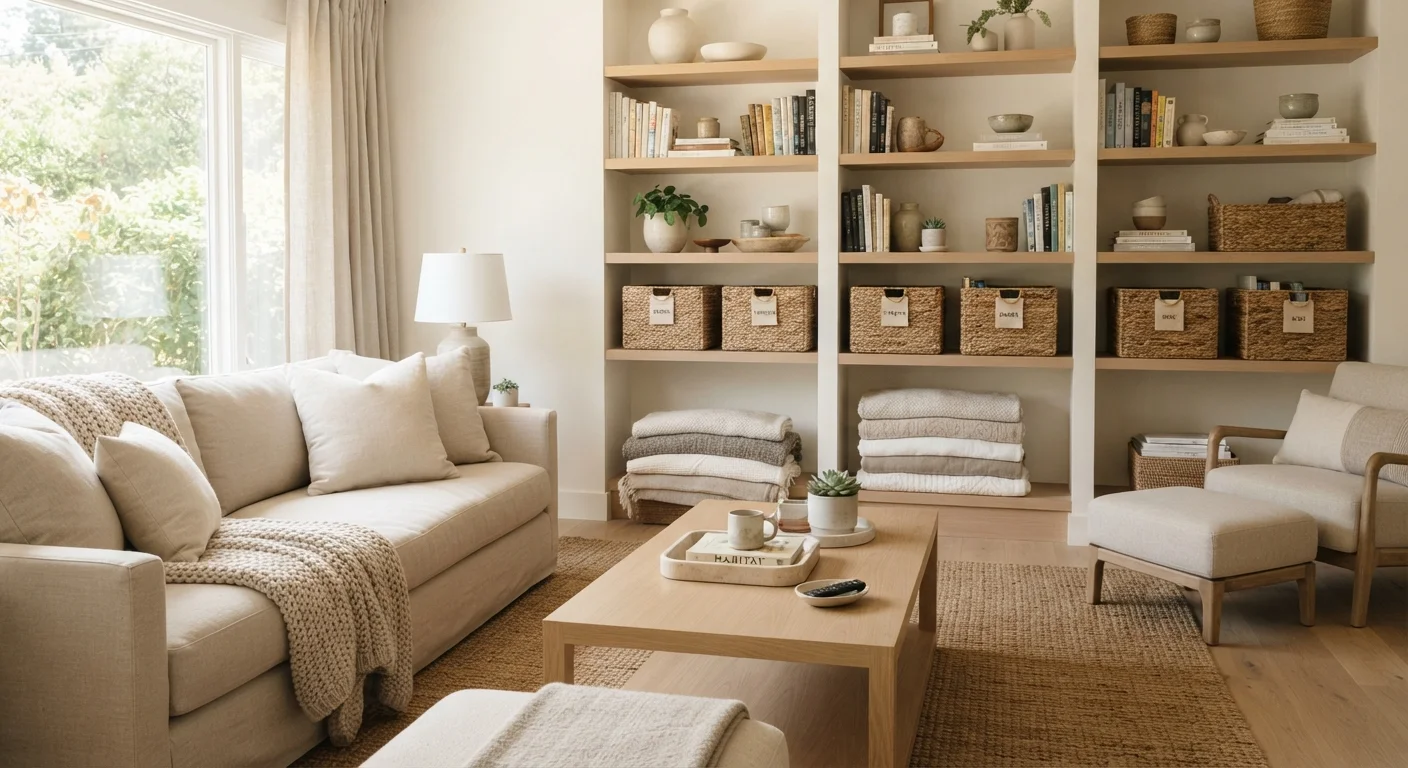
- Shelving: A mix of open display and closed-door storage allows personality without chaos. Baskets and bins on open shelves contain smaller items attractively.
- Toys and hobby items: Assign a dedicated bin or basket to items that belong in other rooms. At the end of each day, returning items to their home takes under five minutes.
- Coffee table: A tray on the coffee table creates a defined zone and signals where items should - and shouldn't - be placed.
80%
of clutter is caused by disorganization
Research cited by the National Association of Professional Organizers suggests the vast majority of household clutter results from lack of systems, not lack of space.
30 min
Average time lost daily searching for items
Studies on household productivity suggest Americans spend roughly 30 minutes each day looking for misplaced belongings in the home.
Home Office and Entryway: First and Last Impressions
The entryway is the first space you encounter when returning home - a chaotic one sets a stressful tone. Hooks, a catch-all tray, and dedicated shoe storage handle the majority of entryway clutter. Assign one hook and one spot per household member so items have a predictable home.
In the home office, paper is the primary enemy of order. A simple three-folder system - action, reference, archive - keeps documents manageable. Go paperless wherever possible; scanned documents take up no physical space. If you're also working to bring order to your digital files and accounts, our guide to organizing your digital life covers that ground thoroughly.
Desk surfaces should mirror the kitchen counter rule: only what you use daily stays visible. Everything else earns a drawer or a filing spot.
Don't Organize Paper Without a Disposal Plan
Stacking papers into neat piles is not organizing - it is deferred decision-making. Before filing anything, decide whether it needs to be kept at all. Shred documents containing personal or financial information rather than simply recycling them to protect against identity theft.
Building Habits That Stick
Organization is not a one-time event - it's a set of repeating behaviors. The most beautifully arranged home will revert to clutter without small, consistent habits to maintain it.
- The one-in, one-out rule: For every new item that enters the home, one comparable item leaves. This prevents accumulation from quietly undoing organized systems.
- Reset routines: A 10-minute evening reset - returning items to their zones, wiping counters, loading the dishwasher - preserves the work already done.
- Seasonal reviews: Every three to four months, revisit each room for a brief re-evaluation. Needs and habits shift, and systems should shift with them.
- Budgeting for organization: Storage solutions don't need to be expensive. If you're working with limited funds, our budgeting basics hub can help you prioritize spending on home improvements.
Building these habits takes time. Approach lapses without judgment - reorganizing a single drawer or shelf is always a valid starting point.