

Key Takeaways
Credit Score
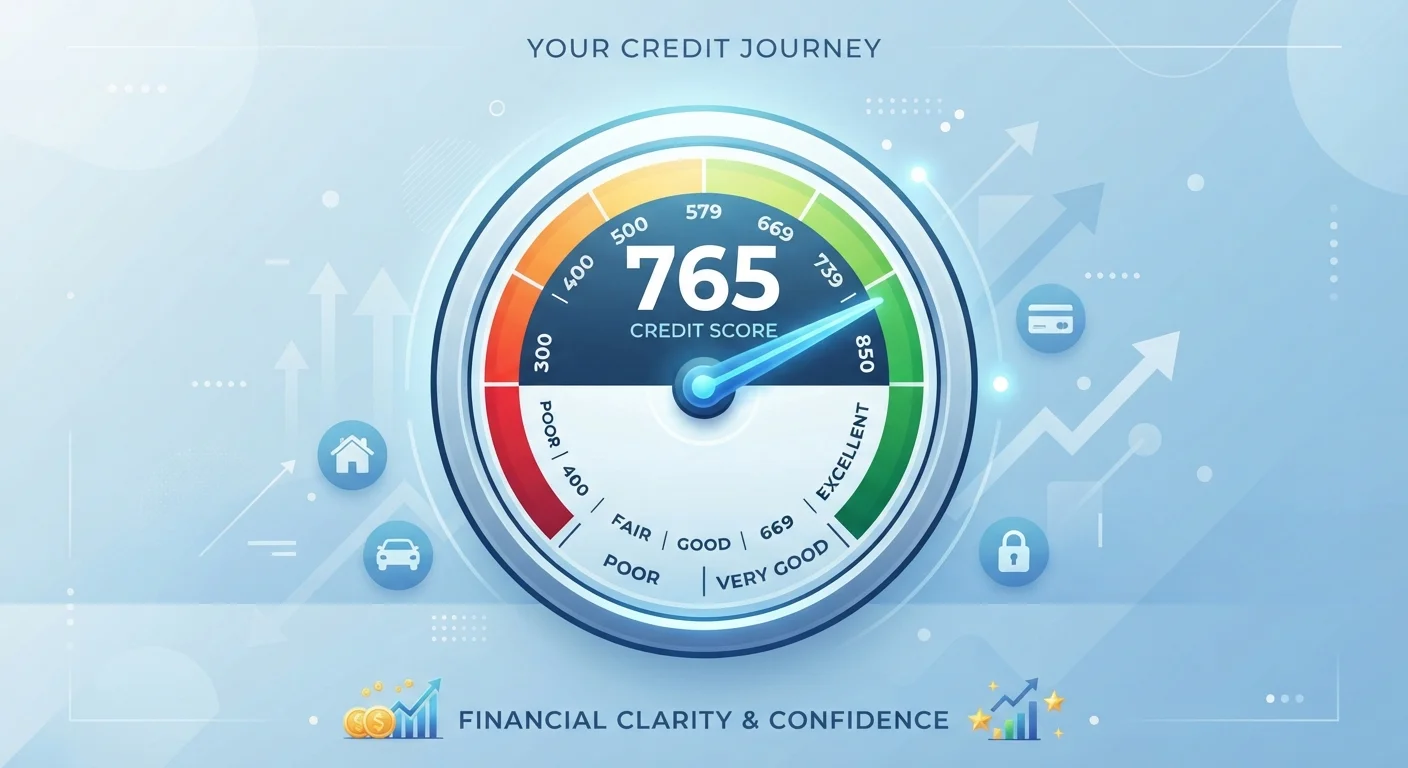
A credit score is a three-digit number - typically ranging from 300 to 850 - that summarizes how reliably you've managed borrowed money. Lenders, landlords, and even some employers use it to gauge financial trustworthiness. The higher the number, the lower the perceived risk you represent to a creditor.
The two most widely used scoring models are FICO® Score and VantageScore, both of which use the 300-850 range but weight factors somewhat differently in their algorithms.
The Score Range - What Each Band Means
Credit scores don't operate on a pass/fail basis. They fall into bands, and understanding where your number sits tells you a lot about how a lender is likely to view your application.
Under the FICO scoring model, the ranges generally break down as follows:
- 800-850 (Exceptional): Borrowers in this range typically qualify for the most favorable interest rates and terms available.
- 740-799 (Very Good): Lenders view this group as highly reliable; most credit products are accessible at competitive terms.
- 670-739 (Good): Near or above the national average. Most standard loan and credit products are accessible, though not always at the lowest rates.
- 580-669 (Fair): Some lenders will approve applications, but expect higher interest rates and fewer product options.
- 300-579 (Poor): Approval is difficult for mainstream credit; secured cards or credit-builder products may be the starting point.
VantageScore uses the same 300-850 scale but applies slightly different category labels and thresholds. The practical impact is similar: higher scores open more doors on better terms.
716
Average U.S. FICO Score
According to Experian's State of Credit report, the average American FICO Score has hovered around this level in recent years, placing the typical consumer in the 'good' range.
35%
Weight of Payment History in FICO Score
FICO's published scoring model assigns more weight to payment history than any other single factor, making on-time payments the highest-impact habit a borrower can maintain.
~200M
Americans with a Scoreable Credit File
The Consumer Financial Protection Bureau has estimated that roughly 200 million Americans have enough credit history to generate a mainstream credit score.
How Your Score Is Calculated
No single action determines your credit score - it's a composite of several factors, each weighted differently. Under the FICO model, the breakdown looks roughly like this:
- Payment History (~35%): Whether you pay on time is the dominant factor. Even one missed payment can meaningfully lower a score.
- Amounts Owed / Credit Utilization (~30%): This measures how much of your available revolving credit you're using. Keeping this ratio low - generally below 30% is cited as a common guideline - signals you're not overextended.
- Length of Credit History (~15%): Older accounts generally help. A longer track record gives lenders more data to evaluate.
- Credit Mix (~10%): Having a variety of account types - credit cards, installment loans, a mortgage - can positively influence your score, though this isn't something to pursue artificially.
- New Credit (~10%): Opening several new accounts in a short window can signal financial stress. Each hard inquiry from a new application can cause a small, temporary dip.
For a deeper look at the data behind your score, reading your full credit report is a logical next step.
Check Your Report Before Your Score
Your credit score is derived from data in your credit report. Errors in that report - a misreported late payment or an account that isn't yours - can drag your score down unfairly. Under federal law, you're entitled to free reports from each of the three major bureaus. Reviewing them for accuracy is a foundational step before trying to interpret or improve your score.
Why Credit Scores Matter Beyond Borrowing
Most people associate credit scores with loan applications - and that's the primary use. But the number follows you into more corners of financial life than many realize.
Rentals: Landlords routinely pull credit as part of a tenant screening. A low score can result in a rejected application or a requirement for a larger security deposit.
Auto and home insurance: In most states, insurers use a credit-based insurance score (a related but distinct calculation) when setting premiums. Research has consistently shown a correlation between credit behavior and claims activity, though the practice is regulated or restricted in some states.
Employment: Certain employers - particularly in finance or roles involving fiduciary responsibility - may request a credit check with your written consent. This is governed by federal and state law and uses a limited version of your report, not your actual score.
Utility deposits: Providers may require a deposit from customers with limited or poor credit histories before activating service.
Understanding why a score dip occurs is just as important as knowing your number. Common reasons scores fall are worth reviewing if you notice an unexpected change.
Building and Protecting Your Score Over Time
Credit improvement is a slow, reliable process - not a quick fix. The behaviors that consistently produce strong scores are straightforward, even if maintaining them takes discipline.
Pay on time, every time. Automating at least the minimum payment removes the risk of forgetting. Payment history is too influential to leave to chance.
Manage your utilization. If your balances are high relative to your credit limits, paying them down has a faster positive effect than almost any other single action.
Avoid unnecessary hard inquiries. Apply for new credit when you need it, not speculatively. Rate-shopping for mortgages or auto loans within a short window (typically 14-45 days depending on the model) is generally counted as a single inquiry.
Keep old accounts open when possible. Closing an older account can shorten your average credit age and reduce total available credit, both of which can negatively affect your score.
For a broader grounding in how credit and debt work together, the Managing Credit and Debt overview is a useful companion. And if you carry credit cards, understanding key terms in your card agreement helps you use them strategically rather than reactively.
This article is for general informational and educational purposes only and does not constitute personalized financial or legal advice. Consult a qualified financial professional for guidance specific to your situation.