

Key Takeaways
What Crate Training Actually Is - and Isn't
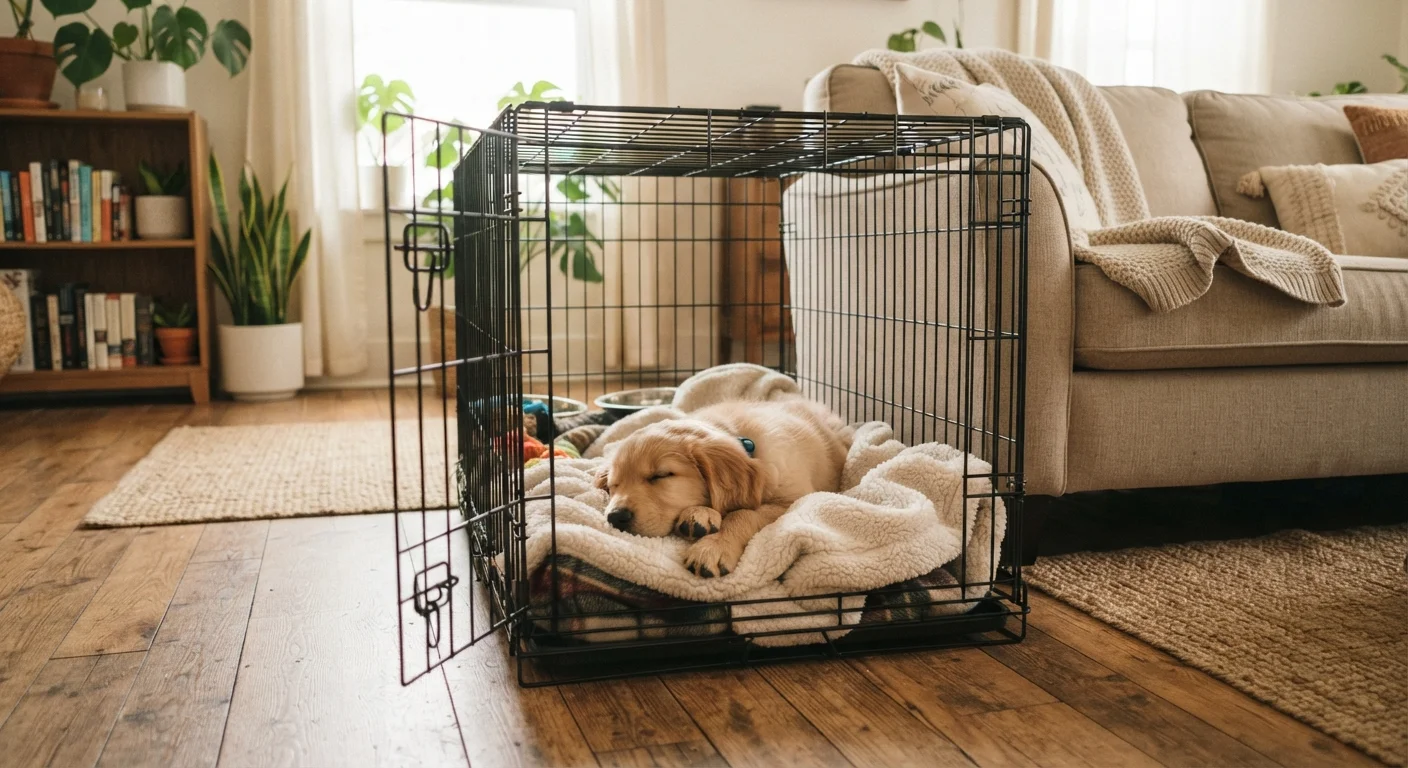
Crate training is the process of teaching a dog to see a crate as their own safe, comfortable space - a place they choose to rest, settle, and decompress. It draws on dogs' natural inclination, inherited from their wolf ancestors, to seek small, enclosed dens for security. A well-trained dog will often retreat to their crate voluntarily, even when the door is open.
What crate training is not is confinement used as punishment, a substitute for exercise and enrichment, or a solution for dogs left alone for excessive hours. The crate is a tool - its value depends entirely on how it's used. If you're also navigating a household with multiple animals, see our guide on keeping a multi-pet household running smoothly for strategies on managing shared space fairly.
Never Use the Crate as Punishment
Sending a dog to their crate as a consequence for bad behavior destroys the association you're trying to build. If your dog learns to fear or resent the crate, the entire training process stalls. The crate must always represent safety and calm - never frustration or correction.
Done correctly, crate training supports housetraining, prevents dangerous unsupervised behavior, and gives your dog a reliable anchor in their environment - especially during transitions like moving, travel, or the arrival of a new baby. It's one of the foundational skills covered in our complete first-time pet owner guide.
Before You Begin: What You'll Need
Success depends less on equipment and more on consistency, but choosing the right crate matters. A crate should allow your dog to stand fully upright, turn around comfortably, and stretch out on their side. Too large, and puppies may use one end as a bathroom. For growing puppies, look for crates with a divider panel that lets you adjust the interior size over time.
What you will need
Wire or plastic dog crate
Provides the enclosed space necessary for crate training; choose a size appropriate to your dog's adult dimensions.
Crate mat or soft bedding
Makes the crate interior comfortable and more inviting, encouraging voluntary entry.
High-value treats
Used to reward calm crate entry and reinforce positive associations throughout training.
Chew toy or food-stuffed puzzle toy
Keeps the dog constructively occupied when the crate door is closed, reducing restlessness.
Crate cover or blanket
Draping a cover over three sides of a wire crate can increase the den-like feel and help some dogs settle faster.
If your dog is brand new to your home, the health foundations primer for new pet owners is a useful companion read - building healthy routines early makes crate training considerably smoother.
Step-by-Step: How to Crate Train Your Dog
The steps below apply to both puppies and adult dogs, though adult dogs may move through the early stages faster. The core principle throughout is never rushing. Each step should feel easy and low-stakes for your dog before you advance. Setbacks are normal - return to the previous step without frustration and progress again gradually.
Set Up the Crate in a Social Area
Place the crate in a room where your family spends time - a living room or bedroom works well. Dogs are social animals, and isolation amplifies anxiety. Leave the crate door open and allow your dog to investigate it freely, with no pressure to enter. Drop treats near the entrance, then just inside, to spark curiosity.
Build a Positive Crate Association
Over several short sessions (five to ten minutes each), toss treats or a favorite toy inside and allow your dog to enter and exit freely. Use a consistent, upbeat cue word - 'crate,' 'place,' or whatever feels natural - every time your dog steps in. Never push or lure your dog in forcefully. The goal is for your dog to choose to enter.
Begin Feeding Meals Inside the Crate
Once your dog enters the crate willingly, start placing their food bowl just inside the doorway. Gradually move the bowl further in over several meals until your dog is fully entering to eat. Do not close the door yet. Meal times are high-value moments - use them strategically. See the tip below for more on this approach.
[tip_callout]Introduce the Closed Door - Briefly
Once your dog is eating calmly inside the crate with the door open, close it gently while they finish their meal - then open it immediately when they're done. Over the next several sessions, keep the door closed a few extra minutes after eating. If your dog whines, you've moved too fast; go back one step. Build duration in small increments.
Extend Time Gradually With You Present
With your dog comfortable eating in a closed crate, begin asking them to enter at non-meal times using your cue word, reward entry with a treat, then close the door for five to ten minutes while you remain in the room. Provide a food-stuffed chew toy to occupy them. Release calmly - no fanfare, which would signal that being outside the crate is dramatically better.
Practice With You Out of Sight
Once your dog is comfortable in a closed crate for fifteen to thirty minutes with you present, begin stepping out of the room briefly. Extend these absences slowly - five minutes, then fifteen, then thirty, working toward a few hours over the course of days. This teaches your dog that your absence is temporary and the crate remains safe regardless.
Establish an Overnight Crate Routine
For puppies especially, overnight crating helps with housetraining and prevents destructive behavior. Place the crate in or near your bedroom initially - proximity to you reduces anxiety. Puppies under four months typically need a bathroom trip overnight; factor this into your schedule. Gradually move the crate to its permanent location once your dog is settled.
Watch for Signs of Severe Distress
Some dogs experience genuine separation anxiety that goes beyond normal adjustment discomfort. If your dog is injuring themselves trying to escape, drooling excessively, or showing signs of extreme panic consistently after two weeks of gradual training, consult a veterinarian or certified animal behaviorist before continuing.
How Long Is Too Long? Time Limits That Matter
A common mistake is using the crate as a management tool for hours beyond what's appropriate for the dog's age and needs. As a general guideline, most adult dogs should not be crated for more than four hours at a stretch during the day. Puppies have even lower thresholds - a rough rule of thumb is that puppies can hold their bladder approximately one hour per month of age, up to a point.
Dogs left in crates for excessive periods often develop anxiety, frustration, or physical discomfort that can undermine all your training progress. If your schedule requires long absences, consider a dog walker, doggy daycare, or a safe, dog-proofed room as an alternative to extended crating. Proper nutrition and feeding schedules also play into how long a dog can comfortably wait - our article on pet nutrition and meal frequency explores how feeding timing affects energy, digestion, and daily routines.
The goal is always a dog who wants to be in their crate - not one who simply has no other option. Reaching that point takes time, repetition, and a genuine commitment to making the crate a rewarding place to be.