

Key Takeaways
Our Verdict
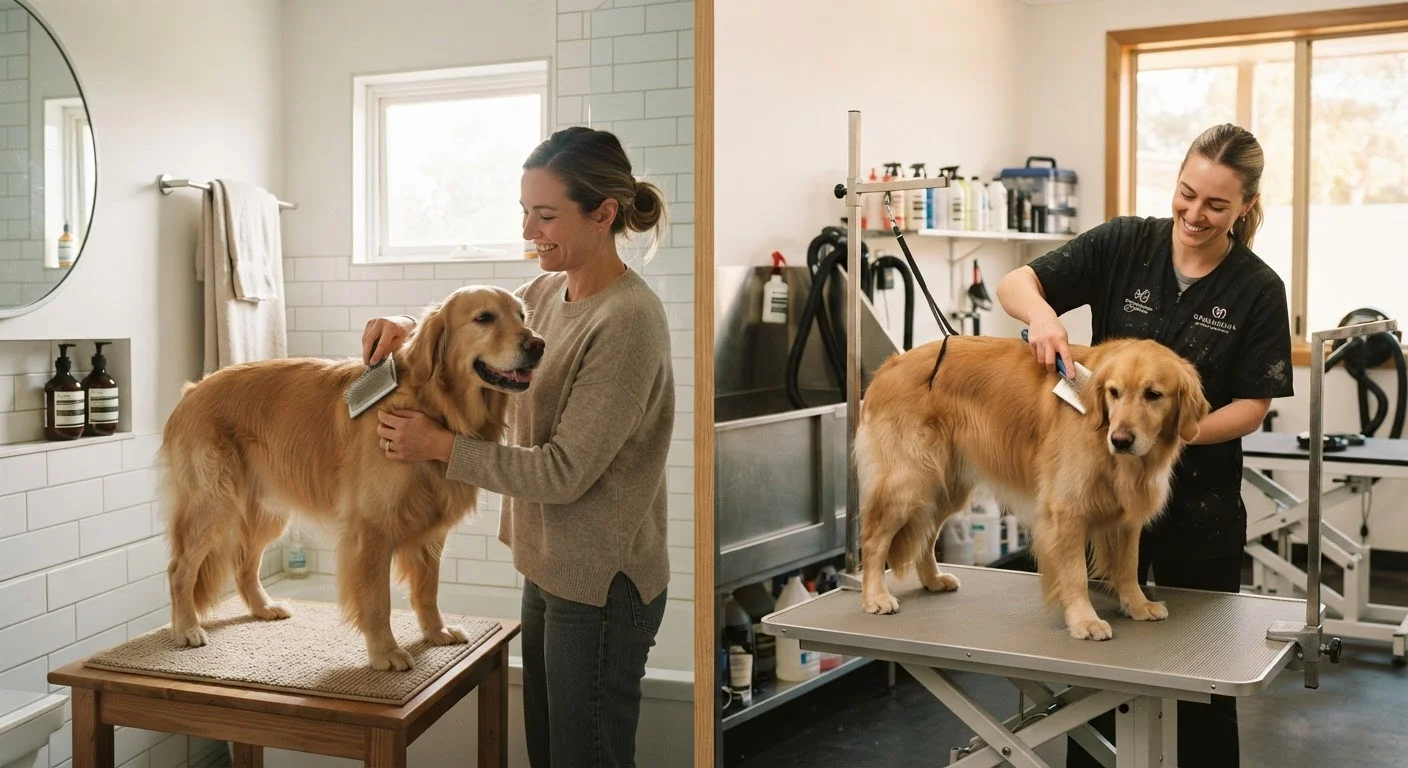
Neither home grooming nor professional grooming is universally better-what matters is matching the approach to your pet's specific coat, health needs, and temperament. Most pet owners benefit from a hybrid routine: daily or weekly maintenance at home, supplemented by professional appointments when more complex work is needed. Grooming is an essential part of your pet's health care, and the right mix keeps it manageable for both of you.
| Best for | Recommended |
|---|---|
| Pets with short, low-maintenance coats and calm temperaments | Home Grooming |
| Dogs with long, curly, or double coats prone to matting | Professional Grooming |
| Budget-conscious owners willing to invest time in learning technique | Home Grooming |
| Anxious pets that need desensitization or experienced handling | Professional Grooming |
Why Grooming Matters More Than Most Owners Realize
Grooming is often treated as optional upkeep, but it is actually a core component of pet health. Regular brushing distributes natural oils across the coat, prevents painful matting, and gives you regular opportunities to notice lumps, skin irritation, parasites, or unusual odors. Nail trims prevent joint strain and posture problems. Ear cleaning reduces infection risk. These aren't cosmetic concerns-they have real medical consequences when neglected.
For new pet owners especially, understanding that grooming belongs in the same conversation as nutrition and vet visits is an important shift. If you're still building out your pet's health foundations, see our health foundations primer for new pet owners for a broader starting point. Grooming expenses are also one of the costs that surprises first-time owners-our article on hidden costs of pet ownership covers the full financial picture.
~67%
U.S. households owning a pet
According to the American Pet Products Association's National Pet Owners Survey, roughly two-thirds of American households include at least one pet, making routine grooming decisions relevant to millions of families.
4-8 weeks
Recommended professional grooming interval for high-maintenance breeds
Veterinary grooming guidelines generally suggest that continuously growing or dense coats-such as Poodles or Shih Tzus-require professional attention every four to eight weeks to prevent matting and skin issues.
What Home Grooming Actually Involves
Home grooming covers everything from daily brushing and spot cleaning to bathing, nail trimming, and ear maintenance. For short-coated dogs and most cats, this is quite manageable with basic tools: a slicker brush or rubber curry comb, nail clippers sized for your pet, and a gentle pet-safe shampoo.
The main advantages are convenience, cost savings over time, and the bonding opportunity it creates. Pets that are groomed regularly from puppyhood or kittenhood often become comfortable with handling, which also makes veterinary exams easier. The limitations are real, though. Improper nail trimming can cause bleeding or pain if you cut into the quick. Bathing a dog with a thick double coat without fully drying it can lead to hot spots-areas of moist, irritated skin. And if your pet is already anxious about being handled, working through that at home requires patience and a structured desensitization approach.
Start Handling Habits Early
Puppies and kittens that are regularly touched on their paws, ears, and mouth grow into adults that tolerate grooming far more calmly. Even a few minutes of gentle handling each day during the first months of life can meaningfully reduce grooming stress later. If your pet is older and already anxious, go slowly and pair each grooming step with a positive reward. Gradual progress is still progress.
Home grooming works best as a consistent routine rather than an occasional event. Short, frequent sessions are less stressful for pets than infrequent marathon grooming appointments-whether at home or elsewhere.
What Professional Grooming Offers
Professional groomers bring specialized training, purpose-built equipment, and experience handling a wide range of breeds and temperaments. High-velocity dryers, hydraulic tables, and professional-grade clippers make tasks like dematting or breed-specific haircuts far more practical than they would be at home. Many groomers are also trained to recognize skin conditions, ear infections, and coat irregularities that owners might miss.
For breeds like Poodles, Shih Tzus, Bichon Frises, and Portuguese Water Dogs-whose coats grow continuously and mat easily-professional grooming every four to eight weeks is typically necessary to maintain coat health, not just appearance. The tradeoff is cost and logistics. Regular professional grooming can add up significantly over a pet's lifetime, and quality, availability, and safety standards vary widely between salons. Always ask about the grooming process, how dogs are secured, and whether a groomer is present with your pet at all times.
| Home Grooming | Professional Grooming | |
|---|---|---|
| Upfront cost | Moderate (tools and supplies) | Low per session initially |
| Ongoing cost | Low after initial setup | Recurring every 4-8 weeks |
| Skill required | Learnable; technique matters | Handled by trained professional |
| Best coat types | Short, smooth, low-maintenance | Long, curly, double, or dense coats |
| Bonding opportunity | High - builds trust over time | Limited to drop-off/pick-up |
| Health observation | Owner learns pet's normal baseline | Groomer may flag coat/skin issues |
| Handling anxious pets | Requires patience and consistency | Experienced handling available |
How to Decide What's Right for Your Pet
The decision isn't really either/or. Most experienced pet owners settle into a hybrid routine: maintaining basics at home and scheduling professional appointments for tasks that genuinely require specialized skill. Here's how to think through it:
- Coat type: Short, smooth coats (Beagles, Boxers, most domestic shorthair cats) require much less professional intervention than long, curly, or double coats. Know what your specific breed needs.
- Temperament: An anxious or reactive pet may actually do better with a professional who has handling experience-or may need gradual desensitization before either approach works well. Consult your vet if anxiety is significant.
- Your skill level: Nail trimming and ear cleaning have a learning curve. If you're uncertain, have a groomer or vet tech show you technique in person before going solo.
- Budget: Professional grooming is a recurring cost. Factor it into your annual pet budget honestly. Our overview of unexpected pet expenses can help you plan.
If you have multiple pets with different coat types and needs, the calculation gets more complex. See our guide on running a multi-pet household smoothly for broader routines that work across species.
This article is for general informational purposes only and does not constitute veterinary advice. Consult a licensed veterinarian for guidance specific to your pet's health and grooming needs.