

Pets & Animals

How to Build a Pet Emergency Kit

Share
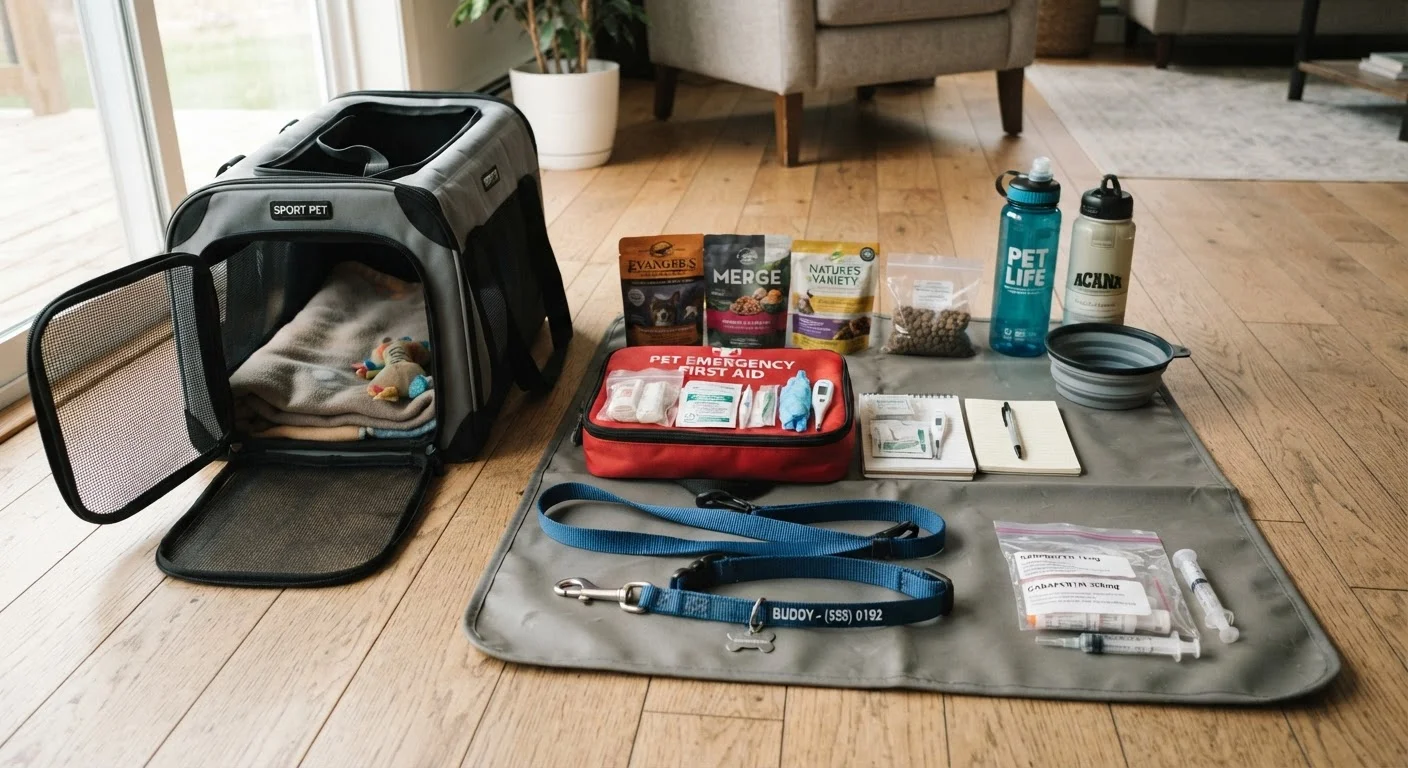
A complete pet emergency kit with supplies organized on a floor next to a pet carrier

Key Takeaways

A dedicated pet emergency kit should be assembled before a crisis, not during one.
Food, water, medications, and ID documents are the four non-negotiable pillars of any pet kit.
Kits must be tailored to your specific pet's species, size, age, and health conditions.
Review and refresh your kit every six months to replace expired items and update records.
Multi-pet households need supplies sized and labeled for each individual animal.
30–60 min

Summary

22 items · 30–60 minutes to assemble

Why Every Pet Owner Needs an Emergency Kit

Floods, wildfires, power outages, and sudden accidents rarely announce themselves. When they happen, the difference between a chaotic scramble and a calm response often comes down to one thing: preparation. A dedicated pet emergency kit means you can evacuate quickly, manage a health crisis at home, or shelter in place without improvising under pressure.

This checklist applies to dogs and cats but can be adapted for small mammals, birds, and reptiles. If you share your home with multiple animals, see our guide on keeping a multi-pet household running smoothly — the same organizational mindset applies to emergency prep. For broader health foundations, the Pet Health hub is a useful companion resource.

Food and Water

Pack at least three to seven days of your pet's regular food in an airtight, waterproof container. Must
Store one gallon of fresh water per pet per day for a minimum of three days. Must
Include your pet's regular food and water bowls, or collapsible travel versions. Must
Add a manual can opener if any of the stored food comes in cans. Must
Include a small supply of high-value treats to help calm or reward a stressed animal. Nice to have

Medications and Health Supplies

Pack a minimum seven-day supply of any prescription medications your pet takes regularly, in original labeled containers. Must
Include a basic pet first aid kit with gauze, non-stick bandages, antiseptic wipes, and blunt-tipped scissors. Must
Add a digital rectal thermometer and petroleum jelly — a normal temperature for dogs and cats is roughly 100–102.5°F. Should
Include any medicated shampoos, ear drops, or topical treatments your pet uses on a regular schedule. Should
Add your veterinarian's phone number and the nearest 24-hour emergency animal hospital's contact information. Must

Identification and Documents

Place a waterproof copy of your pet's vaccination records, especially rabies, in the kit. Must
Include a recent photograph of you with your pet to help prove ownership if you become separated. Must
Store copies of any microchip registration, license, and medical history documents in a sealed plastic bag. Must
Write down your pet's physical description, distinguishing markings, and current weight on an index card. Should

Containment and Comfort

Keep a secure, properly sized carrier or crate ready — many shelters and hotels require pets to be crated. Must
Pack a spare collar with an up-to-date ID tag, plus a sturdy leash or harness. Must
Include a familiar blanket or small toy to reduce stress during displacement. Should
Add a waste management kit — bags, litter and a disposable tray for cats, or portable cleanup supplies. Must
Include a muzzle sized for your pet — even gentle animals may bite when frightened or in pain. Should
Add a reflective or light-up collar or clip-on light for visibility during nighttime evacuations. Nice to have
Pack a self-warming or insulating blanket if you live in a region prone to cold-weather emergencies. Nice to have
Include written feeding, medication, and behavior notes in case someone else must care for your pet temporarily. Should

What to Do After You've Built Your Kit

Assembling the kit is only step one. Store it in a waterproof container near an exit, and make sure every adult in your household knows where it is and how to use it. Schedule a recurring six-month calendar reminder to check expiration dates on food, water, and medications, and to update ID documents if your pet's information has changed.

Never Rely on Stockpiled Human Medications

Many over-the-counter medications safe for humans — including common pain relievers and antihistamines — are toxic to dogs and cats. Do not add human medications to your pet's emergency kit unless a licensed veterinarian has explicitly approved them for your specific animal at a specified dose. When in doubt, call your vet before an emergency arises.

Check Expiration Dates Every Six Months

Food, water, and medications all have limited shelf lives. An emergency kit assembled and then forgotten can give a false sense of security. Set a biannual reminder to rotate out expired stock and verify that any prescription medications are still current and correctly dosed for your pet's current weight and health status.

Knowing your kit's contents also means knowing your pet's baseline health — so you can recognize when something is wrong. If you notice sudden changes in behavior, breathing, or appetite, consult your veterinarian promptly. Our article on symptoms in pets that always warrant a same-day vet call outlines warning signs that should never be ignored.

This article provides general preparedness information for educational purposes only. It is not a substitute for professional veterinary advice. Always consult a licensed veterinarian for guidance specific to your pet's health and needs.

Required

Waterproof Storage Container or Bag

Keeps all kit contents dry and protected during floods, rain, or rapid evacuation.

Required

Pet First Aid Manual

Provides step-by-step guidance for common injuries and emergencies before veterinary care is available.

Optional

Collapsible Travel Bowls

Lightweight and compact, these allow feeding and hydration anywhere without adding bulk to the kit.

Required

Digital Rectal Thermometer

Allows you to check your pet's temperature accurately to detect fever or hypothermia.

Optional

USB-Charged Clip-On Pet Light

Clips to a collar to keep your pet visible during nighttime evacuations or power outages.

Pets & Animals Editorial Team is the collective byline for our editorial team and contributor network. Articles published under this byline or an editorial pen name are researched, written, and reviewed according to our editorial standards for clarity, consistency, and independence before publication.

View all articles by Pets & Animals Editorial Team →
Disclaimer: The content on this site is for informational purposes only and is not a substitute for professional advice. Always consult a qualified professional for guidance specific to your situation.