

Key Takeaways
High palatability for many dogs
Many dogs find raw meat highly palatable, which can benefit animals with poor appetites. However, palatability alone does not indicate nutritional adequacy.
Minimal processing and whole ingredients
Raw diets avoid the high-heat processing of kibble, which some owners prefer from a whole-food standpoint. Whether this translates to measurable health benefits in dogs has not been consistently demonstrated in controlled research.
Potential digestibility advantages
Some small studies suggest certain raw proteins may be more digestible than processed equivalents for some dogs, though results are inconsistent and study populations are typically small.
Owner engagement in pet nutrition
Raw feeding often motivates owners to research ingredients carefully. This heightened attention to diet, when guided by professional input, can lead to genuinely better nutritional decisions.
High pathogen contamination risk
Multiple studies have found Salmonella, Listeria, and E. coli in commercially prepared raw pet foods. These pathogens can infect both dogs and humans in the household.
Frequent nutritional imbalances in homemade recipes
Research shows the majority of home-formulated raw diets are deficient in at least one essential nutrient. Calcium-phosphorus imbalances and vitamin D deficiency are particularly common and can cause serious health problems over time.
Limited clinical evidence for claimed benefits
Most evidence supporting raw diets is anecdotal. The peer-reviewed literature does not yet provide robust, replicated clinical evidence for the frequently cited benefits of shinier coats, better digestion, or improved dental health.
Raw bones carry injury risk
Whole bones, while providing dental benefits in some cases, also pose a real risk of tooth fractures, esophageal obstruction, and gastrointestinal perforation-all of which can require emergency veterinary treatment.
Higher cost and time demands
Properly sourcing, preparing, and storing a raw diet is significantly more time-intensive and often more expensive than feeding a commercially formulated diet. Shortcuts in sourcing or handling increase both nutritional and safety risks.
Heightened risk for vulnerable populations
Puppies, senior dogs, pregnant dogs, and immunocompromised animals face both greater sensitivity to nutritional imbalances and greater susceptibility to foodborne illness on a raw diet.
Our Verdict
Raw diets generate genuine enthusiasm among many dog owners, and some animals may thrive on carefully formulated versions. However, the evidence for most claimed benefits remains limited, while the risks-particularly pathogen exposure and nutritional imbalance-are well-documented. A dog's individual health status, household circumstances, and the quality of dietary formulation all matter enormously.
Best suited to healthy adult dogs whose owners can commit to rigorous food-safety practices and work with a veterinary nutritionist to ensure complete, balanced formulation.
What Is a Raw Diet for Dogs?
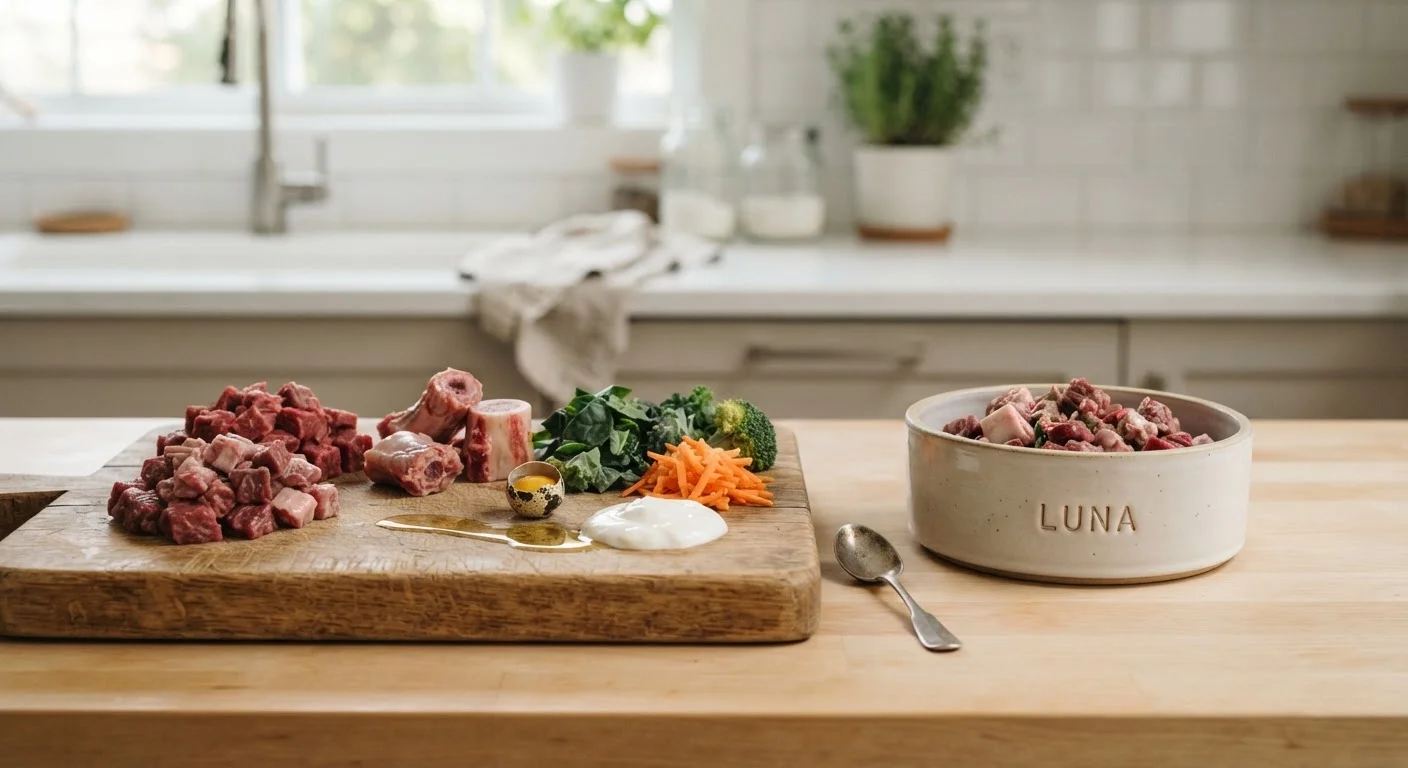
A raw diet for dogs-sometimes called a BARF diet (Biologically Appropriate Raw Food) or prey-model feeding-typically includes uncooked muscle meat, raw meaty bones, organ meat, and sometimes raw eggs, dairy, fruits, and vegetables. The approach rejects conventional heat-processed kibble in favor of ingredients that resemble what proponents describe as an ancestral canine diet.
Raw feeding has grown significantly in popularity, and commercial raw options are now widely available alongside homemade versions. Understanding the claims made for these diets-and what peer-reviewed science actually supports-is essential for making an informed choice. For a broader grounding in how dogs process nutrients generally, see our complete guide to pet nutrition.
What Proponents Claim
Advocates of raw feeding cite a range of potential benefits, from improved coat condition and dental health to better digestion and higher energy levels. These claims are widely repeated in online communities and by some pet retailers.
High palatability for many dogs
Many dogs find raw meat highly palatable, which can benefit animals with poor appetites. However, palatability alone does not indicate nutritional adequacy.
Minimal processing and whole ingredients
Raw diets avoid the high-heat processing of kibble, which some owners prefer from a whole-food standpoint. Whether this translates to measurable health benefits in dogs has not been consistently demonstrated in controlled research.
Potential digestibility advantages
Some small studies suggest certain raw proteins may be more digestible than processed equivalents for some dogs, though results are inconsistent and study populations are typically small.
Owner engagement in pet nutrition
Raw feeding often motivates owners to research ingredients carefully. This heightened attention to diet, when guided by professional input, can lead to genuinely better nutritional decisions.
It's worth noting that many of these reported improvements are based on owner observation rather than controlled studies. Anecdotal evidence can reflect genuine change-but it can also reflect placebo effect, dietary transition effects, or coincidental improvements unrelated to the raw component itself.
The Risks the Evidence Highlights
While enthusiasm for raw feeding is understandable, peer-reviewed research and veterinary organizations-including the American Veterinary Medical Association (AVMA) and the World Small Animal Veterinary Association (WSAVA)-have raised consistent concerns about safety and nutritional adequacy.
High pathogen contamination risk
Multiple studies have found Salmonella, Listeria, and E. coli in commercially prepared raw pet foods. These pathogens can infect both dogs and humans in the household.
Frequent nutritional imbalances in homemade recipes
Research shows the majority of home-formulated raw diets are deficient in at least one essential nutrient. Calcium-phosphorus imbalances and vitamin D deficiency are particularly common and can cause serious health problems over time.
Limited clinical evidence for claimed benefits
Most evidence supporting raw diets is anecdotal. The peer-reviewed literature does not yet provide robust, replicated clinical evidence for the frequently cited benefits of shinier coats, better digestion, or improved dental health.
Raw bones carry injury risk
Whole bones, while providing dental benefits in some cases, also pose a real risk of tooth fractures, esophageal obstruction, and gastrointestinal perforation-all of which can require emergency veterinary treatment.
Higher cost and time demands
Properly sourcing, preparing, and storing a raw diet is significantly more time-intensive and often more expensive than feeding a commercially formulated diet. Shortcuts in sourcing or handling increase both nutritional and safety risks.
Heightened risk for vulnerable populations
Puppies, senior dogs, pregnant dogs, and immunocompromised animals face both greater sensitivity to nutritional imbalances and greater susceptibility to foodborne illness on a raw diet.
What 'Complete and Balanced' Actually Means
In the U.S., a commercially produced dog food labeled 'complete and balanced' must meet nutrient profiles established by the Association of American Feed Control Officials (AAFCO). Many raw diets-particularly homemade versions-do not undergo this verification. If you choose a commercial raw product, look for one that carries an AAFCO nutritional adequacy statement rather than assuming the label implies balanced formulation.
Nutritional shortfalls are particularly common in homemade raw diets. Multiple studies examining home-prepared raw recipes found a majority were deficient in at least one essential nutrient, with calcium-to-phosphorus imbalances and inadequate vitamin D being frequently documented issues. Dogs on unbalanced diets over time can develop skeletal problems, organ dysfunction, or other serious conditions.
The Food Safety Concern Is Not Theoretical
Pathogen contamination in raw meat is among the most evidence-backed concerns. Studies have detected Salmonella, Listeria monocytogenes, and E. coli in commercially produced raw pet foods at rates that are substantially higher than in processed alternatives. Critically, the risk isn't limited to the dog: shedding of these bacteria in feces creates exposure pathways for people in the household, particularly children, older adults, and anyone who is immunocompromised.
~74%
Raw pet foods testing positive for pathogens
A study published in Preventive Veterinary Medicine found approximately 74% of raw dog food samples tested positive for Enterobacteriaceae, with Salmonella detected in a significant subset.
~60%
Home raw recipes with at least one nutritional deficiency
Research published in the Journal of Nutritional Science found that the majority of home-prepared raw dog food recipes examined did not meet established nutritional guidelines for at least one essential nutrient.
Dogs themselves may carry these pathogens asymptomatically, acting as a reservoir even when they appear healthy. This is why the AVMA discourages feeding raw or undercooked animal-source proteins to pets. The concern is public health, not just pet health.
Who Faces the Highest Risk?
Not all dogs are equally positioned to tolerate a raw diet. Puppies, senior dogs, and animals undergoing chemotherapy or managing chronic illness face elevated risks from both nutritional imbalance and pathogen exposure. Puppies in particular have high, precise demands for calcium, phosphorus, and other minerals; errors in formulation during growth phases can cause lasting skeletal damage.
Life stage matters enormously in nutrition decisions-our article on nutritional needs across a dog's life stages explains exactly why puppies and seniors require different dietary approaches than healthy adults.
If You're Considering a Raw Diet: A Grounded Approach
If you're drawn to raw feeding, the most important step is a conversation with your veterinarian-ideally one with nutrition training or a referral to a board-certified veterinary nutritionist (DACVN). A nutritionist can design or evaluate a recipe that meets established nutrient profiles rather than relying on untested formulations shared online.
Food-safety discipline is non-negotiable: dedicated preparation surfaces, thorough handwashing, proper freezing and thawing protocols, and careful waste handling all reduce (though cannot eliminate) pathogen risk. Feeding any unconventional diet is a commitment to ongoing monitoring, regular veterinary checkups, and a willingness to adjust if health markers change. The same critical thinking that helps evaluate human nutrition myths-explored in our piece on persistent nutrition myths-applies equally here: enthusiasm for a dietary idea is not the same as evidence for it.
This article is for general informational and educational purposes only and does not constitute veterinary or medical advice. Always consult a licensed veterinarian or board-certified veterinary nutritionist before making significant changes to your dog's diet.