

Key Takeaways
Option A
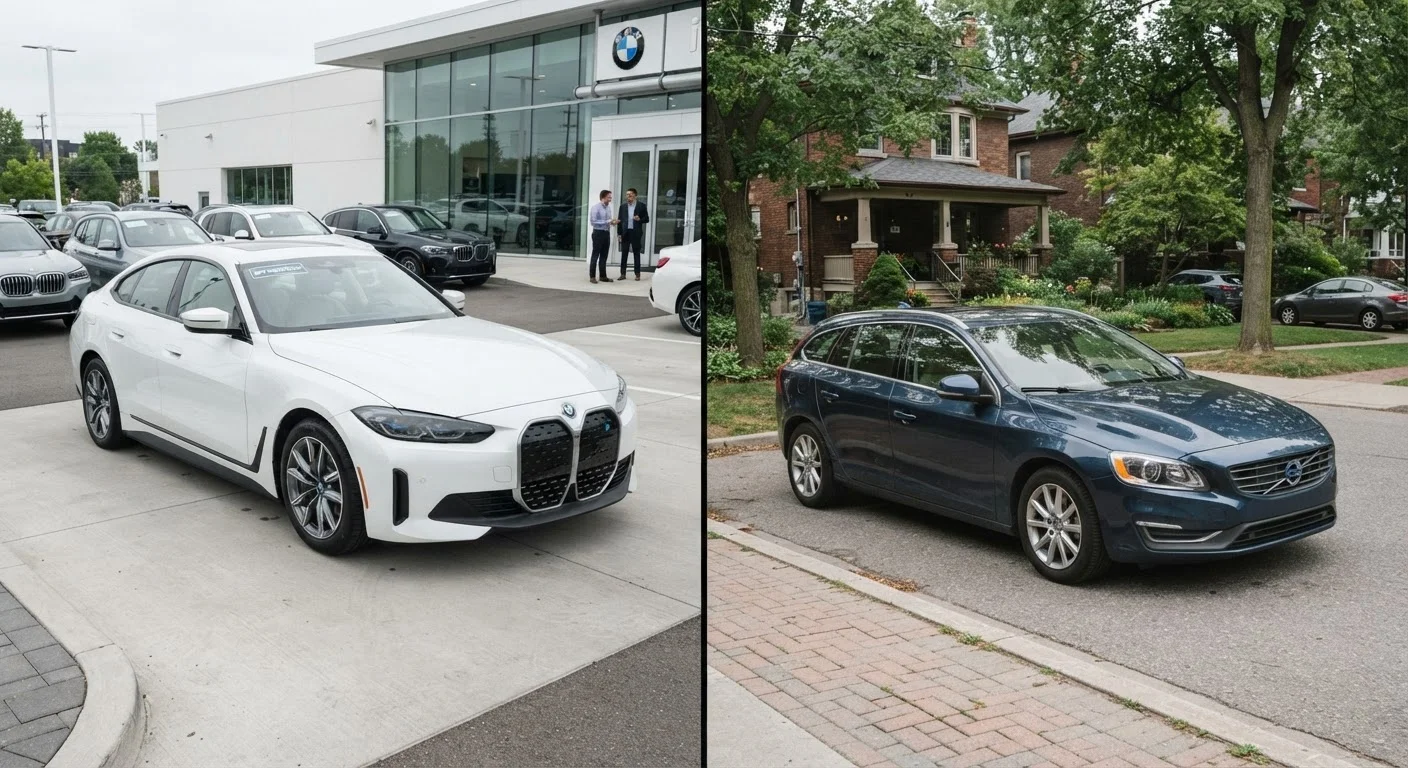
New Car
The fully warranted, technology-current option with predictable early ownership.
Best for: Buyers who prioritize warranty coverage, modern safety features, and financing flexibility and can absorb higher monthly payments.
Option B
Used Car
The lower-entry-cost alternative with faster equity building and slower depreciation.
Best for: Budget-conscious buyers willing to research vehicle history and accept some uncertainty about prior use in exchange for a lower purchase price.
If you want maximum peace of mind and predictable repair costs
New Car
A factory warranty - typically 3 years/36,000 miles bumper-to-bumper and 5 years/60,000 miles powertrain - eliminates most major repair expenses in the early ownership years.
If minimizing total purchase cost is your top priority
Used Car
A used vehicle lets someone else absorb the steepest depreciation curve, meaning you pay closer to real market value from day one.
If you plan to keep the vehicle for ten or more years
New Car
Starting with zero miles and full service history gives you the most reliable long-term foundation, and the depreciation disadvantage diminishes over a longer ownership horizon.
If you drive moderate miles and want to build equity quickly
Used Car
Lower loan principal on a used vehicle means you reach positive equity sooner, reducing financial risk if your situation changes.
If you need the latest driver-assistance and safety technology
New Car
Advanced driver-assistance systems (ADAS), updated infotainment, and current crash-test standards are most reliably found in current-model-year vehicles.
The Depreciation Reality: Where Most of the Money Goes
Depreciation is the single largest cost most car owners never see itemized on a bill. A new vehicle can lose roughly 15-25% of its value in the first year alone, according to widely cited industry data, with the steepest drop occurring the moment it leaves the lot. By the end of year three, total depreciation commonly reaches 40-50% of the original purchase price.
Used cars have already absorbed that initial hit. A three-year-old vehicle priced at 55% of its original MSRP means a buyer effectively pays for the car's remaining useful life - not for the new-car premium. This is why a used car's lower sticker price often represents genuine value, not just a bargain.
That said, depreciation eventually levels off, so very old vehicles depreciate slowly but may accumulate repair costs at a rate that offsets the lower purchase price. The sweet spot many financial analysts describe is a certified pre-owned (CPO) vehicle - typically one to four years old - where dramatic first-year depreciation has passed but the vehicle still has significant useful life ahead. For a broader look at what ownership actually costs year over year, see the true cost of owning a car beyond the sticker price.
| Criterion | New Car | Used Car |
|---|---|---|
| Purchase Price | Higher; full retail MSRP | Lower; post-depreciation market value |
| Depreciation Exposure | Steepest in years 1-3 | Prior owner absorbed first drop |
| Loan Interest Rate | Often lower; manufacturer incentives available | Typically higher by 1-3+ percentage points |
| Factory Warranty | Full coverage from day one | Varies; may be expired or partial |
| Reliability Certainty | High; no prior use history | Variable; depends on prior owner and maintenance |
| Insurance Premiums | Generally higher; higher replacement value | Generally lower on older vehicles |
| Technology & Safety Features | Current-model-year standards | Reflects the model year purchased |
| Equity Build Speed | Slower; depreciation front-loaded | Faster; lower principal, slower depreciation |
Financing, Interest Rates, and the Real Monthly Payment
Financing terms differ meaningfully between new and used purchases. Manufacturers frequently subsidize new-car loans through their captive finance arms, offering promotional rates - sometimes as low as 0% APR for qualified buyers - that are unavailable on used vehicles. Used-car loan rates from banks and credit unions have historically run one to several percentage points higher than equivalent new-car rates, though the exact spread varies with credit conditions and the borrower's credit profile.
However, a lower interest rate on a higher loan balance does not automatically mean a cheaper loan. A $40,000 new car at 4% APR financed over 60 months produces a higher total interest expense than a $22,000 used car at 6% APR on the same term. Running both scenarios with a loan calculator - factoring in down payment, term, and rate - is essential before drawing conclusions. Your credit score plays a significant role in what rate you'll qualify for. For context on how credit health affects financing options, the Debt & Credit hub covers the fundamentals.
~20%
Average new-car value lost in year one
Industry analysts commonly cite first-year depreciation in the 15-25% range depending on make, model, and market conditions.
1-3%+
Typical used-car loan rate premium over new
Used-car auto loan rates have historically been higher than new-car rates; the exact spread varies by lender, credit score, and prevailing rate environment.
3/36 & 5/60
Common new-car factory warranty benchmarks
Many U.S. automakers offer 3-year/36,000-mile bumper-to-bumper and 5-year/60,000-mile powertrain coverage, though terms differ by brand.
Warranties, Reliability Risk, and the Inspection Imperative
A new car's factory warranty is a genuine financial buffer. Standard coverage in the U.S. market typically includes a 3-year/36,000-mile bumper-to-bumper warranty and a 5-year/60,000-mile powertrain warranty, though terms vary by manufacturer. During this window, most mechanical failures are covered at no cost to the owner beyond the deductible, if any.
Used vehicles present more variability. A one-year-old CPO vehicle may still carry most of its original factory coverage. A seven-year-old private-sale vehicle may have none. In the latter case, any major repair - transmission failure, engine work - falls entirely on the new owner. This is why a pre-purchase inspection by an independent, qualified mechanic is not optional; it is standard practice for anyone buying a used car privately or even from a dealer.
Vehicle history reports - which document accident records, ownership changes, odometer readings, and service entries - are a critical due-diligence tool. Understanding how to interpret one is covered in detail at how to read a vehicle history report. If you are weighing whether to purchase an aftermarket service contract for a used car, extended warranties and vehicle service contracts provides a balanced analysis of when those products may - or may not - add value.
Certified Pre-Owned: A Middle Ground Worth Considering
Certified pre-owned (CPO) programs, offered by most major manufacturers, put used vehicles through a multi-point inspection and extend a manufacturer-backed warranty on top of any remaining factory coverage. CPO vehicles are typically one to five years old and carry mileage caps. They generally cost more than non-certified used cars of the same age, but the added warranty and inspection documentation reduce some of the reliability uncertainty associated with private-sale used vehicles. Terms and eligibility vary significantly by brand, so reviewing the specific CPO program details before purchase is advisable.
Insurance Costs and What Lenders Require
Insurance premiums generally run higher on new vehicles for two reasons: higher replacement value and lender requirements. When a car is financed, the lender typically requires both comprehensive and collision coverage - regardless of whether the owner would otherwise choose to carry it. On an older vehicle with a low market value, some owners choose to drop collision coverage once the loan is paid off, reducing premiums. That option is unavailable on a financed new car.
Gap insurance - which covers the difference between what you owe on a loan and what the car is worth if it is totaled - is particularly relevant for new-car buyers, since the depreciation curve means a car can be worth less than its loan balance for the first several years of ownership. Gap coverage is often an add-on through the insurer or the dealer and is worth evaluating carefully.
For more detail on what to expect when buying - including financing markups and warranty fine print that dealers don't always volunteer - see what dealers don't always spell out during the car-buying process. And if you're still deciding between buying and leasing altogether, buying vs. leasing a car covers how usage patterns affect that decision.
This article provides general educational information about vehicle purchasing decisions and is not personalized financial or legal advice. Costs, rates, and warranty terms vary by manufacturer, lender, insurer, and individual circumstances. Consult a licensed financial adviser or insurance professional for guidance specific to your situation.