

| Average Adult Resting Heart Rate | 60-100 bpm (American Heart Association) |
| Common MHR Estimate Formula | 220 minus your age (Widely used population average; individual results vary) |
| Zone 2 Heart Rate Range | 60-70% of MHR |
| Number of Standard Heart Rate Zones | 5 zones (Exercise physiology convention; some protocols use 3 or 6) |
| Well-Trained Athlete Resting HR | Often below 60 bpm (American Heart Association) |
The Basics: What Heart Rate Actually Measures
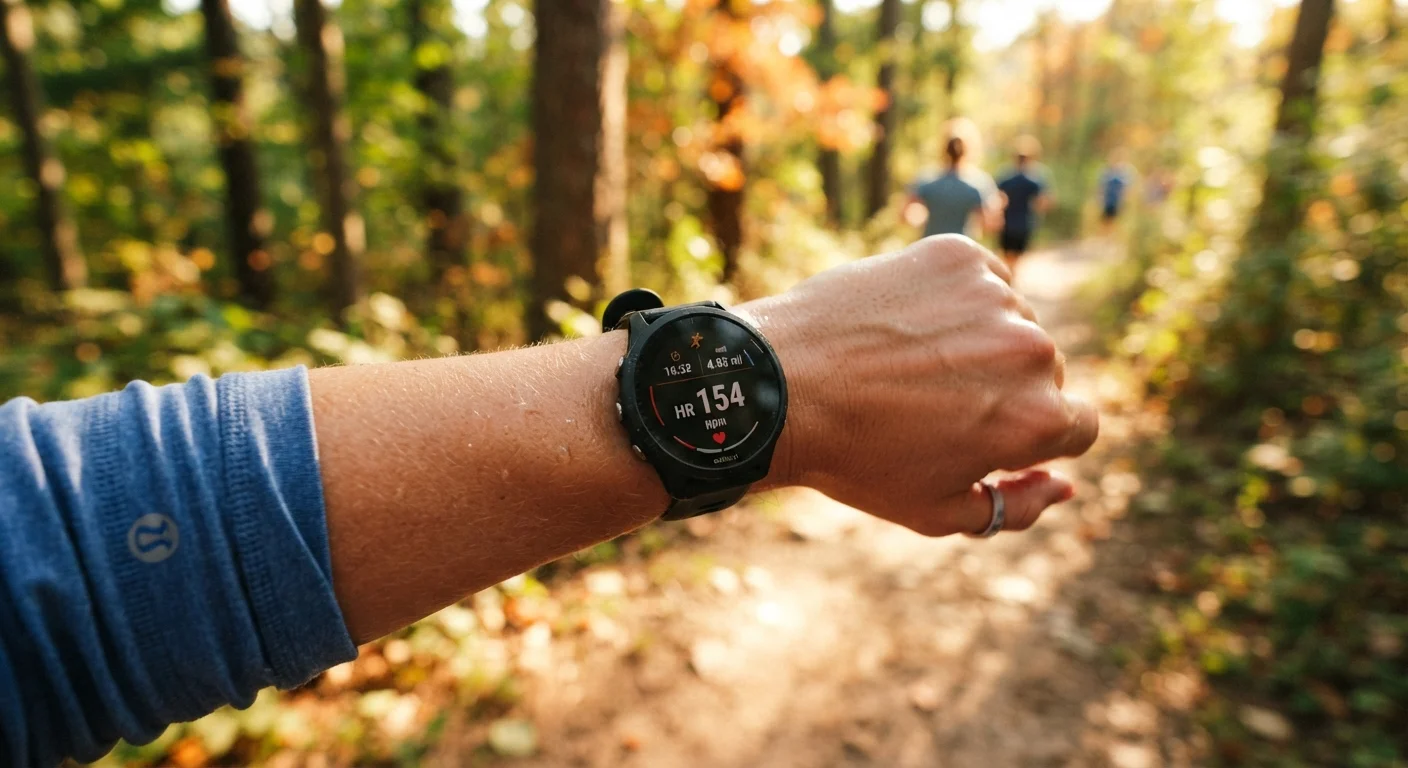
Your heart rate - measured in beats per minute (bpm) - is a real-time indicator of how hard your cardiovascular system is working. When you exercise, muscles demand more oxygen, so the heart pumps faster to deliver it. That number on your wrist or chest strap isn't just a data point; it's a window into the physiological effort your body is making at any given moment.
Two reference points anchor everything else: your resting heart rate and your maximum heart rate. Resting heart rate, typically measured first thing in the morning before getting out of bed, averages between 60-100 bpm for most adults, though well-trained individuals often fall below 60. Maximum heart rate (MHR) represents the fastest your heart can safely beat during all-out effort. A widely used estimate is 220 minus your age, though this is a population average - individual variation can be significant. For a personalized MHR, a supervised exercise stress test is the most accurate method.
It's worth noting that fitness trackers estimate heart rate using optical sensors, which can carry measurement error, especially during high-intensity or uneven movement. See our explanation of how smartwatch sensors work for a fuller picture of what those readings represent.
Resting Heart Rate
The number of times your heart beats per minute when you are fully at rest, typically measured first thing in the morning. Lower values generally indicate better cardiovascular fitness.
Maximum Heart Rate (MHR)
The highest heart rate an individual can achieve during maximal physical exertion. Commonly estimated as 220 minus age, though actual values vary between individuals.
Heart Rate Zone
A range of heart rate values, expressed as a percentage of maximum heart rate, associated with a particular exercise intensity and physiological training effect.
Lactate Threshold
The exercise intensity at which lactic acid accumulates in the bloodstream faster than the body can clear it. Training at or just below this threshold improves sustained high-intensity endurance.
Aerobic Base
The foundation of cardiovascular fitness built through consistent moderate-intensity exercise. A strong aerobic base supports efficiency at higher intensities and faster recovery.
HIIT (High-Intensity Interval Training)
A training method alternating short bursts of near-maximum effort with recovery periods. It typically pushes heart rate into Zone 4 or 5 and is not recommended without a baseline level of fitness.
Heart Rate Zones: A Practical Reference
Exercise physiologists divide the range between resting and maximum heart rate into zones, each associated with different physiological effects and training purposes. These zones are typically expressed as percentages of your MHR.
| Average Adult Resting Heart Rate | 60-100 bpm (American Heart Association) |
| Common MHR Estimate Formula | 220 minus your age (Widely used population average; individual results vary) |
| Zone 2 Heart Rate Range | 60-70% of MHR |
| Number of Standard Heart Rate Zones | 5 zones (Exercise physiology convention; some protocols use 3 or 6) |
| Well-Trained Athlete Resting HR | Often below 60 bpm (American Heart Association) |
- Zone 1 (50-60% MHR): Very light effort. Good for warm-up, cool-down, and active recovery. Sustainable for long periods.
- Zone 2 (60-70% MHR): Light to moderate effort. Often called the "fat-burning zone" - your body relies more heavily on fat as fuel. Also builds aerobic base over time.
- Zone 3 (70-80% MHR): Moderate to vigorous. Improves cardiovascular efficiency and endurance. Conversational speech becomes harder.
- Zone 4 (80-90% MHR): Hard effort. Builds speed and increases lactate threshold - the point at which lactic acid accumulates faster than your body can clear it.
- Zone 5 (90-100% MHR): Maximum effort. Short bursts only. Used in high-intensity interval training (HIIT) and only appropriate for those already conditioned for it.
Most people benefit from spending the majority of weekly exercise time in Zones 2 and 3, with occasional higher-intensity sessions. For a deeper comparison of how cardio effort affects the body differently than strength work, see what actually happens during cardio vs. strength training.
What These Numbers Don't Tell You
Heart rate is a useful guide, but it has real limitations. Several factors can temporarily raise or lower your rate with no change in actual fitness effort: caffeine, dehydration, heat, stress, illness, poor sleep, and even certain medications. Chasing a specific zone number on a stressful day may push you harder than your body needs.
There's also a common misconception that higher heart rate always equals better results. In practice, many persistent fitness myths - including "no pain, no gain" - discourage the kind of moderate, consistent exercise that research most consistently links to long-term health. Zone 2 work, which feels almost too easy for many people, underpins endurance adaptations that high-intensity-only approaches can miss.
Fitness tracker data, while helpful, should be treated as a general guide rather than a precise prescription. Our article on common misreadings of fitness tracker data covers where wearable metrics often mislead.
Heart Rate and Mental Health Are Connected
Moderate aerobic exercise - which keeps heart rate in Zones 2 and 3 - is also associated with measurable improvements in mood, stress regulation, and cognitive function. For a look at what's happening neurologically, see our article on exercise and mental health. The cardiovascular and psychological benefits of consistent moderate movement reinforce each other.
This article provides general health and fitness information and is not a substitute for personalized medical advice. If you have a heart condition, are new to vigorous exercise, or experience chest pain or dizziness during activity, consult a qualified healthcare professional before changing your exercise intensity.