

Key Takeaways
Why Proportions Work Better Than Math for Most People
Calorie counting has a place in clinical and research settings, but for everyday eating it introduces friction that many people find unsustainable. Weighing food, logging entries, and converting labels into numbers adds cognitive load to what is, at its core, a daily routine. Research on eating behavior consistently shows that simpler decision frameworks are more likely to stick over time.
Proportion-based approaches - most commonly the plate method - work by structuring what goes on your plate rather than how much of it. When the visual layout is right, total intake tends to self-regulate without deliberate tracking. Non-starchy vegetables provide bulk and fiber. Protein slows gastric emptying. Whole grains offer sustained energy. These mechanisms operate whether or not you know the calorie count of anything on the plate.
This doesn't mean proportions are a magic solution. Individual energy needs vary considerably based on body size, activity level, age, and health status. But as a starting framework - one that works in a real kitchen, at a restaurant, or even with leftovers - it's both evidence-informed and practical. For those curious about specific eating patterns that apply similar principles, see how the Mediterranean, DASH, and whole-food diets compare.
Make It Visual, Not Mathematical
You don't need measuring cups or a food scale to use the plate method. Your hand is a reliable guide: a palm-sized protein portion, a cupped handful of grains, and as many vegetables as fill half a standard dinner plate. These rough landmarks hold up across most body sizes and are easy to apply anywhere you eat.
What to Do and What to Watch
Before assembling your plate, gather what you need and review what proportions you're aiming for.
What you will need
Standard Dinner Plate (9-10 inches)
Used as the visual canvas for portion proportions - its size naturally limits total volume without counting.
Your Hand
Acts as a portable, always-available portion estimator for protein, grains, and fat servings.
Meal Prep Containers
Help you pre-portion balanced meals in advance, making the approach easier to maintain through a busy week.
Follow the steps below to apply the plate method to a real meal. Once the proportions become familiar - typically within a few weeks of consistent practice - you won't need to think through each step consciously.
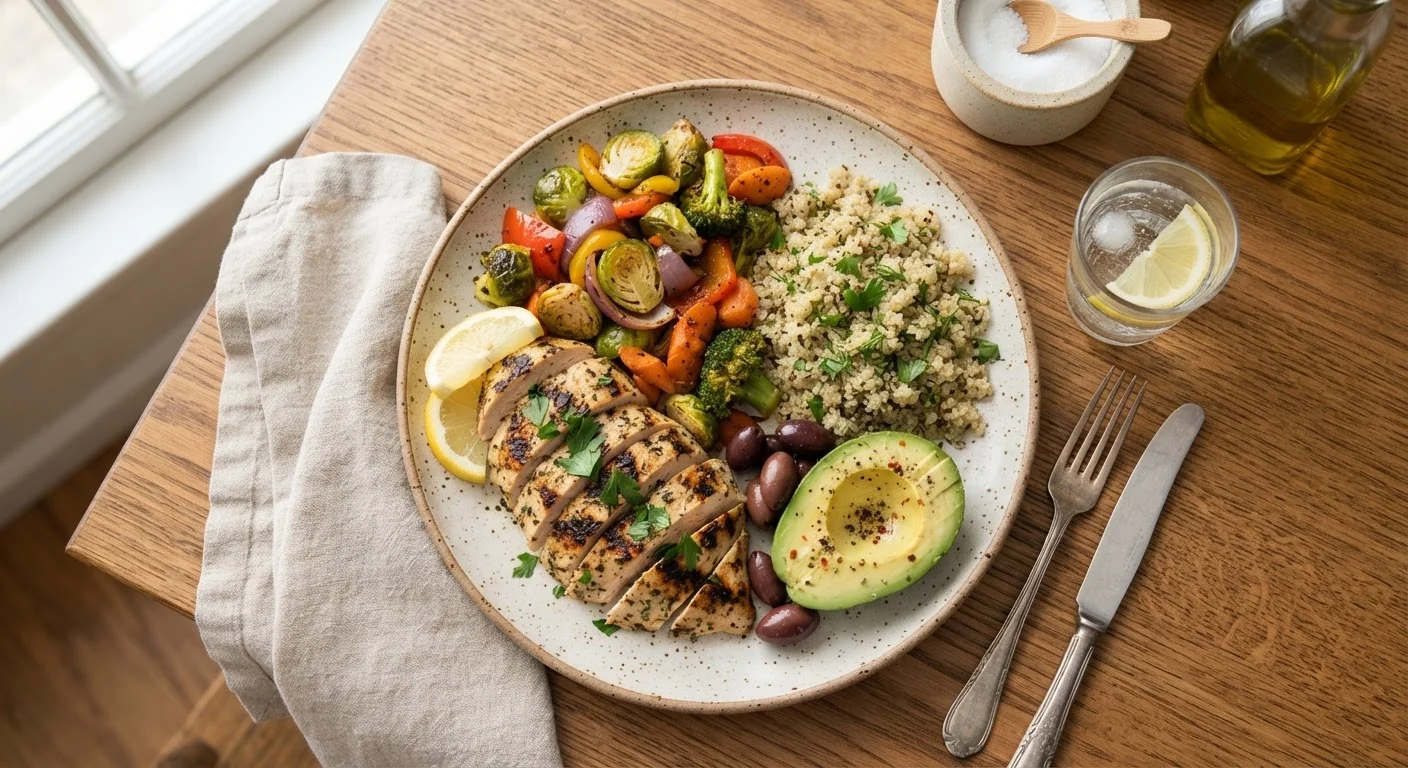
Fill Half Your Plate With Non-Starchy Vegetables
The largest real estate on your plate belongs to non-starchy vegetables - think leafy greens, broccoli, bell peppers, zucchini, cucumbers, tomatoes, and cauliflower. These foods deliver fiber, vitamins, minerals, and water content that slow digestion and support satiety, all with relatively low caloric density.
Variety matters more than any single vegetable. Rotating colors across the week - dark greens, reds, oranges, and purples - broadens the range of micronutrients you take in naturally. Roasting, steaming, or eating raw all count. If leafy greens alone aren't keeping you full, the issue is often what's missing elsewhere on the plate. Learn why satiety depends on the full plate, not just the greens.
Add a Lean Protein Source to One Quarter
Protein supports muscle maintenance, promotes fullness, and plays a central role in many body functions. Aim to fill roughly one quarter of your plate with a lean or minimally processed protein source. Options include skinless poultry, fish, eggs, legumes (beans, lentils, chickpeas), tofu, tempeh, or low-fat dairy.
Red and processed meats can be part of a balanced diet in moderation, but most dietary guidance suggests leaning on plant-based proteins and seafood more often. If you eat primarily plant-based, understand the nutritional trade-offs that come with eliminating animal products, particularly around nutrients like B12, iron, and zinc.
Reserve One Quarter for Whole Grains or Starchy Vegetables
Carbohydrates are not the enemy - context and quality matter. The remaining quarter of your plate supports energy needs and should come primarily from whole or minimally refined sources: brown rice, quinoa, whole-grain bread or pasta, oats, sweet potato, corn, or peas. Whole grains retain fiber and a broader micronutrient profile compared to refined versions.
Portion size here is where many people overshoot, especially with pasta and rice. A cupped handful is a reasonable landmark for most adults at a single meal. For a deeper look at how carbohydrates function alongside protein and fat, see this plain-language guide to macronutrients.
Include a Small Serving of Healthy Fat
Fat is essential for absorbing fat-soluble vitamins (A, D, E, and K) and for sustaining satiety between meals. A small addition - a drizzle of olive oil, a quarter of an avocado, a small handful of nuts or seeds, or a tablespoon of nut butter - rounds out the plate without dominating it.
This portion is intentionally modest because fat is calorie-dense. The goal is inclusion, not elimination. Extremely low-fat diets can limit nutrient absorption and leave meals less satisfying, which may lead to overeating later.
Choose a Low-Calorie Beverage to Complete the Meal
What you drink alongside your plate matters. Water, sparkling water, unsweetened tea, or black coffee add hydration without displacing nutrients or adding significant sugar. Sugary drinks - sodas, sweetened juices, and many flavored beverages - can add considerable energy without contributing to fullness.
Milk and fortified plant milks provide calcium and, depending on the variety, protein - they're a reasonable complement to a meal when consumed in modest amounts. The goal is to think of beverages as part of the overall eating pattern, not an afterthought.
Proportion Methods Have Limits
The plate method is a practical starting framework, but it doesn't account for individual energy needs, medical dietary restrictions, or conditions like diabetes where carbohydrate quality and quantity require closer attention. Do not use this guide as a replacement for clinical dietary advice if you manage a diagnosed health condition.
This Is General Nutrition Education
The information in this article is for general educational purposes and is not a substitute for personalized medical or dietary advice. Individual nutritional needs vary based on age, health status, activity level, and other factors. If you have a chronic condition, specific health goals, or concerns about your diet, consult a registered dietitian or qualified healthcare provider before making significant changes.
The plate method translates to eating out as well. When dining away from home, you can mentally divide the restaurant plate and ask for modifications - dressing on the side, extra vegetables, a smaller grain portion - to approximate the same proportions. Strategies for making more informed choices when dining out can help you apply this thinking beyond your own kitchen. Planning your grocery trips around these proportions also makes the approach easier to maintain week to week - a practical grocery planning checklist can simplify that process.
This article is for general informational and educational purposes only and does not constitute medical or dietary advice. Individual nutritional needs vary. Consult a registered dietitian or qualified healthcare professional for guidance tailored to your specific health circumstances.