

Key Takeaways
Our Verdict
Mediterranean, DASH, and whole-food eating patterns all rest on a foundation of vegetables, legumes, and minimally processed ingredients - making any of them a sound starting point. Where they diverge is in their specific emphasis: DASH is the most structured around measurable targets, Mediterranean leans into healthy fats and cultural flexibility, and whole-food eating offers the broadest, most adaptable framework.
| Best for | Recommended |
|---|---|
| Those focused on heart health and blood pressure management | DASH Diet |
| Those seeking a culturally rich, flexible long-term eating lifestyle | Mediterranean Diet |
| Those wanting a flexible, non-prescriptive framework for cleaner eating | Whole-Food Diet |
| Those with specific clinical nutrition needs | Work with a registered dietitian |
What Each Pattern Actually Involves
These three eating patterns are frequently cited in nutrition research and public health guidance, yet they're often mischaracterized as rigid rules. Understanding what each actually prescribes - and where it leaves room for interpretation - is essential before comparing them.
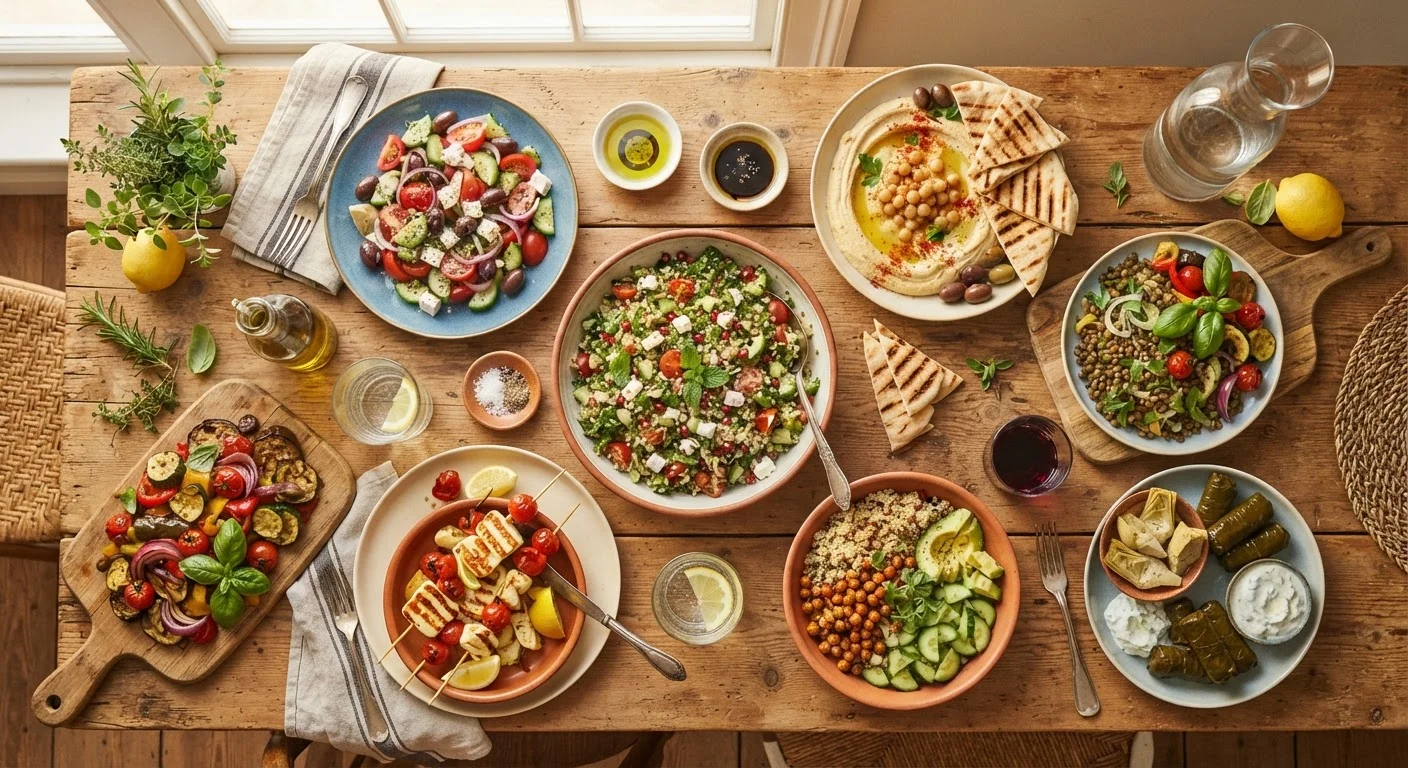
Mediterranean diet: Rooted in the traditional eating habits of countries bordering the Mediterranean Sea, this pattern prioritizes vegetables, fruits, whole grains, legumes, nuts, and olive oil as its base. Fish and seafood appear frequently; poultry, eggs, and dairy in moderate amounts; and red meat only occasionally. Moderate red wine consumption is part of many descriptions, though it is not a required component.
DASH diet (Dietary Approaches to Stop Hypertension): Developed through clinical research with an explicit goal of lowering blood pressure, DASH emphasizes fruits, vegetables, whole grains, and low-fat dairy. It places firm limits on sodium, saturated fat, and added sugars. Unlike the Mediterranean pattern, DASH includes specific numeric targets for nutrients - particularly sodium - making it more prescriptive.
Whole-food diet: Less a defined clinical protocol than a broad philosophy, whole-food eating simply prioritizes foods in their natural or minimally processed state. There is no official governing body or standardized nutrient targets. It can be omnivorous, plant-forward, or anywhere in between. Plant-based variations of whole-food eating carry their own nutrient planning considerations worth reviewing separately.
How the Three Patterns Compare
Despite their different origins, the three patterns overlap substantially. The clearest distinctions emerge when examining specific dimensions side by side.
| Mediterranean | DASH | Whole-Food | |
|---|---|---|---|
| Primary goal | Overall cardiovascular health | Lower blood pressure | Reduce processed food intake |
| Fat approach | Olive oil emphasized | Low saturated fat focus | Naturally lower in processed fats |
| Sodium limits | Discouraged, not prescribed | Explicit numeric targets | Not formally specified |
| Dairy inclusion | Moderate, mostly yogurt/cheese | Low-fat dairy encouraged | Varies by individual approach |
| Animal protein | Fish primary, red meat rare | Lean meats, limited red meat | Flexible, minimally processed |
| Prescriptiveness | Moderate structure | Highly structured | Flexible framework |
| Research depth | Extensive long-term trials | Strong clinical trial base | Broad, less pattern-specific |
One notable divergence is fat philosophy. DASH traditionally emphasizes low total fat, especially saturated fat, while the Mediterranean pattern treats olive oil - a monounsaturated fat - as a dietary cornerstone rather than something to limit. Whole-food eating doesn't take a firm stance on fat type, but naturally tends to reduce industrially processed fats simply by avoiding ultra-processed foods.
Sodium is another point of contrast. DASH sets an explicit sodium ceiling, grounded in evidence linking high sodium intake to elevated blood pressure. Mediterranean and whole-food approaches discourage excessive salt but rarely frame it with the same clinical precision. For readers curious about how meal timing layers onto these patterns, evidence on eating frequency and timing adds another dimension to the conversation.
Shared Strengths and Where Evidence Points
All three patterns have meaningful bodies of research supporting their association with positive health outcomes, though the quality and specificity of evidence varies.
The Mediterranean diet has perhaps the deepest longitudinal research record, with large observational studies and some randomized trials linking adherence to reduced cardiovascular risk. DASH has strong clinical trial evidence specifically for blood pressure reduction, and is endorsed by major cardiology and dietary guidelines organizations. Whole-food eating, as a category, is harder to study in isolation - but research consistently shows that reducing ultra-processed food intake improves a range of metabolic markers.
Start With What You Already Eat
Rather than overhauling your diet overnight, nutritionists often recommend identifying two or three foods or habits in your current routine that already align with these patterns - and building outward from there. For example, if you already enjoy beans or lentils regularly, you have a ready foundation in all three frameworks. Small, consistent shifts tend to be more sustainable than complete dietary resets.
A practical truth is that the commonalities - abundant vegetables, legumes, whole grains, limited refined carbohydrates and added sugar - likely drive much of the benefit seen across all three. Building a balanced plate without calorie counting reflects a similar philosophy: structure and proportions often matter more than precise tracking. It's also worth remembering that some popular nutrition claims don't hold up to scrutiny, so grounding decisions in established research is always worthwhile.
Choosing a Starting Point That Fits Real Life
Deciding between these patterns isn't primarily a question of which is "best" in the abstract - it's about which principles you can sustain, given your food culture, budget, cooking habits, and health context.
If you eat out frequently, the Mediterranean approach's flexibility around restaurant meals may be more practical. Navigating restaurant menus with nutrition in mind offers strategies that work within any of these frameworks. If managing blood pressure is a clinical priority, DASH's structured targets give you specific markers to work toward. If you simply want to reduce your reliance on packaged foods without committing to a named diet, whole-food eating provides an accessible entry point.
People with existing health conditions, those who are pregnant, elderly individuals, or anyone managing a chronic disease should consult a qualified healthcare provider or registered dietitian before making significant dietary changes. General frameworks are useful starting points, but individual nutritional needs can vary considerably.
This article is for general informational and educational purposes only and does not constitute medical or nutritional advice. Always consult a qualified healthcare professional or registered dietitian for guidance specific to your health situation.