

Key Takeaways
Option A
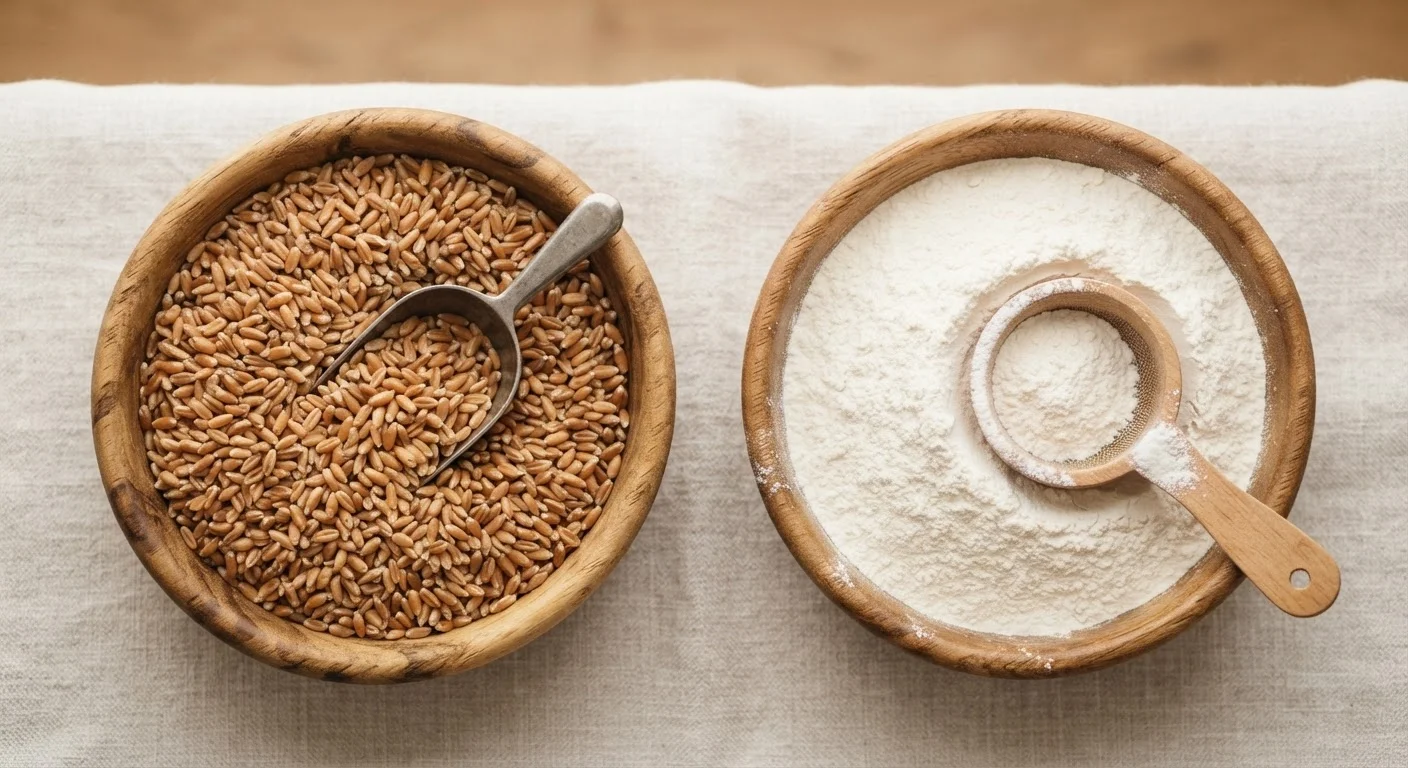
Whole Grains
The intact, nutritionally complete option.
Best for: People looking to support digestive health, steady energy, and long-term nutrient intake through everyday food choices.
Option B
Refined Grains
The processed, widely available alternative.
Best for: Situations where texture, shelf life, or palatability are priorities, though they deliver fewer naturally occurring nutrients.
If you want to maximize fiber and naturally occurring nutrients
Whole Grains
Whole grains retain the bran and germ, which together supply the bulk of dietary fiber, B vitamins, and antioxidants absent in refined versions.
If digestive tolerance or texture preferences are a concern
Refined Grains
Refined grains are easier for some individuals to digest and may be appropriate in specific therapeutic diets; a healthcare provider can guide personal needs.
If you want to align with mainstream dietary guidance
Whole Grains
The U.S. Dietary Guidelines recommend making at least half of daily grain servings whole grains, based on consistent evidence linking them to better health outcomes.
If you're building a balanced, plant-forward eating pattern
Whole Grains
Whole grains contribute fiber, protein, and micronutrients that support a varied plant-based diet and help fill common nutritional gaps.
What Happens Inside the Mill
Every grain - wheat, rice, oats, corn, or otherwise - starts as a kernel with three distinct parts: the bran (the fibrous outer layer), the germ (the nutrient-dense embryo), and the endosperm (the starchy inner core). A whole grain product keeps all three parts intact, either as an unbroken kernel or ground into flour that still contains all three components in their original proportions.
Refining changes that structure deliberately. Milling strips away the bran and germ, leaving primarily the starchy endosperm. This produces the smoother texture and longer shelf life that make white flour, white rice, and similar products so commercially practical. However, the bran and germ are precisely where most of the nutritional value lives. Research consistently shows that refining removes a significant share of dietary fiber, B vitamins (thiamine, riboflavin, niacin, and folate), vitamin E, iron, magnesium, and a range of phytochemicals that emerging science links to health benefits.
| Criterion | Whole Grains | Refined Grains |
|---|---|---|
| Kernel parts retained | Bran, germ, and endosperm | Endosperm only |
| Dietary fiber | High | Very low (not restored by enrichment) |
| B vitamins | Naturally present in full | Partially restored via enrichment |
| Glycemic impact | Generally lower (fiber slows absorption) | Generally higher |
| Shelf life | Shorter (germ oils can go rancid) | Longer |
| Texture | Denser, heartier | Softer, lighter |
| Phytochemicals | Present in bran and germ | Largely removed |
Enrichment: Partial Restoration, Not a Full Fix
Because milling strips so much nutritional value, the U.S. government has required enrichment of certain refined grain products since the 1940s. Enriched products have four B vitamins and iron added back after processing. This practice has been genuinely effective at reducing nutrient-deficiency diseases at a population level.
Even so, enrichment is not a nutritional reset. It replaces only a fraction of the compounds removed. Fiber - arguably the most consequential nutrient lost - is not restored in enriched products. Neither are vitamin E, magnesium, zinc, selenium, or the many phytochemicals concentrated in the bran and germ. The practical takeaway: enriched refined grain products are meaningfully better than unenriched ones, but they remain distinct from whole grain equivalents.
25%
Fiber retained after milling white flour
Research cited by the Whole Grains Council indicates refined white flour retains roughly 25% or less of the original wheat kernel's fiber content.
~50%
Recommended proportion of grains that should be whole
The U.S. Dietary Guidelines for Americans recommend that at least half of all daily grain servings come from whole grain sources.
21-38g
Daily fiber target for adults (general range)
The National Academy of Medicine's Adequate Intake for dietary fiber is approximately 25g per day for adult women and 38g for adult men.
What the Research Actually Shows
Large observational studies and meta-analyses have consistently associated higher whole grain consumption with reduced risk of type 2 diabetes, cardiovascular disease, and certain digestive conditions. The mechanism most researchers highlight is fiber - both its role in slowing glucose absorption and its support of a diverse gut microbiome. The U.S. Dietary Guidelines for Americans recommend that at least half of all grain servings be whole grains.
It's worth noting that most of this evidence comes from epidemiological research, which shows association rather than direct causation. People who eat more whole grains also tend to have other health-supportive habits. Still, the breadth and consistency of findings across multiple populations gives most nutrition researchers confidence in the relationship. If you're curious how grain choices fit into broader sugar and carbohydrate patterns, see our look at added versus natural sugar for complementary context.
Reading Labels Without Getting Fooled
Front-of-package marketing can obscure what's actually inside a product. Terms like "multigrain," "made with whole grain," or "wheat bread" do not legally guarantee that a food is predominantly whole grain. A product labeled multigrain simply contains more than one type of grain - those grains can all be refined.
The reliable method: check the ingredient list. The first ingredient should be a whole grain - "whole wheat flour," "whole oats," "brown rice," or another grain with the word whole explicitly present. If "enriched flour" or "bleached flour" appears first, the product is primarily refined regardless of any front-of-pack claim. For people building more plant-forward diets, getting grain choices right is one building block among several; our guide to plant-based eating trade-offs covers the broader picture.
A Note on "Sprouted" and "Ancient" Grains
Products labeled sprouted grain or featuring ancient grains (such as farro, spelt, or einkorn) are generally whole grain options, though processing methods vary by brand. Sprouting can improve digestibility and slightly alter nutrient availability, but these products are not categorically superior to standard whole grains. As with any grain product, checking the ingredient list remains the best verification step.
This article is for general informational and educational purposes only and is not a substitute for professional medical or dietary advice. Consult a registered dietitian or qualified healthcare provider before making significant changes to your diet, especially if you have a chronic health condition.