

Key Takeaways
Why Volume Alone Doesn't Create Fullness
A salad can fill your bowl without filling you up. That disconnect has a straightforward explanation rooted in how the body signals satiety. Fullness isn't primarily triggered by the physical size of a meal - it's driven by specific nutrients, particularly protein, dietary fat, and fiber, that activate hormonal and mechanical signals telling your brain the meal is complete.
Leafy greens are mostly water and air. Two cups of romaine lettuce weigh almost nothing nutritionally. When a salad lacks protein, fat, and substantial fiber, digestion moves quickly, blood sugar may rise and dip without much buffer, and hunger returns well before the next scheduled meal.
Salads Aren't a Complete Meal by Default
A bowl of greens is a nutritious foundation, but it is not automatically a balanced or filling meal. Without adequate protein, healthy fat, and fiber-rich ingredients, even a large salad may leave you hungry within an hour. This is general nutrition information - speak with a registered dietitian if you have specific dietary concerns or health conditions.
This doesn't mean salads are a poor choice - quite the opposite. Vegetables supply vitamins, minerals, and phytonutrients that support long-term health. The issue is composition, not the concept. A well-built salad can absolutely be a satisfying, complete meal.
The Most Common Salad Mistakes - And How to Fix Them
Most salads that leave people hungry share the same structural gaps. Recognizing these patterns makes it straightforward to correct them without abandoning a meal you enjoy. The mistakes below are among the most frequent - and the most fixable.
Building the salad almost entirely from leafy greens with no protein source.
Why it happens: Greens look substantial in a bowl, giving the impression of a full meal. Many people associate a 'healthy' meal with lots of vegetables and underestimate how little protein leafy greens actually provide.
Skipping healthy fat entirely, especially when using a fat-free dressing.
Why it happens: Fat has long been associated with weight gain, so many health-conscious eaters avoid it, opting for fat-free dressings or plain vinegar.
Relying on iceberg or romaine lettuce as the primary ingredient without adding high-fiber vegetables or legumes.
Why it happens: Lettuce is the most recognizable salad base, but common varieties are mostly water with minimal fiber. Fiber is what genuinely slows digestion and sustains fullness.
Treating the salad as a low-calorie placeholder rather than a balanced plate.
Why it happens: Salads are culturally coded as 'diet food,' so people intentionally keep them light, expecting to feel virtuous rather than satisfied - which sets up a cycle of snacking shortly after.
Ignoring calorie and nutrient density by piling on croutons, candied nuts, or creamy dressings without adding substantive nutrients.
Why it happens: These toppings are tasty, widely available on salad bars, and feel like reasonable additions. But they add refined carbohydrates or excess saturated fat without the protein or fiber that drive satiety.
It's also worth noting that nutrient gaps don't stop at macronutrients. Many salad-heavy eating patterns can fall short on micronutrients Americans commonly fall short on, especially iron, calcium, and zinc - nutrients more reliably supplied by protein-rich toppings like legumes, seeds, or animal foods.
Putting It Together: What a Filling Salad Actually Looks Like
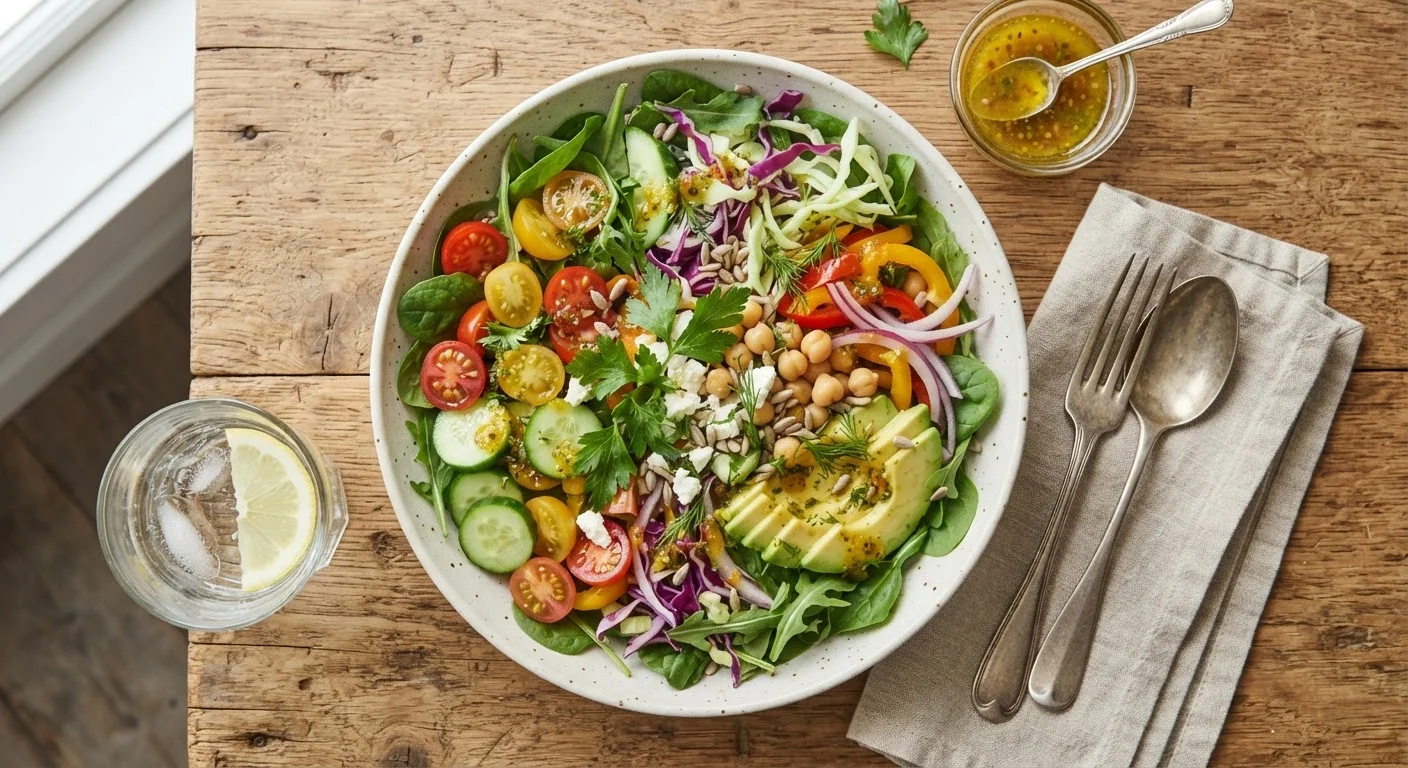
A salad built for satiety has three non-negotiable components working together: a meaningful protein source, a healthy fat, and ingredients that contribute real fiber beyond the leafy base.
~5%
Daily fiber in 2 cups of romaine lettuce
According to USDA nutrient data, two cups of romaine provide roughly 2 grams of fiber - a fraction of the recommended daily intake for adults.
~90%
Water content of iceberg lettuce
Iceberg lettuce is approximately 96% water by weight, contributing minimal protein, fat, or fiber - the three primary drivers of meal satiety.
25-38g
Recommended daily fiber intake for adults
The Dietary Guidelines for Americans recommend 25 grams per day for women and 38 grams for men - amounts most Americans fall well short of.
For those following plant-forward eating patterns, salads are a natural vehicle for meeting nutritional needs - but require deliberate planning. Plant-based eating comes with nutritional trade-offs worth understanding, particularly around protein completeness and micronutrient availability.
The broader takeaway: think of your salad the same way you'd think about any other meal on your plate. A mixed green base is a starting point, not a finished product. Add protein, fat, and fiber-rich ingredients, and what was once an unsatisfying side dish becomes a genuinely sustaining meal.
This article is for general informational and educational purposes only and does not constitute medical or dietary advice. Consult a registered dietitian or qualified healthcare professional for guidance tailored to your individual health needs.