

Key Takeaways
Summary
22 items · 2-5 hours spread across a weekend
Why Fall Prep Pays Off
Autumn is a narrow window. Once overnight temperatures consistently drop below freezing, burst pipes, ice dams, and a struggling furnace can turn small oversights into expensive emergencies. A systematic fall walkthrough - exterior first, then interior, then mechanical systems - gives you the best chance of catching problems while repairs are still straightforward and affordable.
This checklist is organized into three logical groups so you can tackle one area at a time. Pair it with your month-by-month maintenance calendar to keep track of what to revisit in spring. If you're also preparing your vehicle for cold weather, see our vehicle winterizing checklist for parallel seasonal steps.
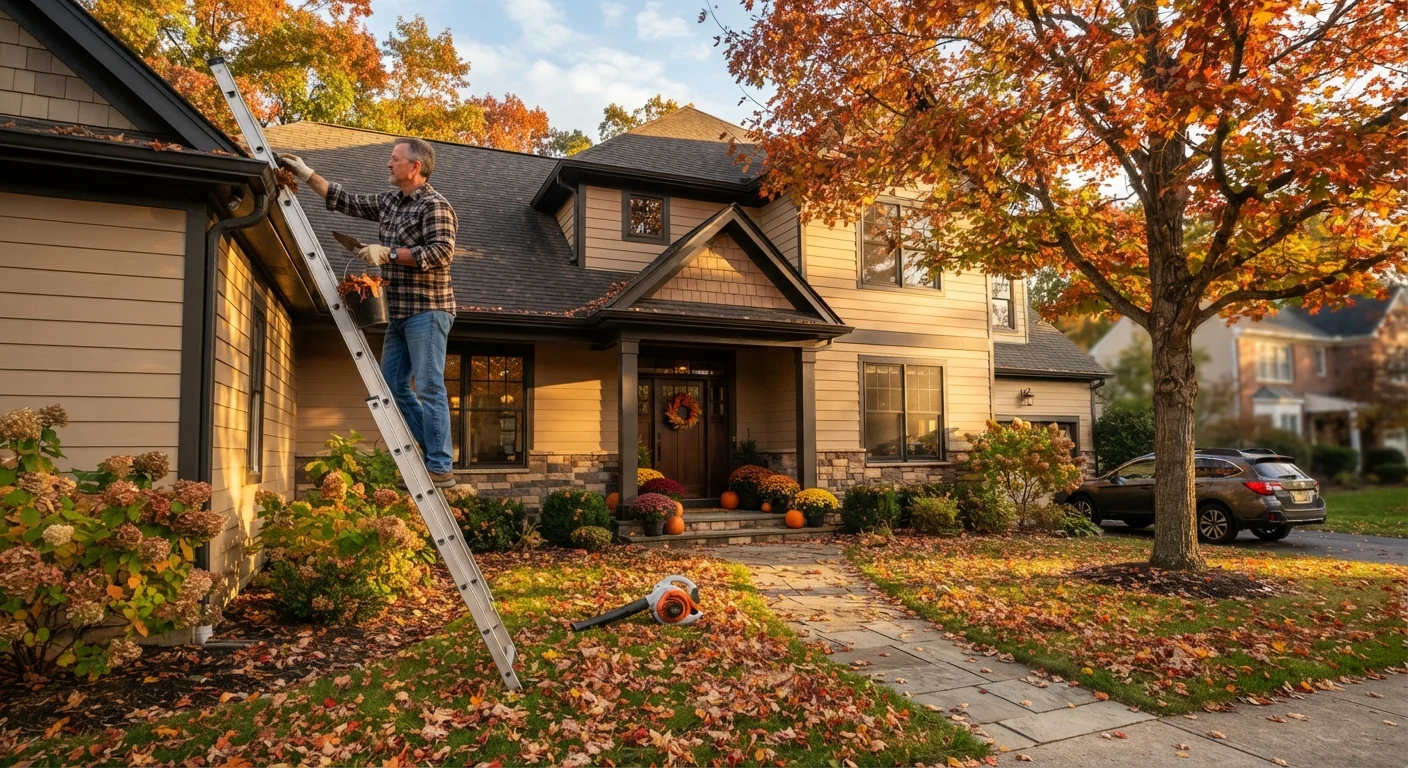
Extension ladder
Required for safely reaching gutters and inspecting the lower roofline.
Caulk gun and exterior-grade caulk
Used to seal gaps around window frames, door frames, and utility penetrations.
Weatherstripping roll and door sweeps
Replaces worn seals on exterior doors to stop drafts at the door perimeter and base.
Furnace air filter (correct size for your unit)
Swap out the old filter to maintain airflow efficiency and indoor air quality.
Multimeter or thermostat tester
Helps verify thermostat wiring and battery function before heating season begins.
Foam backer rod
Used to fill larger gaps before caulking so you don't waste sealant in deep cracks.
The Full Fall Prep Checklist
Work through each group below. Items marked must address freeze risk or safety directly - prioritize those if time is short. Should items protect efficiency and prevent wear. Nice-to-have tasks are valuable but can be deferred if needed.
Exterior Tasks
Interior & Weatherproofing
Mechanical Systems
Know When to Call a Professional
Tasks involving gas lines, electrical panels, structural roof repair, or chimney liners carry real safety risks and often require permits in most US jurisdictions. Do not attempt to service gas appliances, repair flashing near electrical service entries, or clean a severely blocked chimney on your own. Always hire a licensed contractor for regulated or hazardous work, and check with your local building department about what requires a permit before starting.
A Note on Energy Efficiency and Costs
Several items on this list - sealing air leaks, adding weatherstripping, and replacing furnace filters - directly affect how hard your heating system has to work. Older homes especially can lose significant heat through gaps that aren't visible to the naked eye. A can of foam sealant and a roll of weatherstripping typically cost under $20 combined and take less than an hour to apply around doors and windows.
Fall is also a practical time to reassess interior organization before you're indoors more often. Our seasonal declutter audit and wardrobe rotation checklist complement this home prep well - clearing hallways and storage areas before winter gear arrives avoids a crowded, frustrating season.
Frozen Pipes Can Cause Severe Water Damage
Pipes in unheated spaces - crawl spaces, attached garages, and exterior walls - are most vulnerable when temperatures dip below 32°F. Insulate exposed pipes with foam pipe insulation sleeves before cold weather arrives. If you leave home for an extended period in winter, keep the thermostat set no lower than 55°F and ask a trusted neighbor to check on the property. A single burst pipe can release hundreds of gallons of water and cause damage that far exceeds the cost of prevention.
This article provides general home maintenance information for educational purposes. Costs, code requirements, and conditions vary by region. Always verify local permit requirements and consult a licensed contractor or tradesperson for electrical, gas, structural, or other regulated work.