

Key Takeaways
Why Most Organizing Attempts Don't Stick
Most people tidy a room, feel satisfied, and then watch it return to chaos within weeks. The reason is usually the same: the organizing effort focused on appearance rather than systems. Stacking things neatly or buying matching bins feels productive, but without underlying principles, the results don't last.
Professional organizers rely on a small set of durable concepts - vertical storage, zone definition, and intentional rotation - that create environments which essentially maintain themselves. These aren't design trends; they're structural approaches to how space and human behavior actually work together. If your previous organizing efforts have stalled, chances are one or more of these principles was missing. For more on why common tidying instincts backfire, see common organization myths that may be working against you.
The Three Core Principles
Understanding each principle - and how they work together - is the starting point for any lasting organizational change.
Use vertical wall space as primary storage, not an afterthought.
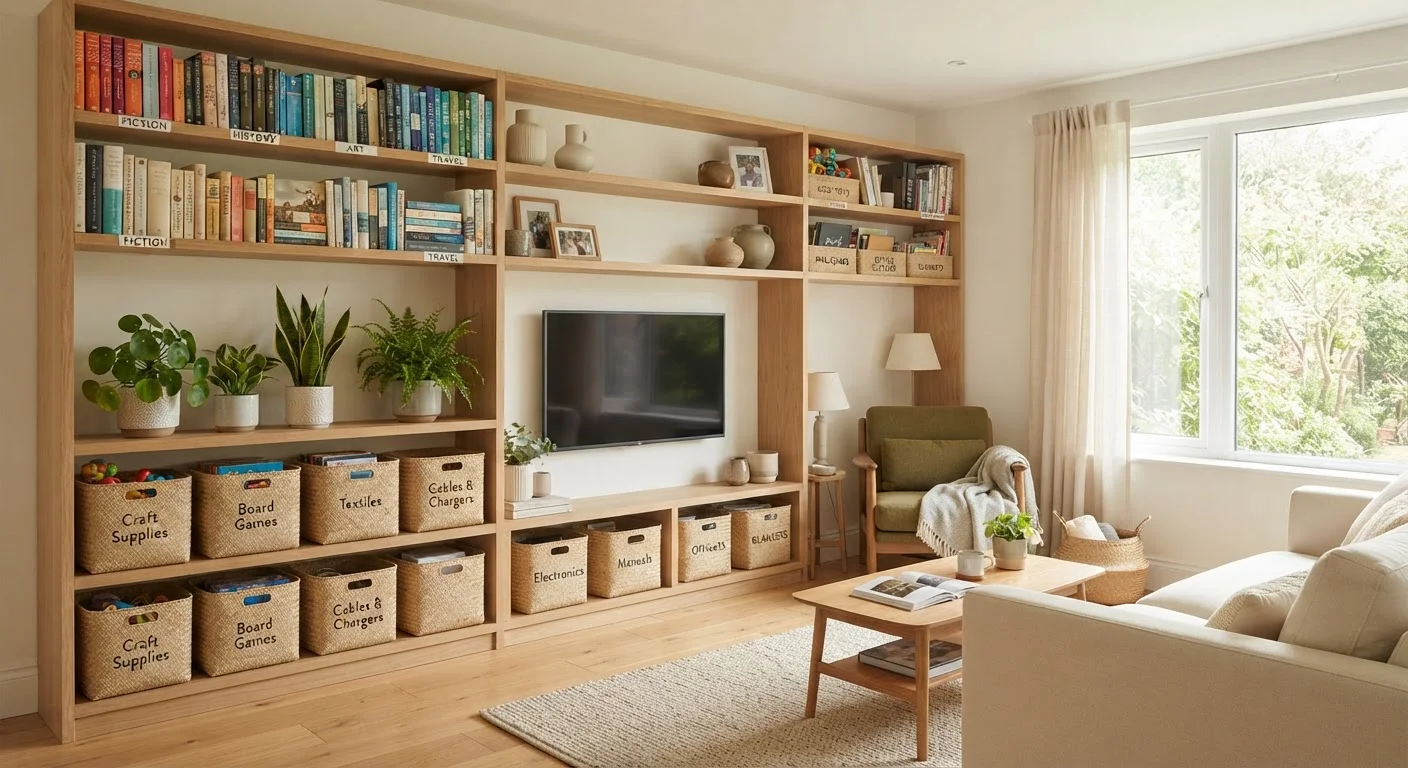
Floor space is finite, but the vertical dimension in most rooms is vastly underused. Shelving, pegboards, and wall-mounted systems multiply usable storage without consuming any additional square footage. This is especially impactful in smaller homes and apartments where floor space is at a premium.
Define distinct zones for specific activities or item categories.
When every item has a designated zone - a charging area, a bill-paying spot, a craft corner - retrieval and return become automatic. Without zones, items drift and accumulate wherever they're set down last. Zones reduce decision fatigue because you always know where something belongs.
Rotate seasonal items in and out of accessible storage on a schedule.
Keeping winter coats in a front closet all summer, or storing beach towels in a main bathroom year-round, wastes prime storage real estate. Regular rotation ensures that what's accessible is what's actually in use, reducing both clutter and the frustration of digging past irrelevant items.
Label every container, shelf, and zone consistently.
Labels make organizational systems legible to everyone in the household, not just the person who set them up. This distributes the maintenance load and prevents the slow drift where items end up returned to the wrong place simply because no one could remember where they belonged.
Apply the 'one in, one out' rule when adding items to a zone.
Zones only function if they don't become overcrowded over time. Committing to removing one item whenever a new one enters a defined space prevents gradual overflow, which is the most common way organized spaces degrade back into clutter.
Quick Actions to Get Started Today
You don't need to overhaul your entire home at once. Applying even one of these principles to a single area creates momentum and shows you what's possible before committing to larger changes. These quick actions are drawn directly from the core principles above.
Start With One Zone, Not the Whole House
Attempting to reorganize an entire home at once is one of the most common reasons people give up partway through. Choose a single high-traffic area - a pantry, entryway, or bathroom cabinet - and apply all three principles there first. Once you see how the space functions differently, the motivation to extend the system elsewhere tends to follow naturally.
How These Principles Connect to the Bigger Picture
Effective organization has benefits that extend well beyond aesthetics. A well-structured home supports better home maintenance habits, since it's easier to inspect, clean, and care for spaces when items aren't piled in front of what needs attention. Clutter also has documented links to elevated stress, making home organization a genuine quality-of-life concern rather than a purely cosmetic one.
It's also worth noting that buying more storage products isn't always the answer. Thoughtful use of vertical space, zone definition, and rotation often reveals that a home already has enough room - the items just aren't placed strategically. Before investing in new organizers or furniture, apply the principles above and see what existing space becomes available. For households tracking household improvement spending, general budgeting strategies can help you decide what's worth purchasing versus what can be solved through smarter arrangement alone.
80%
Of clutter is caused by disorganization, not lack of space
According to organizational research cited by the National Association of Productivity and Organizing Professionals (NAPO), the majority of household clutter stems from absent systems rather than insufficient storage.
1 hour
Average time spent per day searching for misplaced items
Research from the American Institute for Research has estimated that disorganization costs households significant time weekly in searching for misplaced items, pointing to the practical productivity cost of unclear zones.
This article is for informational purposes only. Organizational outcomes vary based on home size, household needs, and individual habits.