

Key Takeaways
Why Organization Myths Do Real Damage
Bad advice about home organization doesn't just waste your time - it can leave your space more chaotic than before you started. Many widely-shared beliefs about tidying up are rooted in wishful thinking, social media aesthetics, or products someone wants to sell you, rather than in how homes actually function day to day.
The result? People buy storage containers they don't need, attempt whole-home overhauls that collapse by day three, and feel like failures when a system designed to look good on camera doesn't survive contact with real life. Understanding what's actually true about organization can save you significant effort - and money. For a deeper look at how clutter affects your mental state, see how physical clutter influences stress and focus.
Myth
You just need more storage containers and everything will finally be organized.
Fact
More containers without first reducing your belongings just gives clutter a more organized appearance - temporarily.
Buying bins, baskets, and drawer dividers feels productive, but it skips the essential first step: getting rid of things you no longer need or use. When you organize before you declutter, you end up carefully storing items that should have been donated or discarded. Within weeks, the containers overflow and the space feels just as chaotic. Declutter first, then determine what storage - if any - you actually need for what remains.
Myth
Your organization system needs to look good to work well.
Fact
A system that functions reliably for your household is far more valuable than one that photographs well but is too cumbersome to maintain.
Social media has created a powerful but misleading image of what an organized home looks like: matching jars, color-coded closets, perfectly labeled everything. In practice, elaborate aesthetic systems require significant time and discipline to maintain. If a simpler, less polished system means things actually get put away consistently, that system wins. Organization is measured by how your home functions, not how it looks on a shelf.
Myth
You should do one big organization overhaul to fix everything at once.
Fact
Whole-home overhauls are exhausting and rarely produce lasting results; small, consistent habits are far more effective over time.
The appeal of a total reset is understandable - it feels decisive and dramatic. But tackling your entire home in a single weekend typically leads to burnout, half-finished projects, and systems assembled too quickly to be well thought-out. Research on habit formation consistently shows that small, repeatable actions are more sustainable than large, infrequent ones. Focusing on one drawer, one shelf, or one category at a time produces steadier, more durable progress. See why reorganized spaces fall back into chaos for a closer look at this pattern.
Myth
Everything should be hidden away to make a space feel truly organized.
Fact
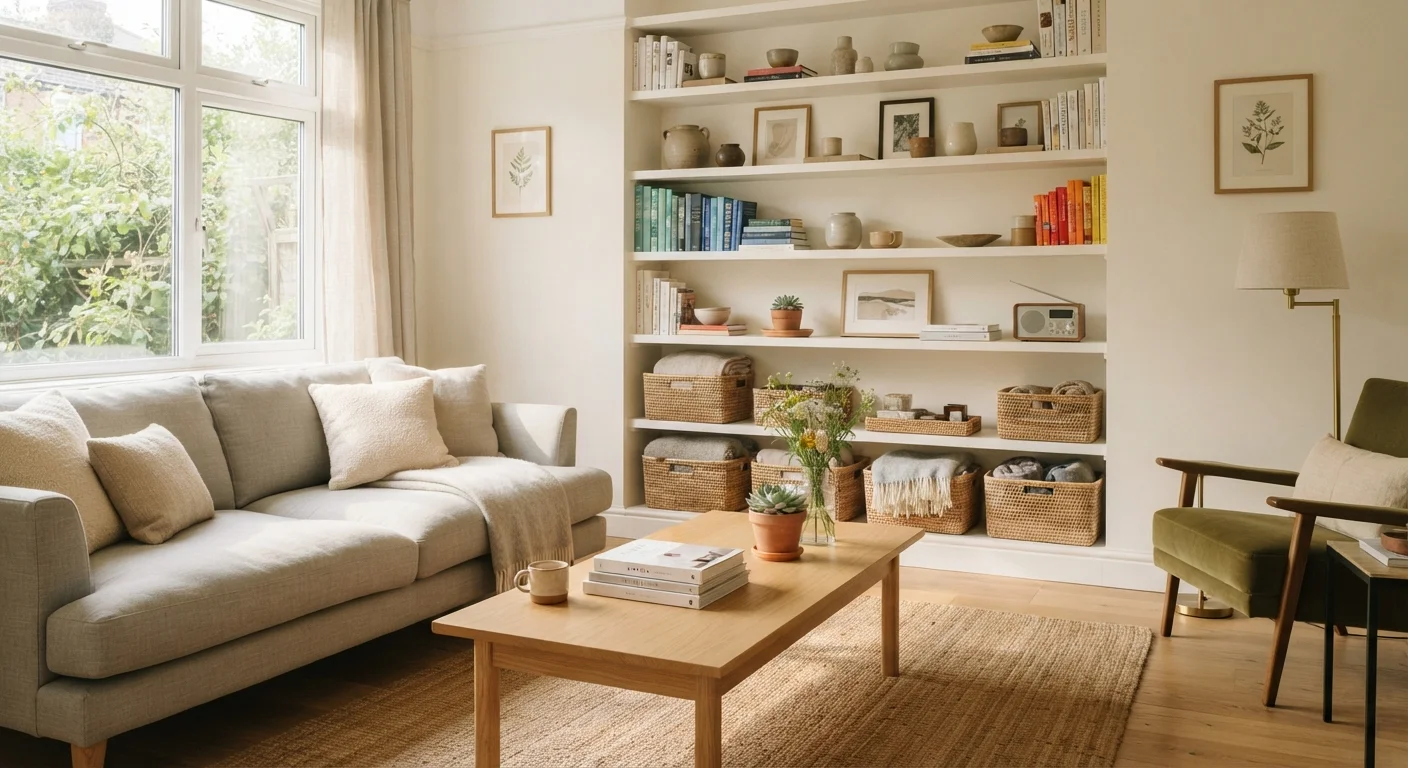
Visible, accessible storage is often more practical and helps people actually maintain the system.
The instinct to conceal everything behind cabinet doors or in opaque bins can backfire. When items are out of sight, they're also out of mind - leading people to forget what they have, buy duplicates, or skip putting things away because retrieval feels like too much effort. Open shelving, clear containers, and visible hooks can all support better habits, as long as the items being displayed are genuinely used and the quantity is kept manageable.
Myth
An organized home stays organized once you get it right.
Fact
Organization requires ongoing maintenance; even well-designed systems need periodic reassessment as life circumstances change.
Life is not static. Households grow, hobbies shift, routines change - and the organization systems that worked last year may not serve you well today. A system built for one person's schedule may collapse when a partner moves in or a child arrives. Building in short, regular maintenance sessions (rather than waiting for chaos to return) and revisiting your systems seasonally will keep them aligned with your actual life. Think of organization as a practice, not a destination.
Building a System That Actually Lasts
Once you've cleared the myths out of the way, the path forward is more practical than inspirational. Effective organization isn't a one-time event - it's a set of small, repeatable habits layered onto a sensible structure. The goal is a home that's easy to maintain, not one that looks staged for a photo shoot.
80%
Of clutter stems from disorganization, not lack of space
According to the National Soap and Detergent Association, approximately 80% of household clutter is the result of disorganization rather than insufficient storage space.
~$2,700
Average American spends annually on impulse buys that add to clutter
Slickdeals' 2022 survey estimated the average American spends significant sums on unplanned purchases, many of which contribute to household clutter over time.
A useful starting point is understanding the difference between decluttering and organizing - they're not the same step, and doing them in the wrong order is one of the most common reasons organization efforts fail. Our guide on decluttering vs. organizing explains why sequence matters. Once you have a leaner inventory of belongings, explore vertical storage, zones, and rotation principles that professionals rely on to maintain tidy spaces long-term. And if you share your home with others, organizing a home with multiple people offers strategies for navigating different habits under one roof.
Don't Organize Items You Should Discard
One of the most common organization mistakes is spending time and energy creating systems for items you rarely use, don't need, or don't even like. Before investing in new shelving, labels, or containers, take stock of whether the items you're organizing are truly worth keeping. Organizing things you should discard doesn't solve the problem - it just delays it.