

Key Takeaways
Why Shared Households Need a Different Approach
Organizing a home you share with others is fundamentally different from organizing one on your own. When you live alone, your system only has to work for one set of habits. In a shared household - whether that's a couple, a family, or roommates - every person brings different tolerance levels for clutter, different routines, and different ideas about what "clean" means.
These differences aren't flaws. They're just realities. The goal isn't to force everyone into one organizing philosophy, but to build a system with enough structure to function and enough flexibility for individuals to coexist comfortably. If you've ever wondered why a beautifully reorganized home slides back into disorder within weeks, different household habits are often part of the answer. Our guide on why reorganized spaces fall back into chaos covers this pattern in depth.
Before diving into the steps, it helps to accept one truth: no single person should unilaterally impose a system on others. Organization in shared spaces is a negotiation, not a decree.
What you will need
Step-by-Step: Building a System That Works for Everyone
The following steps move from conversation to implementation. Don't skip the early discussion stages - the practical steps only stick when there's genuine buy-in from everyone involved.
Map the shared spaces and identify pain points
Walk through your home together and note every area that more than one person uses regularly: the kitchen, bathrooms, entryway, living room, and any shared storage. For each space, identify the recurring friction - items left out, unclear ownership of storage, or conflicting use patterns. Write these down. You can't solve problems you haven't named.
Hold an honest household conversation
Schedule a dedicated time - not in the middle of a conflict - to talk through what's working and what isn't. Ask each person to share their biggest organizational frustration and one thing they genuinely need from the shared space. Keep the tone collaborative. The goal is a list of shared priorities, not a verdict on anyone's habits.
Establish personal zones within shared spaces
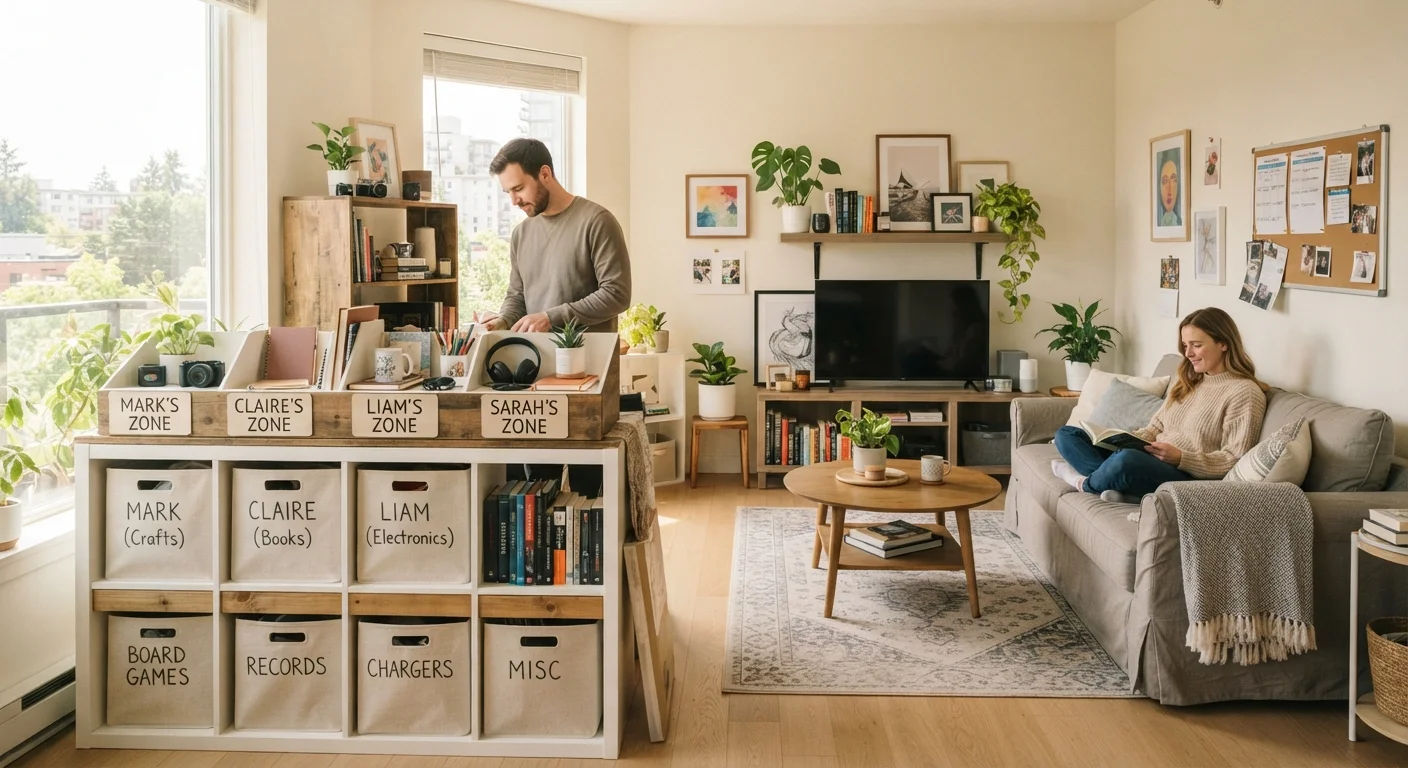
Even in communal areas, people function better when they have a designated spot. Assign a shelf, drawer, or cabinet section to each household member in high-traffic areas like the bathroom vanity or kitchen. Personal zones reduce the guesswork about where things belong and lower the daily negotiation load. This doesn't require equal square footage - just clear ownership.
Design systems for the lowest-friction user
A system that requires five steps to maintain will be abandoned by the household member least motivated by tidiness - and that will affect everyone. Aim for the simplest possible version: open bins over lidded boxes, broad categories over micro-organization, and "good enough" over perfect. A system that 80% of household members follow 80% of the time outperforms a perfect system that only one person uses.
Agree on shared maintenance expectations
Decide together on a small set of non-negotiable shared standards - for example, dishes cleared by the end of the day, entryway kept clear of shoes, or bathroom counter wiped after use. Keep the list short (three to five items). Then agree on how often you'll do a shared reset: a 15-minute weekly tidy is far less stressful than a monthly overhaul.
Schedule a regular check-in to revisit the system
Even well-designed systems need adjustment as households change - new schedules, new people, or shifting needs. Set a recurring check-in every one to three months to ask: What's working? What isn't? What needs to change? Treat the system as a living agreement, not a one-time fix. This also gives everyone a legitimate channel to raise concerns before they become resentments.
Start Small to Build Momentum
Rather than overhauling the entire home at once, pick one shared space that causes the most friction and build your first successful system there. A working solution in the entryway or kitchen builds trust in the process and makes it easier to expand to other areas. Small wins matter in shared households.
Once your system is in place, you may find that applying vertical storage and zoning principles helps reinforce the structure, especially in kitchens, living rooms, and entryways where multiple people's items tend to pile up together.
Navigating Common Friction Points
Even well-designed systems hit predictable snags. Here are three that come up most often in multi-person homes:
- The "I'll deal with it later" pile. Designate a single landing zone - a basket, a shelf - for items in transition. This contains the drift without requiring immediate decisions.
- Sentimental or personal items in communal spaces. These require a gentle conversation about boundaries. Our article on storing sentimental items without letting them take over your home offers thoughtful strategies for preserving meaningful belongings while keeping shared areas functional.
- Conflicting organizing philosophies. One person may gravitate toward a minimalist approach while another prefers a more curated system. Comparing different organizing philosophies can help households find common ground.
Avoid Enforcing Change Unilaterally
Reorganizing shared spaces without consulting other household members - even with the best intentions - can create resentment and resistance. If others feel a system was imposed on them, they're far less likely to maintain it. Always loop everyone in before moving or reassigning shared storage areas.
For households navigating tighter living quarters, the same principles apply with added urgency. Small-space organization strategies can help when everyone needs to share limited storage.