

Key Takeaways
Why Sentimental Clutter Is Uniquely Difficult
Unlike old magazines or duplicate kitchen gadgets, sentimental items carry emotional weight that makes standard decluttering advice feel inadequate or even hurtful. Research in environmental psychology suggests that physical clutter - even when it holds meaning - can contribute to elevated stress and reduced focus at home. You can read more about this connection in our article on how clutter affects your mood.
The challenge is that sentimental collections tend to grow passively. Inheritances arrive, children's art accumulates, and gifts from people who have passed feel impossible to discard. Without a deliberate system, these items gradually colonize shelves, closets, and spare rooms - not because you chose to collect them, but because no one ever set a clear limit.
The goal of this guide is not to push you toward minimalism or to dismiss the value of keepsakes. It is to help you create a system where the things that genuinely matter have a proper, protected home - and stop competing with your daily living space. If you share your home with others, it is worth reading our piece on organizing shared spaces with different habits before you begin, since sentimental items often involve household-wide decisions.
Avoid Sorting During Acute Grief
Immediately following a loss is often the worst time to make permanent decisions about a loved one's belongings. If possible, box items temporarily and allow yourself several months before committing to what to keep or release. Decisions made under acute emotional distress are frequently regretted. If you are finding the process overwhelming, speaking with a mental health professional can help.
Before You Begin: Tools and Principles
A few organizational principles that apply broadly to home storage are especially relevant here. Understanding concepts like zoning (grouping items by use or category) and dead space (storage areas that are hard to access regularly) will help you make better decisions about where sentimental items actually belong. Our home organization glossary is a useful quick reference if any terms in this guide are unfamiliar.
You will also want to review the broader principles covered in vertical storage and rotation strategies - these apply directly to the rotating display system described in Step 6.
Archival storage boxes
Protect paper items, photos, and textiles from moisture, light, and acid degradation over time.
Smartphone or flatbed scanner
Digitize photographs, letters, and documents so memories are preserved without taking up physical space.
Acid-free tissue paper
Wrap delicate textiles or paper-based keepsakes to prevent deterioration inside storage containers.
Label maker or adhesive labels
Clearly identify each container so contents are easy to locate without opening every box.
Cloud storage or external hard drive
Back up digitized files so they are not lost if a device is damaged or replaced.
What you will need
Following the Steps
Work through this process in order. Skipping ahead to storage before completing the sorting and limiting steps often means you end up carefully boxing items you did not truly need to keep. The sequence matters.
Gather everything in one place
Before making any decisions, collect all sentimental items into a single area - a table, a cleared floor, or a large bed. This gives you a realistic picture of how much you actually have. Many people are surprised to discover items scattered across multiple closets, attics, and drawers that together form a much larger collection than expected.
Sort into three categories
Divide your items into three groups: Display (items you want visible in your living space), Store (items worth keeping but not displaying), and Release (items you are ready to let go of - through donation, gifting to family, or respectful disposal). Avoid creating a large "maybe" pile, as this tends to grow indefinitely without resolution.
Set a physical limit for what you keep
Choose a defined container - one archival box, one shelf, one drawer - as the boundary for your stored sentimental items. If new items come in, something must come out or be digitized to make room. This approach, sometimes called a one-in, one-out rule, prevents gradual accumulation without requiring you to make all decisions at once.
Digitize high-volume, fragile items
Photographs, letters, report cards, newspaper clippings, and similar paper items are prime candidates for digitizing. Scan or photograph each item at a high resolution, then organize the files into labeled folders by year, person, or event. Store copies both locally and in a cloud-based service so you have redundancy. Once digitized, many people find it easier to part with the physical originals - or at least keep only a small representative sample.
Store remaining items properly
Place items in archival-quality, acid-free containers stored in a cool, dry, dark location - away from attics, basements, or garages where temperature swings and humidity accelerate deterioration. Wrap delicate textiles in acid-free tissue paper. Label every container clearly on the outside with contents and approximate date range, so you never have to dig through everything to find one item.
Create a rotating display system
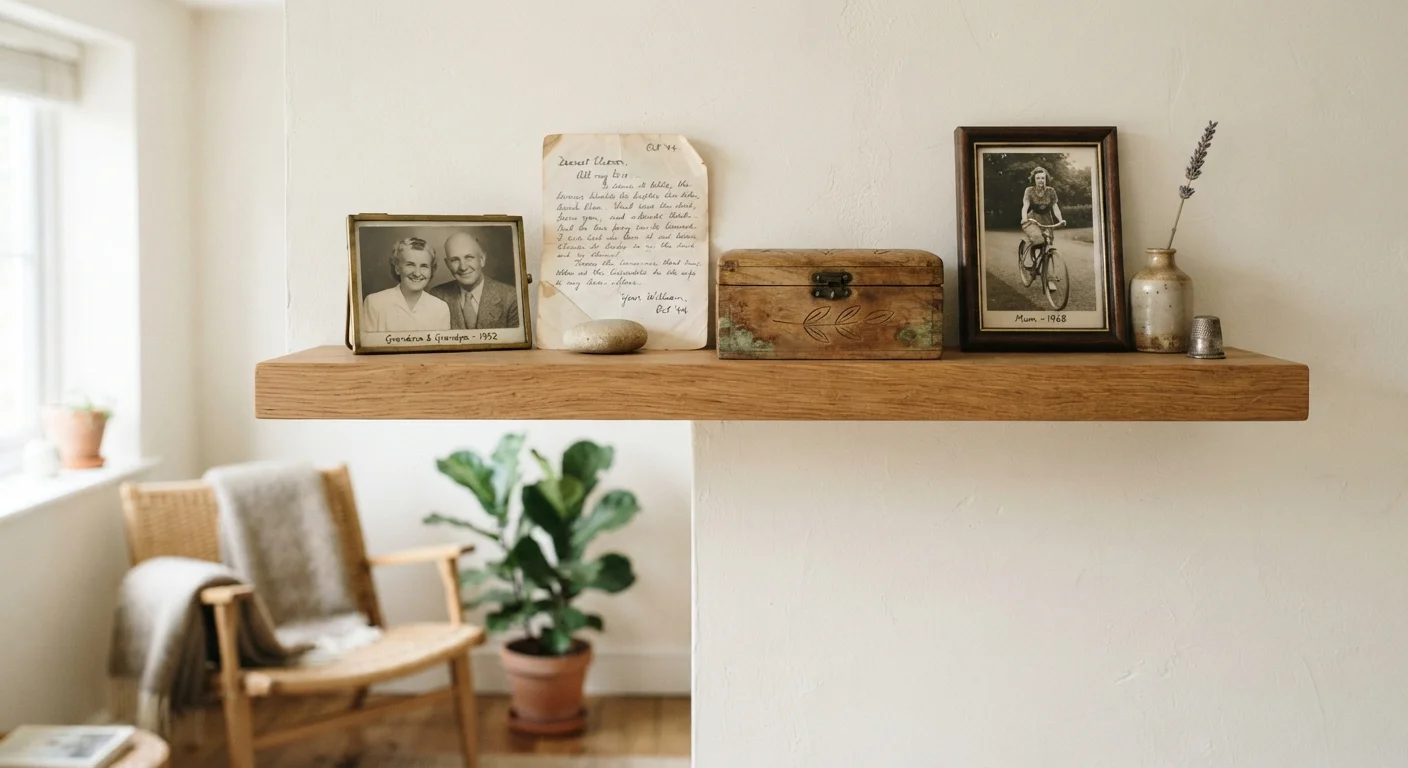
Rather than keeping all display items out permanently, choose a small number to show at one time and rotate them seasonally or annually. This keeps your living space from feeling cluttered while ensuring that each piece actually gets seen and appreciated. A dedicated shelf, shadow box, or small gallery wall works well for this purpose.
Memory Books Are a Powerful Middle Ground
If digitizing feels impersonal, consider creating a physical memory book or scrapbook that consolidates photographs, notes, and small flat keepsakes into a single, organized volume. One well-made book can replace several boxes of loose items while remaining deeply personal and easy to revisit. Archival-quality scrapbooking materials are widely available and resist fading over time.
Maintaining the System Over Time
A single sorting session will not keep sentimental items under control indefinitely. The most important maintenance habit is enforcing your physical limit each time new items enter the home - especially after a move, an inheritance, or a major life event. Treat your designated container as a fixed resource, not an expandable one.
If you find yourself consistently struggling to make decisions about what to keep versus release, that may point to a broader pattern worth examining. Our article on setting emotional boundaries explores how boundaries in relationships - including boundaries around inherited objects and gift-giving expectations - can reduce this kind of ongoing pressure.
For readers in smaller homes, small-space organization strategies offers additional guidance on making limited square footage work without sacrificing the items that matter most to you.
This article is for general informational and organizational purposes only. It does not constitute psychological, legal, or financial advice. For decisions involving estate items or inherited property with potential legal implications, consult a qualified professional.