

Key Takeaways
Why Most Purchasing Routines Break Down
Most households don't lack willpower - they lack a reliable system. Without a consistent routine, shopping tends to be reactive: you run out of something, make a quick trip, and come home with three extras you didn't need and one thing you forgot. The cycle repeats, waste accumulates, and the budget quietly erodes.
A purchasing routine replaces reactive buying with intentional planning. It doesn't require elaborate spreadsheets - just a few repeatable habits applied consistently. Understanding how retailers engineer unplanned spending is a useful starting point, because many routine failures are really just unrecognized impulse patterns.
The Core Practices That Actually Work
The following practices address the most common points where household purchasing goes off track - from the pantry audit to the checkout line. Each one is designed to be low-effort once established.
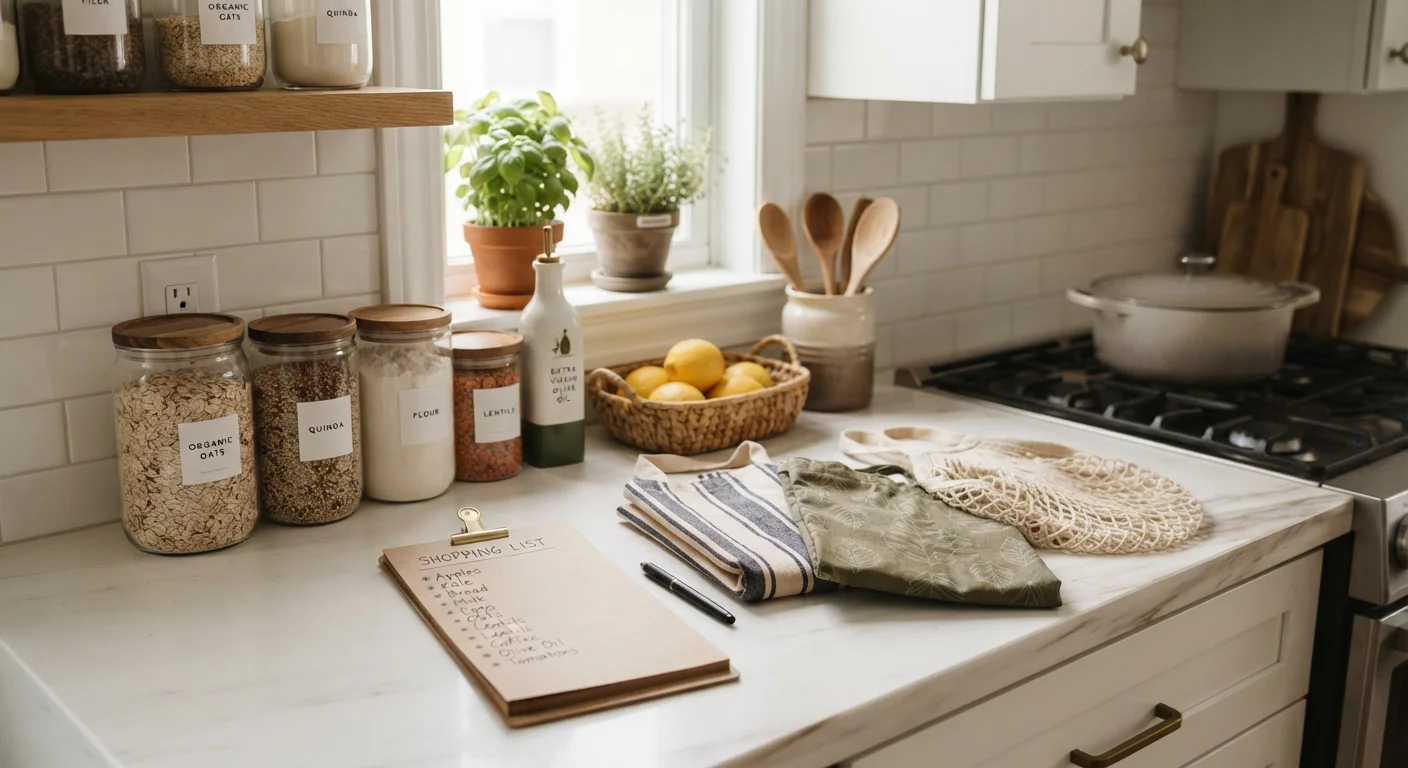
Audit your inventory before making any shopping list
Buying what you already have is one of the most common sources of household waste, particularly for pantry goods and cleaning products. A quick visual scan before writing your list resets your baseline and prevents duplicate purchases from accumulating.
Write your list by category, not by store section
Organizing your list by use category (cleaning, personal care, proteins, produce) rather than store layout keeps your thinking need-focused. It also makes it easier to spot when a category is overstocked, which naturally deters adding more.
Set category-level replenishment thresholds, not just shopping days
Replenishment thresholds - a simple rule like 'reorder when down to one' for staple items - remove the guesswork from timing. They prevent both the waste of overstocking and the inconvenience of running out entirely.
Review your list one final time before checkout, not at the shelf
The checkout review is a low-effort filter that catches items added impulsively during the trip. Removing them before purchase is far easier than returning them afterward, and it reinforces the habit of intentional buying over time.
Separate wants from needs at the planning stage, not in the store
In-store environments are designed to blur the line between what you need and what catches your eye. Deciding in advance which categories get discretionary spending prevents that blurring from derailing your routine. This connects directly to broader budgeting habits covered in our needs, wants, and savings framework.
Track spending patterns monthly to spot quiet drains
Convenience markups, duplicate subscriptions, and gradual category creep are hard to see trip-by-trip but visible in a monthly summary. A short monthly review keeps the routine honest over time. Common spending patterns that quietly drain budgets are worth knowing before they compound.
Putting It All Together: A Weekly Rhythm
The most sustainable purchasing routines run on a weekly or bi-weekly rhythm tied to natural household cycles - how fast you use staples, when trash pickup happens, or when a particular family member does meal prep. Pick one consistent day to review your list, check inventory, and plan the week's purchases across all categories, not just groceries.
Grouping by category matters. Household supplies, personal care items, and pantry staples each have different replenishment rates. Tracking them together prevents the "I'll grab it next time" drift that leads to both stockouts and overstocking. For nutritional variety in your weekly grocery planning, see our weekly grocery planning guide.
30-40%
Share of US food supply that goes to waste
According to the USDA, roughly 30-40% of the US food supply is wasted, with a significant portion occurring at the consumer level in homes.
~$1,500
Estimated annual food waste cost per household
The Natural Resources Defense Council has estimated that the average American family of four discards food worth approximately $1,500 per year.
Before any non-essential purchase enters your cart, a brief pause pays dividends. Our pre-purchase checklist offers a simple set of questions that take under a minute and meaningfully reduce buyer's remorse. Combined with a category-based routine, it closes the loop on most unplanned spending.
Home Organization Connects Directly Here
A well-organized storage space makes inventory audits faster and more accurate. When items are visible and logically grouped, you can assess stock levels at a glance rather than digging through cabinets. If clutter is making your routine harder to sustain, our home organization hub offers practical strategies to declutter and optimize your living space.
For a broader look at smart shopping principles, the practical overview for everyday consumers covers budgeting, quality evaluation, and value assessment in one place.