

Key Takeaways
Unit Price
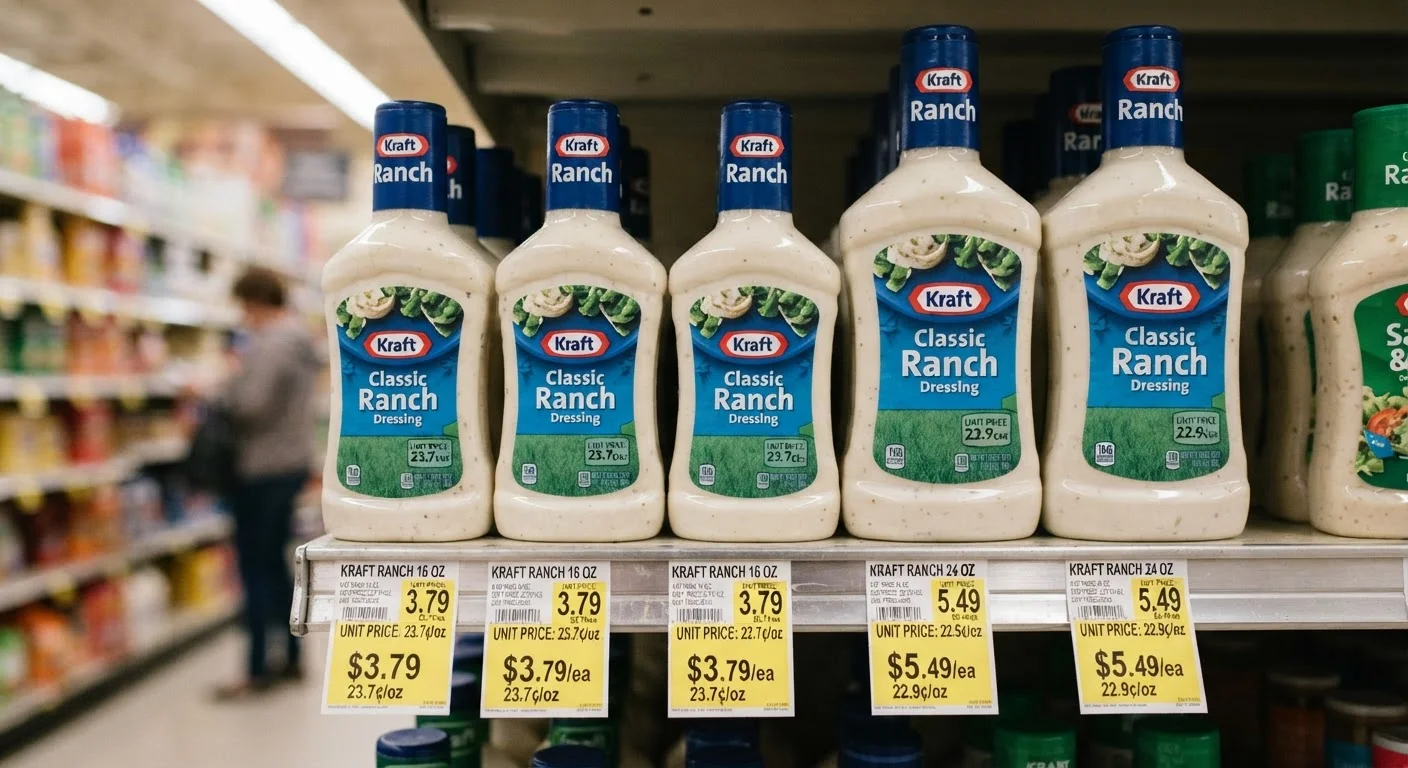
A unit price is the cost of a product broken down to a standard measurement - such as price per ounce, per count, or per square foot. It lets you compare different sizes and brands on equal footing, regardless of package size. The sticker price is just what you pay at checkout; the unit price tells you what you're actually getting for that money.
In the U.S., most states require retailers to display unit pricing on shelf tags for packaged grocery and household goods, though the specific requirements vary by state.
Why Sticker Prices Are Designed to Catch Your Eye
Walk down any grocery aisle and you're surrounded by prices designed to feel intuitive: $3.99 seems low, $12.49 feels significant. But those numbers tell you almost nothing about the actual value you're getting - they're total costs, not rates. Two bottles of dish soap sitting side by side can look similarly priced while actually being miles apart in value per wash.
This is the gap between the sticker price (what you pay at checkout) and the unit price (what you pay per standardized unit of measurement). Stores must display unit prices on shelf tags in many jurisdictions, but the design of most labels buries that number in small print while the total price takes center stage. Understanding which number to actually use when comparing products is one of the most practical skills an everyday shopper can develop.
To learn how other pricing strategies shape what you pay, see common shopping terms every consumer should understand.
~$500
Annual grocery savings potential from comparison shopping
Consumer advocacy research has estimated that households applying consistent unit-price comparison can reduce grocery spending meaningfully, with estimates often in the range of several hundred dollars per year, though results vary by household size and shopping habits.
35%+
Price difference between sizes of the same product
Studies of grocery shelf pricing have found that unit price differences between package sizes of the same product can routinely exceed 30%, and sometimes favor the smaller size.
~30 states
U.S. states with unit pricing requirements
Approximately 30 U.S. states have enacted some form of unit pricing regulation for retail grocery stores, though scope and enforcement vary significantly.
How to Read and Calculate Unit Price
Most shelf tags display unit price as a small figure in one corner, labeled something like $0.18/oz or $0.04/ct (per count). That's the number worth your attention. If a tag doesn't show it, the calculation is straightforward:
- Find the total price of the item.
- Divide by the quantity or weight - ounces, count, square footage, or whatever unit applies.
- Compare that result across competing products using the same unit.
For example: a 32 oz bottle priced at $5.12 costs $0.16 per oz. A 20 oz bottle of the same product at $3.60 costs $0.18 per oz. The larger bottle wins - but only if you'll use it before it expires or goes stale.
Use Your Phone to Speed Up Comparisons
Open your phone's calculator while standing in the aisle and divide each product's price by its weight or count. It takes under 30 seconds per item and removes all guesswork. Some grocery store apps also display unit prices digitally if you're shopping with a list.
Unit pricing becomes especially revealing when manufacturers change package sizes without changing the price - a practice sometimes called shrinkflation. The sticker price stays the same or drops slightly, while the unit price quietly climbs.
When Bigger Isn't Cheaper (and Other Surprises)
A common assumption is that larger packages always deliver a lower unit price. That's often true - but not reliably enough to skip the check. Retailers know that shoppers make this assumption, and pricing strategies sometimes exploit it.
Consider these situations where the math defies expectations:
- Promotional multi-packs occasionally carry a higher unit price than single items on sale.
- "Value" or "club" sizes at warehouse retailers sometimes match or exceed the per-unit cost of standard grocery store sizes.
- Store-brand alternatives in smaller packages can undercut name-brand large sizes on a per-unit basis.
- Sale-tagged items may still have a worse unit price than a non-sale competitor on the same shelf.
This connects directly to a broader point: sale language doesn't guarantee savings. For a deeper look at how retail discounts are structured, see how retail discounts are structured.
Sale Tags Don't Change the Math
A bright yellow "sale" sticker draws attention to the sticker price - not the unit price. Always check the unit price on a sale item against nearby alternatives before assuming you're getting the best value. A non-sale generic or store-brand product may still come out ahead on a per-unit basis.
Unit Pricing and Your Household Budget
Consistently applying unit price comparisons across your regular grocery run can add up meaningfully over time - but it works best as a habit, not a one-time audit. Start with the categories you buy most frequently: paper products, canned goods, cleaning supplies, cooking oils. These tend to have the widest unit price variation between sizes and brands.
It's also worth pairing unit price awareness with honest thinking about usage. A lower unit price on a perishable item only pays off if you actually consume it before it spoils. Buying in bulk doesn't always save you money - spoilage and storage costs can quietly erode the savings a strong unit price appears to promise.
If you notice certain spending habits eating into your budget despite careful shopping, spending patterns that quietly drain household budgets may offer useful perspective. And for anyone working on a broader financial plan, budgeting basics is a practical starting point.
“The unit price is the most honest number in the store. Everything else is marketing.”
— Edgar Dworsky, Consumer advocate and founder of ConsumerWorld.org