

Key Takeaways
The Appeal of Bulk - and Where the Logic Breaks Down
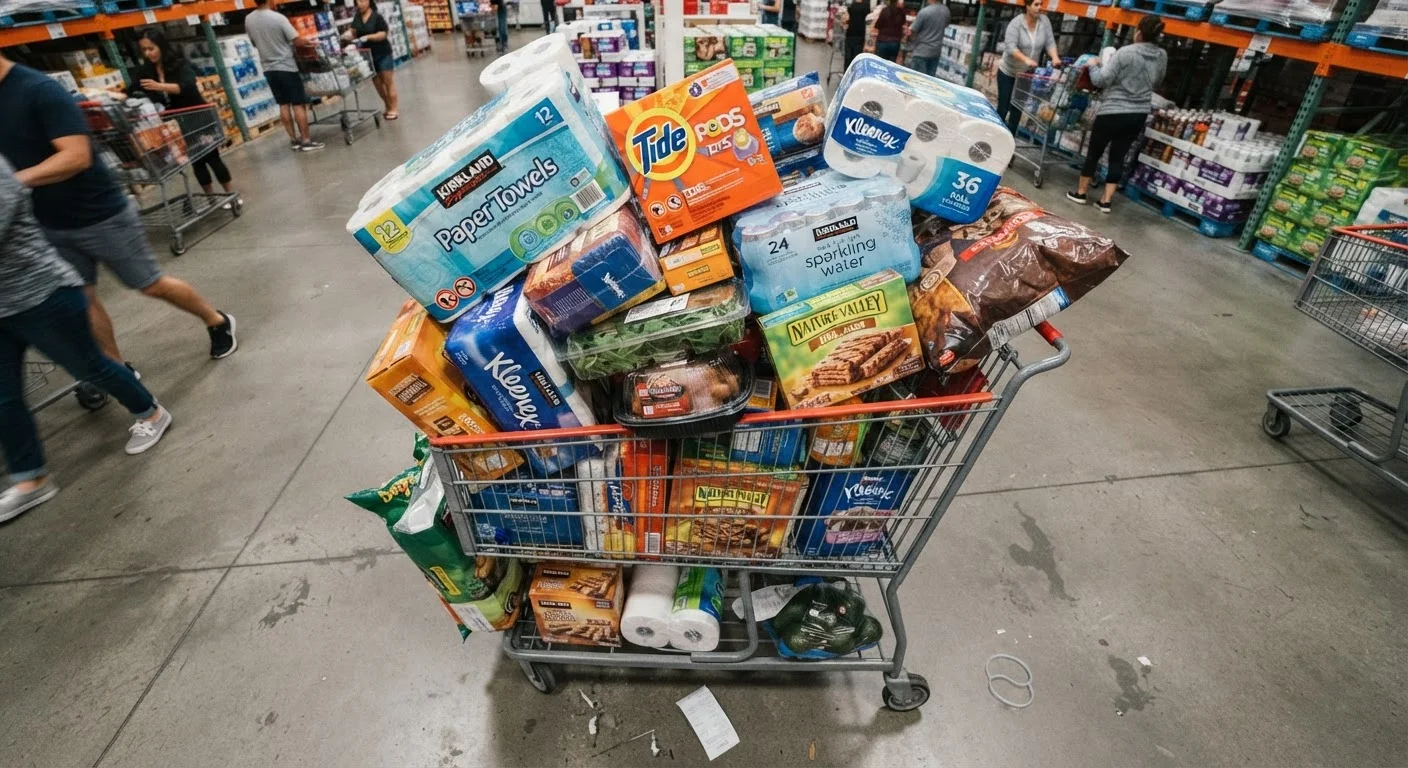
Walk into any warehouse club and the premise feels airtight: buy more, pay less per unit. It's a straightforward equation, and for certain products it genuinely holds. But for many households, bulk buying produces an unexpected result - more spending, not less.
The core problem is that unit price savings only materialize if the entire quantity gets used. When food spoils, cleaning products expire, or a family simply doesn't consume 96 granola bars before they go stale, that cheap per-unit price becomes meaningless. You've paid for product you'll never use.
Understanding how bulk pricing actually works - and when it works against you - is part of being a genuinely informed shopper. For a broader look at retail pricing mechanics, see our guide to how retail discounts are structured.
Myth
Buying in bulk always saves money because the per-unit price is lower.
Fact
A lower unit price only saves money if you use everything you purchase. Waste, spoilage, and storage costs can eliminate - or reverse - the savings.
The unit price advantage is real on paper, but it assumes 100% utilization. Research on household food waste consistently shows that Americans discard a significant portion of food purchased - meaning the savings calculation is rarely as clean as the shelf tag suggests. If you throw away a third of a bulk perishable purchase, you may have paid more per usable unit than you would have buying smaller quantities.
Myth
Warehouse clubs are always cheaper than regular grocery or big-box stores.
Fact
Warehouse clubs offer lower prices on many items, but not all. Regular stores frequently match or beat warehouse pricing on specific categories, especially during sales.
Studies comparing warehouse club prices to standard supermarket prices show that the gap varies widely by product category. Staples like nuts, cooking oil, and paper goods tend to favor the warehouse. But for items where supermarkets run frequent promotions - cereals, canned goods, cleaning supplies - a sale price at a regular store can be competitive or cheaper, without requiring a membership fee or a minimum quantity.
Myth
If it doesn't expire, bulk buying is risk-free.
Fact
Even shelf-stable items can degrade in quality over time and take up valuable storage space that has its own cost.
"Non-perishable" doesn't mean "unchanging." Cooking oils go rancid, spices lose potency, and even paper goods can absorb odors or moisture in imperfect storage conditions. Beyond quality, there's the spatial cost: large quantities require dedicated storage space, and in many US homes - particularly apartments or smaller houses - that space is genuinely limited and valuable.
Myth
Buying bulk is a smart financial habit for any budget-conscious household.
Fact
For households with tight monthly cash flow, large upfront bulk purchases can create budget pressure that outweighs the per-unit savings.
Spending $150 at a warehouse club to stock up might save $30 over time - but if that $150 comes at the cost of overdraft fees, a missed bill payment, or credit card interest, the net financial result is negative. Thoughtful budgeting means accounting for timing and liquidity, not just unit economics. This is a variation of the counterintuitive financial patterns discussed in our article on financial behaviors that quietly undermine progress.
The Hidden Costs Bulk Shoppers Often Overlook
Even when spoilage isn't a factor, bulk purchases carry costs that rarely appear on the price tag.
- Storage space: Warehouse-sized quantities require somewhere to go. Renting additional storage, or living in a cluttered space, has real costs - financial and practical.
- Cash flow impact: Paying $80 upfront for paper towels you'd normally spend $12 per month on ties up cash. For households managing tight monthly budgets, that lump sum can create shortfalls elsewhere. This connects to a broader pattern explored in our article on spending patterns that quietly drain household budgets.
- Quality drift: Some products - cooking oils, spices, batteries - degrade in quality over time even before their official expiration date. A bulk buy might mean using a mediocre product for 18 months rather than a fresher one.
- Membership fees: Warehouse clubs charge annual membership fees. If your actual savings don't exceed that cost, you're not saving - you're spending on access.
30-40%
Share of US food supply wasted at home
The USDA estimates that food waste at the consumer level accounts for roughly 30-40% of the food supply, a figure that directly affects the true savings from bulk food purchases.
$1,300+
Average annual US household food waste cost
According to ReFED and related food waste research, the average American household discards an estimated $1,300 or more worth of food each year - a figure that bulk buying habits can inadvertently worsen.
Smart shoppers cross-reference bulk pricing against standard shelf prices using unit pricing - the cost per ounce, count, or pound. Our unit price vs. sticker price guide explains exactly how to read these figures and avoid being misled by large-package optics.
Watch Out for Bulk 'Deals' on New Products
Buying a large quantity of something you've never tried before is one of the most reliable ways to lose money on bulk shopping. If you dislike the product - or it doesn't work as expected - you're stuck with a large, unusable supply. Always test a standard size before committing to bulk, especially for food, personal care, or cleaning products.
When Bulk Buying Genuinely Makes Sense
Bulk purchasing isn't inherently flawed - it's a tool that works well under specific conditions. Used thoughtfully, it fits into the kind of household purchasing routine that reduces waste.
Bulk buying tends to pay off when:
- The item is non-perishable and stable over time (toilet paper, laundry detergent, canned goods).
- Your household has a consistent, confirmed usage rate for the product.
- You have adequate storage without disrupting your living space.
- The unit price is verifiably lower than standard retail - not just the sticker price.
- The upfront cost doesn't stretch your monthly budget in a way that creates downstream problems.
Notice that none of these conditions involve guesswork or optimism. Bulk buying rewards planning, not impulse. If you can't check every box for a given item, the standard size is likely the more financially sound choice - even if it feels less satisfying at checkout. For a fuller picture of smart spending habits, the practical overview for everyday consumers covers how to evaluate value across all your purchases.
This article is for general informational purposes only and does not constitute financial or budgeting advice. Consult a qualified financial professional for guidance tailored to your personal circumstances.