

Key Takeaways
Why 'On Sale' Doesn't Always Mean What You Think
Walk through any retail store or scroll any shopping app and you'll encounter a near-constant stream of sale tags, crossed-out prices, and percentage-off banners. The implication is always the same: you're getting something for less than it's worth. But the word sale carries no legally precise definition in most contexts - what matters is the reference price it's measured against, and that reference price is not always what it appears to be.
Understanding the mechanics behind promotional pricing helps you evaluate whether a discount is genuine - or simply a number that was set high so it could be crossed out. This article walks through the most common misconceptions consumers hold about sale pricing and replaces them with a clearer picture of how retail discounts actually work. For a deeper look at the full taxonomy of retail pricing strategies, see how retail discounts are structured.
Myth
If a price tag shows a crossed-out 'original' price, that original price was real and recently charged.
Fact
Reference prices are sometimes set artificially high and held briefly - or not at all - simply to make the selling price appear discounted.
The US Federal Trade Commission (FTC) has long-standing guidance stating that a former price used as a reference should have been offered openly and in good faith for a reasonably substantial period. However, enforcement is complaint-driven, and the specific thresholds vary by state. Some retailers have faced legal action for fictitious reference pricing; many promotions operate in a gray area. When you see a crossed-out price, it is worth asking how recently and how consistently that figure was actually charged.
Myth
A higher percentage off always means a bigger real-world saving.
Fact
The percentage figure is only meaningful if the baseline price is accurate; a large percentage off an inflated reference price can still result in an ordinary market price.
Percentage-off framing is one of the most effective anchoring techniques in retail marketing because consumers naturally focus on the percentage rather than the absolute price. A product advertised at "60% off" may still cost more than a functionally equivalent item at a competing retailer with no promotional framing at all. The relevant question is always: what is the actual price, and how does it compare to what this item costs elsewhere?
Myth
Countdown timers and 'limited stock' warnings always reflect real scarcity or deadlines.
Fact
Many urgency signals are generated automatically by marketing platforms and do not necessarily correspond to actual inventory levels or hard expiration dates.
Artificial scarcity and time pressure are well-documented persuasion techniques. Some e-commerce platforms allow sellers to display low-stock warnings regardless of actual warehouse inventory. Countdown timers sometimes reset automatically after they expire. This doesn't mean all urgency cues are false - clearance items and flash sales can involve genuine constraints - but the presence of a timer alone is not reliable evidence that a deal will disappear or that stock is truly limited.
Myth
Sales events like Black Friday or end-of-season sales offer the steepest discounts of the year.
Fact
Prices during major sales events are mixed - some items are genuinely discounted, while others carry inflated pre-sale prices or discounts no deeper than those available at other times of year.
Consumer research and retail price-tracking data consistently show that not all products hit their lowest prices during high-profile sales events. Some categories - certain electronics, for example - do see meaningful reductions around major promotional periods. Others, particularly items that are newly listed at an inflated price shortly before an event begins, offer illusory savings. Comparing prices in the weeks before and after a sales event provides useful context that the event's marketing materials are unlikely to offer.
Myth
Buying more units of a sale item is always the smarter financial move.
Fact
Bulk purchases during sales only save money if you will use the product before it expires, if storage costs don't offset the discount, and if the per-unit price genuinely beats alternatives.
Stocking up on sale items can be a sound strategy for non-perishable products you regularly use, but several factors complicate the math. Perishable goods purchased in excess may be wasted before use. Storage space has a real cost, even if that cost is indirect. And multi-pack pricing is not always cheaper per unit than a standard-size purchase - a point worth verifying on the shelf label before loading up a cart.
Tactics That Make Ordinary Prices Look Like Deals
Several specific practices show up repeatedly in retail promotions. Recognizing them by name makes them easier to spot in the moment.
~37%
Shoppers who check price history before buying
A National Retail Federation consumer survey found roughly a third of US shoppers use price-tracking tools or history checks before committing to a promotional purchase.
2-8 weeks
Common pre-inflation window before major sales events
Retail price-tracking analyses have documented products whose listed 'original' prices were raised weeks before a promotional event, then 'discounted' back near the prior everyday price.
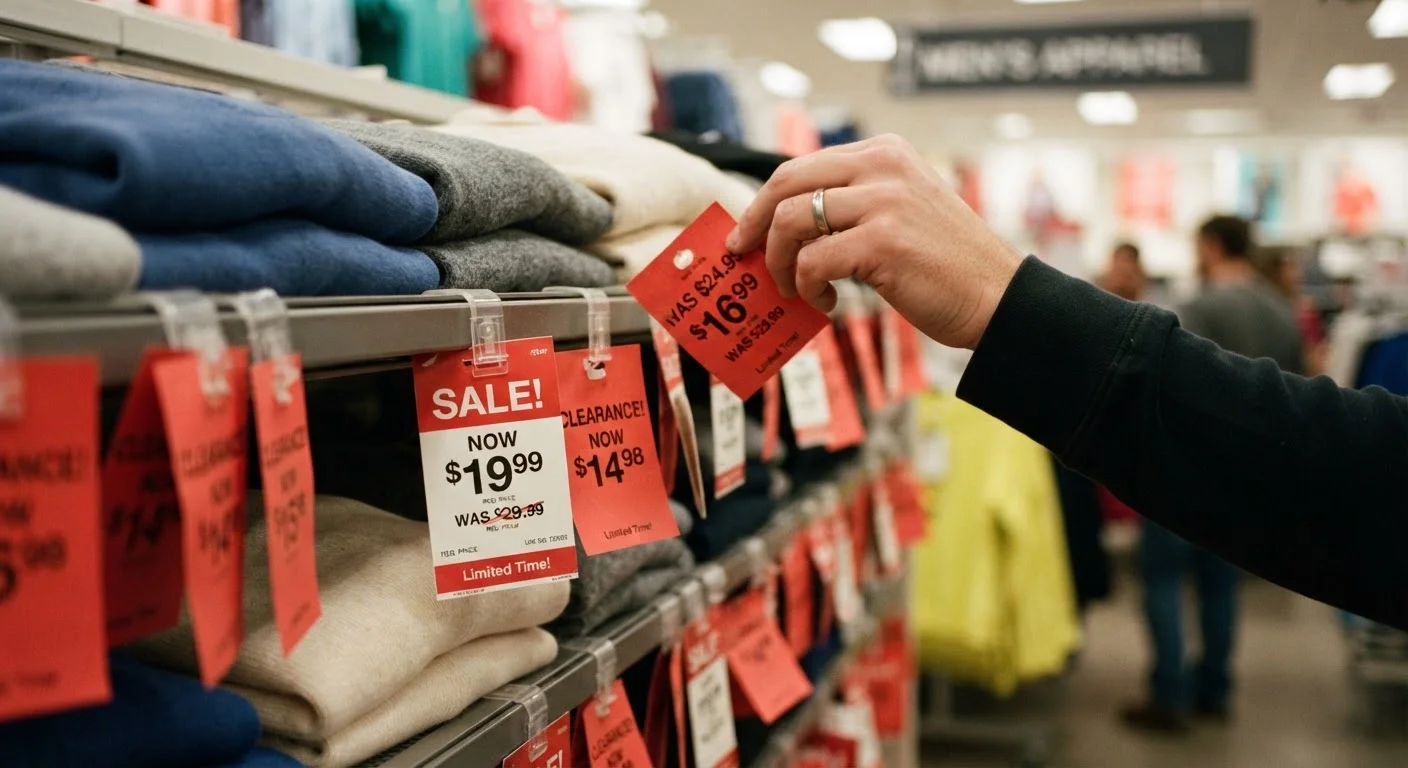
Reference-price inflation involves setting or briefly listing an artificially high "original" price so that the everyday selling price looks like a steep discount. A product sold at $40 virtually every day of the year may carry a tag reading "Was $80" based on a price that existed for only a few days - or was never charged at a comparable retailer at all.
Manufactured urgency - countdown timers, "only 3 left" warnings, and "sale ends tonight" language - is designed to compress your decision-making time. Some of these signals reflect real inventory constraints. Others are generated automatically by marketing software regardless of actual stock levels.
Percentage-off anchoring can be misleading when the baseline price is inflated. "50% off" sounds significant, but if the baseline was never a real market price, the percentage is largely meaningless. Checking the unit price rather than the sticker price provides a more grounded comparison, especially for groceries and household goods.
Auto-applied Coupons Can Obscure the Real Price
Some online retailers show a lower 'original' price alongside an automatically applied coupon, making the checkout price appear to be a discount even when it reflects the item's consistent everyday price. Always note the final price you're actually paying - not the gap between the original and the coupon - and compare it against prices at other sources before completing the purchase.
A practical counter-strategy is to track prices over time using browser extensions or retailer price-history tools before making larger purchases. If a product has sold at the "sale" price for the past six months, the sale price is the regular price.
How to Evaluate Any Sale Before You Buy
No single rule catches every misleading promotion, but a few consistent habits significantly reduce the risk of paying more than you need to.
- Look up price history. Free browser tools can show how a product's price has moved over weeks or months. A genuine markdown looks different from a price that oscillates between an inflated "original" and a "sale" figure on a predictable cycle.
- Calculate unit prices. Bulk or multi-pack "deals" don't always beat the per-unit cost of a standard size. Shelf labels in most US grocery stores are required to display unit prices - use them. Our plain-language glossary of retail terms explains the vocabulary retailers use and what it actually means.
- Pause on urgency cues. Before responding to a countdown timer or low-stock warning, ask whether you'd regret buying this item at full price. If the answer is yes, the urgency is working on you - not for you.
- Check return policies before purchase. Sale items are sometimes marked final sale, which removes the safety net of a return. Reading the return policy in advance prevents an unpleasant surprise after the transaction.
Your State May Have Stronger Protections
Several US states - including California and New York - have consumer protection statutes that place specific requirements on how retailers must establish and advertise reference prices. If you believe a promotional price is deceptive, your state attorney general's office or consumer protection bureau is the appropriate point of contact. The FTC also accepts consumer complaints about deceptive advertising practices.
These habits don't require cynicism about every promotion - genuinely good discounts exist. The goal is a quick, informed check rather than automatic trust in promotional language.