

Key Takeaways
Option A
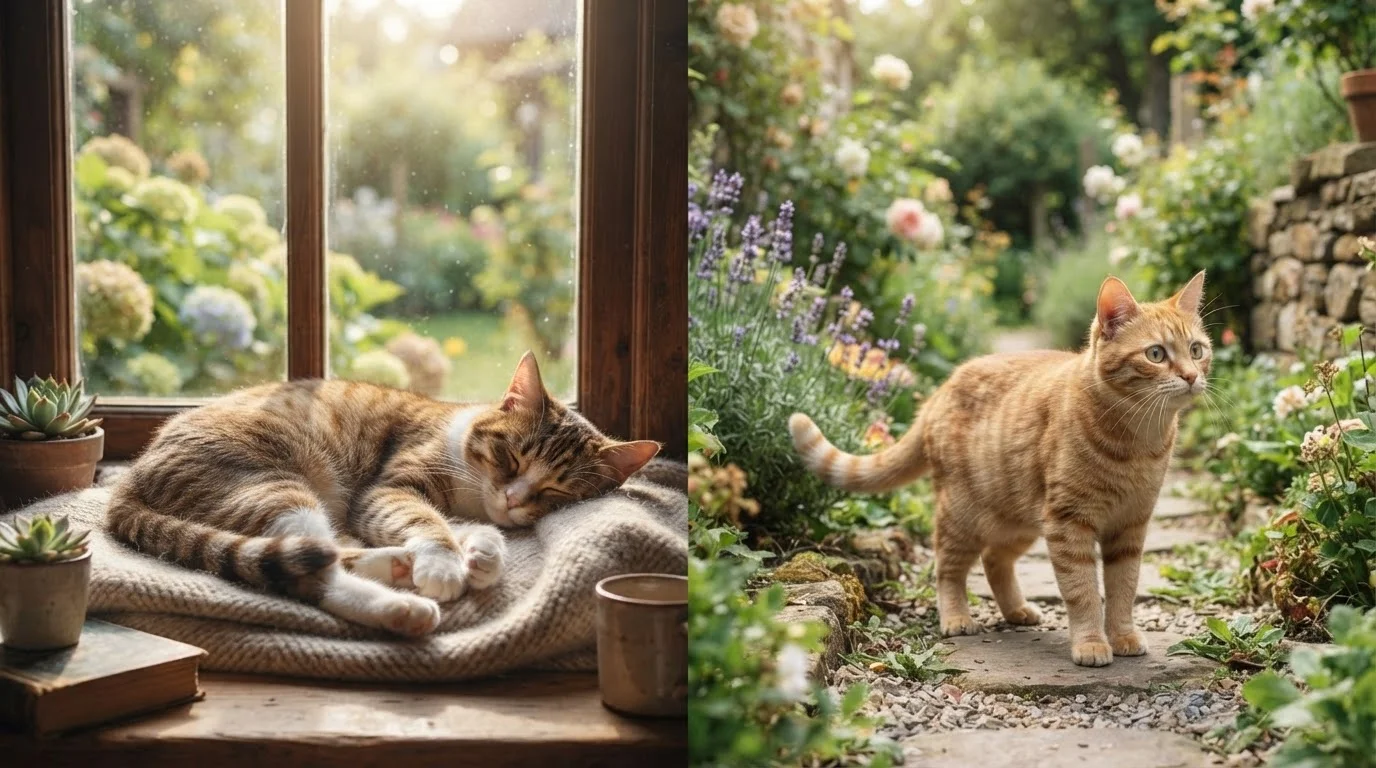
Indoor Cat
The controlled, protected environment choice.
Best for: Owners who prioritize longevity, predictability, and minimizing exposure to external hazards.
Option B
Outdoor Cat
The stimulating, freedom-forward lifestyle.
Best for: Cats with strong prey drives or high activity needs, in low-traffic, rural, or semi-rural settings.
If your cat lives in a busy urban area near heavy traffic
Indoor Cat
Traffic poses one of the highest mortality risks for free-roaming cats. Keeping your cat indoors eliminates this danger entirely.
If your cat shows strong hunting instincts and signs of restlessness indoors
Outdoor Cat
Some cats, especially those adopted as adults with outdoor histories, experience genuine stress when confined. Structured outdoor access may better suit their temperament.
If you want to balance enrichment with safety
Indoor Cat
A well-enriched indoor environment with a catio or supervised leash walks provides stimulation while keeping risk manageable.
If you live in a rural area with low traffic and few predators
Outdoor Cat
Risk levels are meaningfully lower in low-density areas, and outdoor access may align well with your cat's activity level and behavioral needs.
If your cat has a chronic health condition or is immunocompromised
Indoor Cat
Outdoor exposure to parasites, bacteria, and other cats increases infection risk considerably for cats already managing a health condition.
The Core Tradeoff: Lifespan vs. Stimulation
The indoor-versus-outdoor debate ultimately centers on one fundamental tension: safety versus environmental richness. Neither lifestyle is inherently wrong, but each comes with real consequences that owners should understand before deciding - or before reconsidering an existing arrangement.
Research consistently suggests that indoor cats live significantly longer on average than their outdoor counterparts. Estimates vary, but many veterinary sources cite indoor cats living roughly 12-18 years, while outdoor cats average closer to 2-5 years in some studies - though these figures depend heavily on environment, traffic density, and predator presence. For a deeper look at how lifestyle affects specific health outcomes, see our article on how indoor and outdoor lifestyles shape cats' health profiles.
That longevity advantage comes at a cost: indoor cats are more prone to obesity, boredom-related behavioral issues, and stress if their environment lacks adequate stimulation. The tradeoff is real, and dismissing either side doesn't serve your cat well.
| Criterion | Indoor Cat | Outdoor Cat |
|---|---|---|
| Average lifespan | 12-18 years (generally longer) | 2-5 years (highly variable) |
| Injury and accident risk | Low | High (traffic, predators) |
| Parasite exposure | Minimal | Frequent; ongoing prevention required |
| Infectious disease risk | Low | Higher (FeLV, FIV, rabies) |
| Obesity risk | Higher without active enrichment | Lower due to activity level |
| Behavioral stimulation | Requires deliberate owner effort | Natural and abundant |
| Veterinary costs | Lower ongoing preventive costs | Higher; more frequent parasite and injury care |
| Environmental impact | None on local wildlife | Notable impact on birds and small wildlife |
Risks Each Lifestyle Actually Carries
Outdoor risks are numerous and well-documented. Free-roaming cats face vehicle traffic, predators (coyotes, dogs, birds of prey), infectious diseases such as feline leukemia virus (FeLV) and feline immunodeficiency virus (FIV) from cat-to-cat contact, intestinal parasites, and accidental poisoning from pesticides, antifreeze, or toxic plants. These aren't hypothetical concerns - they're among the leading causes of premature death in outdoor cats.
Indoor risks are subtler but still worth taking seriously. Without structured activity and mental engagement, indoor cats can develop obesity, diabetes, urinary tract problems, and stress-related behaviors such as over-grooming, aggression, or inappropriate elimination. These conditions are manageable but require owner commitment to daily enrichment and routine veterinary care. The Pet Health hub has broader guidance on keeping indoor cats healthy year-round.
1.3-4B
Birds killed annually by outdoor cats in the US
According to estimates published in Nature Communications (Loss et al.), free-ranging cats are among the leading human-linked causes of bird mortality in North America.
~3x
Higher disease exposure risk for outdoor cats
Veterinary epidemiologists note that outdoor and indoor-outdoor cats face substantially higher exposure rates to FeLV, FIV, and intestinal parasites compared to strictly indoor cats.
50%+
Of indoor cats in the US are overweight or obese
The Association for Pet Obesity Prevention has reported that more than half of domestic cats in the US are classified as overweight, with sedentary indoor lifestyles a key contributing factor.
Understanding these risks side-by-side helps owners make decisions that are grounded in reality rather than assumption.
Making the Indoor Life Work
An indoor cat that's bored is a cat heading toward behavioral problems. The solution isn't complicated, but it does require consistency. Vertical space - cat trees, wall-mounted shelves, window perches - allows cats to satisfy climbing and territory instincts. Puzzle feeders and rotating toys engage their predatory drive. Daily interactive play sessions with a wand toy or similar are among the most effective forms of enrichment available.
Litter box hygiene is also more consequential indoors: the standard recommendation is one box per cat plus one extra, scooped daily. Odor and cleanliness issues are among the most common reasons indoor cats develop elimination problems.
If your household includes multiple cats, resource competition can create hidden stress. See strategies for keeping a multi-pet household running smoothly for practical approaches to managing shared space and reducing tension.
Giving Outdoor Cats a Safer Setup
If you have an outdoor cat - or a cat that clearly needs more external stimulation - harm reduction is the most practical frame. A fully enclosed outdoor structure (often called a catio) gives cats access to fresh air, sunlight, and sensory variety without free-roaming risk. Leash and harness training is another option that works well for some cats, particularly when started young.
For cats with outdoor access, preventive care becomes non-negotiable: regular deworming, flea and tick prevention, up-to-date vaccinations (especially rabies and FeLV), and more frequent veterinary checkups. These aren't optional extras - they're baseline care for outdoor lifestyles. Keep in mind that preventive care adds to the ongoing cost of cat ownership; the hidden costs many new pet owners don't anticipate covers this in detail.
This article is for general informational purposes only and does not constitute veterinary advice. Consult a licensed veterinarian for guidance specific to your cat's health, behavior, and environment.
The Middle-Ground Option Worth Considering
Many veterinarians and cat behavior specialists now recommend supervised outdoor access - through catios, enclosed runs, or leash walks - as a practical compromise. This approach gives cats sensory enrichment and fresh air while significantly reducing exposure to the hazards associated with free-roaming. It's not the right fit for every household, but for owners looking to balance safety with quality of life, it's an option worth exploring with your vet.