

Key Takeaways
Option A
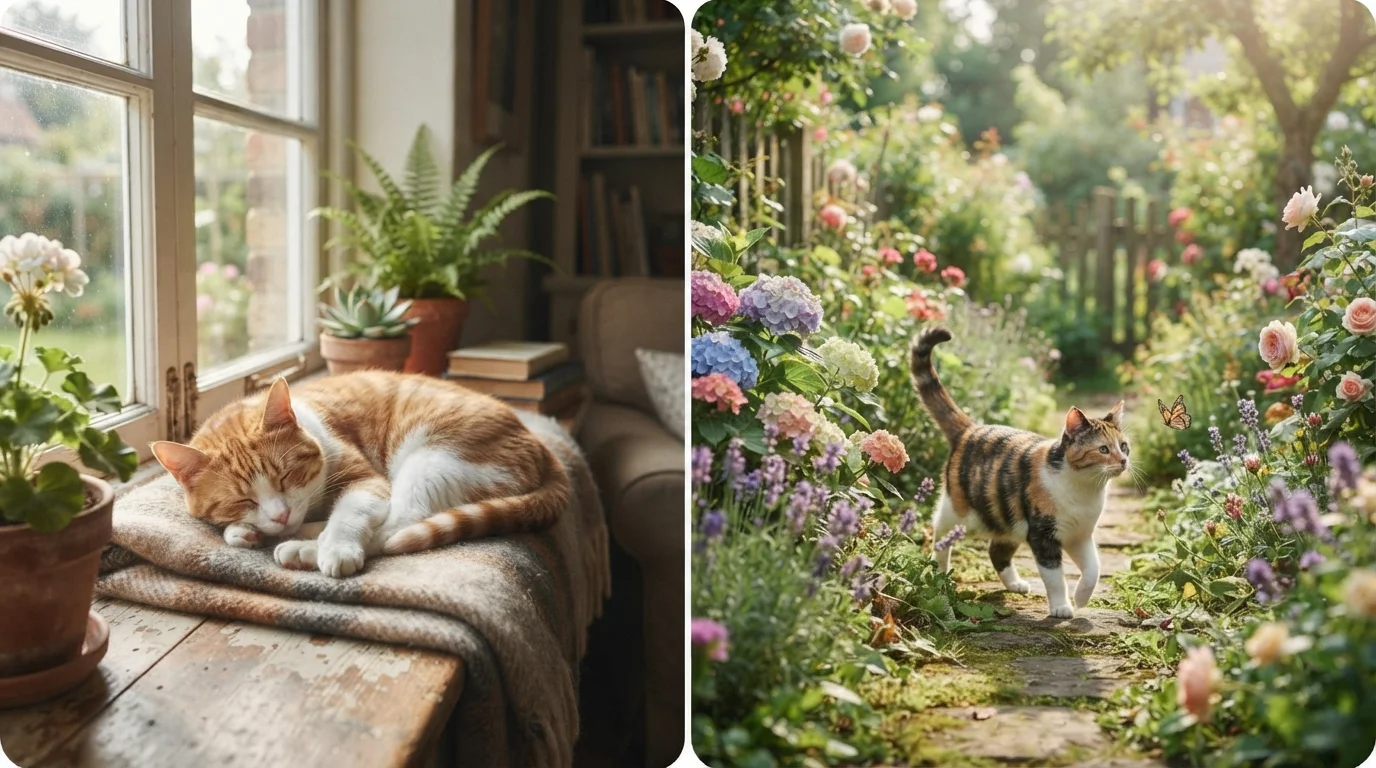
Indoor Cats
The protected, enrichment-dependent lifestyle.
Best for: Owners in urban environments or those wanting greater control over their cat's safety and health exposures.
Option B
Outdoor Cats
The stimulation-rich, higher-risk lifestyle.
Best for: Cats with strong territorial instincts in lower-traffic rural or suburban settings where supervised access is possible.
If your cat lives in a densely populated urban area
Indoor Cats
Traffic, toxins, and high disease exposure in urban environments make keeping cats indoors the substantially safer choice.
If your cat shows signs of stress or frustration indoors
Outdoor Cats
Some cats have strong predatory or territorial drives that indoor enrichment alone may not satisfy; managed outdoor access can reduce behavioral distress.
If you want to minimize veterinary costs related to injury and infection
Indoor Cats
Indoor cats have far lower rates of trauma, infectious disease, and parasite-related illness, which generally reduces emergency veterinary needs.
If your cat is overweight or showing signs of low activity
Outdoor Cats
Outdoor activity naturally encourages movement; however, structured indoor play and puzzle feeders can achieve similar results without the added risks.
If you want the best of both worlds for a healthy, curious cat
Indoor Cats
A well-enriched indoor environment paired with a secure catio or supervised leash time provides mental stimulation with significantly reduced hazard exposure.
Lifespan and Injury Risk: The Numbers Behind the Difference
One of the starkest differences between indoor and outdoor cats is lifespan. Veterinary and animal welfare organizations consistently report that indoor cats live longer on average - estimates often range from 12 to 18 years for indoor cats, compared to 2 to 7 years for free-roaming outdoor cats. These figures vary by source and setting, but the directional gap is well established in the literature.
The primary driver is trauma exposure. Outdoor cats face vehicle strikes, dog attacks, falls from height during escapes or confrontations, and encounters with wildlife. Indoor cats are almost entirely shielded from these hazards. For owners weighing the two approaches, this single factor carries considerable weight.
| Criterion | Indoor Cats | Outdoor Cats |
|---|---|---|
| Average lifespan | 12-18 years | 2-7 years |
| Trauma risk | Very low | High (vehicles, animals) |
| Infectious disease exposure | Low | High (FIV, FeLV, URI) |
| Parasite burden | Minimal | Frequent (fleas, worms, ticks) |
| Obesity risk | Higher due to inactivity | Lower due to roaming |
| Urinary/stress disease | More common | Less common |
| Behavioral stimulation | Owner-dependent | Environment-provided |
| Vaccination needs | Core vaccines required | Core + additional vaccines |
Disease, Parasites, and Immune Challenges
Outdoor cats come into contact with a wider range of infectious agents. Feline immunodeficiency virus (FIV) and feline leukemia virus (FeLV) spread primarily through bites and close contact - interactions that are far more common among free-roaming cats. Upper respiratory infections, ringworm, and diseases carried by rodents (such as toxoplasmosis) also pose meaningful risks.
Parasite burden is another area where outdoor cats consistently differ. Fleas, ticks, ear mites, intestinal worms, and heartworm (in endemic regions) are substantially more prevalent in cats with outdoor access. Routine preventative treatment is critical for outdoor cats, but it does not eliminate exposure risk entirely.
2-5×
Higher FIV prevalence in outdoor vs. indoor cats
Multiple seroprevalence studies indicate outdoor and stray cats test positive for FIV at substantially higher rates than indoor-only cats.
50%+
Of indoor cats are overweight or obese
The Association for Pet Obesity Prevention has consistently found more than half of domestic cats in the US are classified as overweight or obese, a condition strongly linked to sedentary indoor lifestyles.
12-18 yrs
Typical lifespan range for indoor cats
Veterinary consensus places average indoor cat lifespan well above that of free-roaming cats, though individual variation is significant.
Indoor cats are not parasite-free by default - fleas can hitchhike inside on clothing and other pets - but their overall exposure is dramatically reduced. Vaccination protocols for both lifestyles should be discussed with a veterinarian, as core vaccines remain important regardless of where a cat lives.
The Indoor Cat's Distinct Health Vulnerabilities
While indoor cats avoid many outdoor hazards, they face their own health profile. Reduced activity levels make indoor cats more susceptible to obesity - a condition that contributes to diabetes, joint disease, and urinary problems. Learn how excess weight affects pets at the organ level and how veterinarians typically approach management.
Lower urinary tract disease, including feline idiopathic cystitis (FIC), is also more common in indoor cats. Stress - from environmental monotony, lack of stimulation, or multi-pet household tension - is a recognized trigger. Owners of indoor cats should pay close attention to litter box habits and signs of straining or blood in urine, and consult a veterinarian promptly if these appear.
Dental health is another concern for both lifestyles, though diet type and chewing behavior can influence plaque accumulation. For a broader look at oral health risks in cats, see what's actually at stake with feline dental health.
Behavioral Needs and Environmental Enrichment
Cats are natural hunters. Whether indoors or out, they need opportunities to stalk, pounce, climb, and investigate. Outdoor cats satisfy much of this drive through direct environmental interaction. Indoor cats depend entirely on their owners to provide those outlets.
Inadequate enrichment in indoor cats can manifest as destructive scratching, aggression, excessive vocalization, overgrooming, and anxiety. Rotating toys, puzzle feeders, vertical space (cat trees, shelving), window perches with bird feeders outside, and regular interactive play sessions are all evidence-supported strategies for meeting these instinctual needs. Understanding your cat's nutritional needs is part of this picture - feeding patterns that mimic hunting behavior, such as multiple small meals, can reduce boredom-driven overeating.
The Catio and Leash-Walk Middle Ground
Many veterinarians and animal behaviorists recommend a supervised outdoor compromise for owners who want to balance safety with stimulation. Enclosed outdoor structures (often called catios) allow cats to experience fresh air, natural light, and sensory variety without exposure to traffic, predators, or infectious disease. Harness and leash training, when introduced gradually, is another option. These approaches are not suitable for every cat, but for curious, active cats in indoor-only settings, they can meaningfully reduce stress-related behavioral issues.
In multi-pet households, behavioral complexity increases further. Managing space and resources between multiple pets becomes especially relevant when indoor cats must share territory.
This article is for general informational purposes only and does not constitute veterinary advice. Always consult a licensed veterinarian for guidance specific to your cat's health and circumstances.