

Key Takeaways
Why Dental Disease Is So Easy to Miss
Dental disease develops gradually and quietly. Plaque - a sticky film of bacteria - begins forming on tooth surfaces within hours of eating. Left undisturbed, it mineralizes into tartar, which irritates the gums and creates pockets where bacteria multiply below the gumline. This is periodontal disease, and it's the most commonly diagnosed condition in both dogs and cats.
The problem is that pets don't show pain the way humans do. A dog with a fractured molar or advanced gum recession will typically keep eating, playing, and greeting you at the door. There are rarely obvious distress signals until disease is well-established. This is why routine pet care basics, including regular oral assessments, matter so much - because owners can't rely on behavioral cues alone.
Pain Doesn't Always Look Like Pain
Dogs and cats instinctively mask discomfort - it's a survival behavior. A pet with severe dental disease may continue eating, playing, and acting normally until the problem is quite advanced. Don't interpret a lack of obvious distress as a sign that teeth are healthy. Regular veterinary exams are the only reliable way to detect problems early.
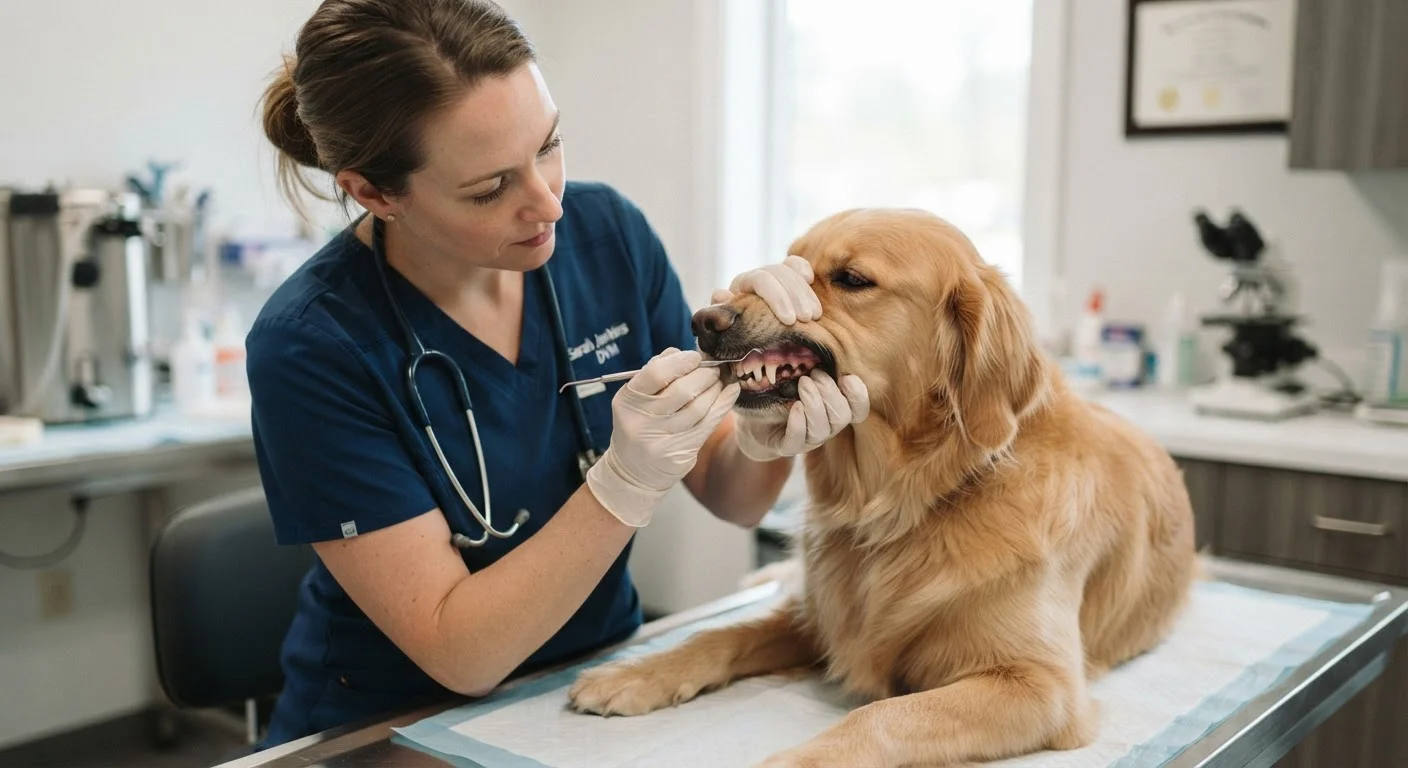
Even the appearance of the teeth can mislead. A tooth can look intact above the gumline while its root is infected and the surrounding bone is deteriorating. Only a veterinary exam - and in many cases, dental X-rays - can reveal what's actually happening beneath the surface.
The Mistakes That Let Dental Disease Progress
Most cases of advanced dental disease in pets don't happen because owners don't care - they happen because of specific, correctable gaps in knowledge and routine. Understanding where the errors occur is the first step toward closing them.
Assuming bad breath is normal and not a warning sign.
Why it happens: Many pet owners chalk up unpleasant breath to diet or the nature of the animal, not realizing that persistent bad breath (halitosis) is one of the earliest clinical signs of bacterial buildup and gum inflammation.
Skipping dental checks at annual wellness visits.
Why it happens: Owners often expect the vet to raise dental concerns unprompted, and time-limited appointments don't always allow for thorough oral exams unless the owner specifically asks.
Believing that dry kibble cleans teeth sufficiently.
Why it happens: The idea that crunchy food scrapes plaque from teeth is widely repeated but is largely a persistent pet health myth. Most kibble shatters before meaningful abrasion occurs.
Never attempting to brush the pet's teeth at home.
Why it happens: The process feels unfamiliar and many pets resist it initially, so owners give up after one or two attempts rather than building a gradual routine.
Postponing professional cleanings due to anesthesia concerns.
Why it happens: Anesthesia carries a perception of high risk, and some owners delay cleanings indefinitely out of fear - even when the dental disease itself poses a far greater health risk.
Not connecting dental disease to the broader cost of pet ownership.
Why it happens: Pet owners often budget for food and vaccinations but underestimate dental care. Advanced periodontal treatment, extractions, and related organ complications can quickly become significant expenses - as explored in our look at hidden costs new pet owners don't anticipate.
Dental Disease Can Affect Vital Organs
Periodontal disease doesn't stay in the mouth. Oral bacteria can enter the bloodstream and contribute to damage in the heart valves, kidneys, and liver - conditions that are costly, complex, and sometimes irreversible. Addressing dental health early is one of the most impactful preventive steps a pet owner can take.
It's also worth recognizing the financial dimension. Dental neglect is one of the hidden costs new pet owners rarely anticipate. A professional cleaning early in a pet's life is a fraction of the cost of multiple extractions or treating a secondary kidney or heart condition years later. Similarly, feeding habits that rely heavily on soft or sugary treats can accelerate plaque buildup, compounding the problem.
80%
Dogs with dental disease by age 3
The American Veterinary Medical Association estimates that approximately 80% of dogs and 70% of cats show signs of oral disease by their third birthday.
70%
Of tooth structure is below the gumline
Because most of the tooth - including the root and supporting structures - sits beneath the gumline, visual inspection at home cannot detect the majority of dental disease.
4x
More likely: dental disease in small breeds
Small and toy breed dogs are disproportionately affected by periodontal disease due to tooth crowding relative to jaw size, according to veterinary dental specialists.
Building a Realistic Dental Care Routine
A sustainable dental care plan for most pets combines daily or near-daily home care with periodic professional cleanings. Neither replaces the other - home brushing slows plaque formation between visits, while professional cleanings address tartar and disease below the gumline that no brush can reach.
For home care, the gold standard remains brushing with a pet-safe enzymatic toothpaste. VOHC-accepted dental chews and water additives can supplement brushing but shouldn't substitute for it. If your pet absolutely resists brushing, discuss alternatives with your vet - some combinations of products are more effective than others, and what works depends on the individual animal.
For professional care, frequency depends on breed, age, diet, and the individual pet's rate of tartar accumulation. Some pets need annual cleanings; others may need them more often. Your veterinarian is best positioned to recommend a schedule based on what they observe during exams. Dental health is also connected to overall wellness - conditions like pet obesity can complicate anesthetic procedures, making weight management another reason to address both proactively. For broader feeding and nutrition guidance, the pet nutrition hub offers practical, vet-informed resources to support your pet's overall health.
This article is for general informational purposes only and does not constitute veterinary advice. Always consult a licensed veterinarian for guidance specific to your pet's health needs.