

Key Takeaways
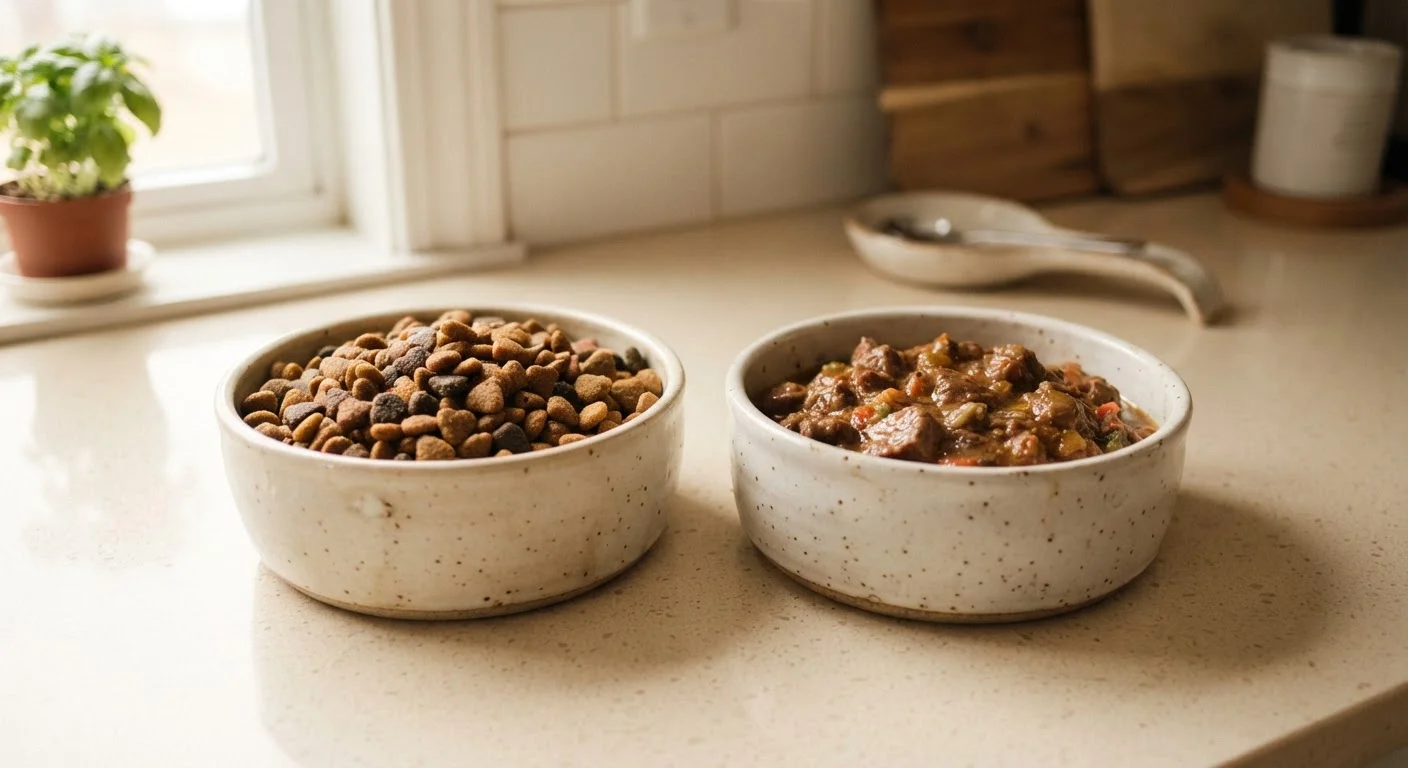
Option A
Dry Kibble
The convenient, calorie-dense staple.
Best for: Pet owners seeking cost-effective, shelf-stable feeding with easy portion control.
Option B
Wet Food
The moisture-rich, highly palatable alternative.
Best for: Pets with hydration needs, picky appetites, or conditions requiring lower caloric density.
If your cat drinks very little water independently
Wet Food
Cats evolved as desert animals with a low thirst drive. Wet food dramatically increases their daily fluid intake, supporting urinary and kidney health.
If budget and storage convenience are top priorities
Dry Kibble
Kibble has a longer shelf life once opened, requires no refrigeration, and typically costs less per serving than comparable wet food.
If your pet is overweight or needs careful calorie management
Wet Food
Wet food's high moisture content means fewer calories per cup, which can help pets feel satisfied while consuming fewer total calories.
If your pet is a healthy adult dog with no special health conditions
Dry Kibble
A high-quality kibble meeting AAFCO standards can fully sustain an adult dog, with easier daily feeding logistics and consistent nutrient profiles.
If your pet is a senior, recovering from illness, or has dental pain
Wet Food
Soft texture makes wet food easier to chew and swallow. It's also highly palatable, which helps maintain appetite in pets with reduced interest in eating.
How Moisture Content Changes Everything
The most obvious difference between dry kibble and wet food is water. Wet food is typically 70-80% moisture by weight, while dry kibble sits around 10%. That gap has real consequences for how your pet's body functions day to day.
Cats are the species most affected by this distinction. Unlike dogs, cats evolved from arid environments and have a naturally weak thirst response - they tend not to compensate for low-moisture food by drinking more water. Feeding an exclusively dry diet to a cat can contribute to chronic mild dehydration, which over time is associated with urinary tract issues and kidney stress. Wet food helps bridge that gap without requiring your cat to change behavior.
Dogs are more willing to drink water independently, but pets managing kidney disease, urinary crystals, or diabetes can also benefit from increased dietary moisture, regardless of species. Always discuss specific health conditions with your veterinarian before changing your pet's diet. Understanding how macronutrients and hydration interact can help you ask better questions at that appointment.
70-80%
Moisture content in typical wet food
Compared to roughly 10% in dry kibble - a difference that meaningfully affects daily fluid intake, particularly in cats.
~3x
Calorie density difference per volume
Dry kibble can contain roughly three times the calories per cup compared to wet food, making portion accuracy especially important.
Nutrient Profiles: What Each Format Actually Delivers
When comparing dry and wet food, it's important to look at nutrients on a dry matter basis - that is, after accounting for the water content in each format. On this basis, both can deliver equivalent protein, fat, and micronutrient levels. The format itself does not automatically make one more nutritious than the other.
What matters more is whether the food meets the standards established by the Association of American Feed Control Officials (AAFCO), which sets minimum nutrient profiles for dogs and cats at different life stages. Both kibble and wet food can carry an AAFCO nutritional adequacy statement - look for it on the label. Reading ingredient labels carefully will tell you far more than the format alone.
Caloric density is where the practical difference emerges. Because kibble contains so little moisture, it packs more calories into a smaller volume. A single cup of dry kibble can contain 300-400 calories, while the same volume of wet food may contain 100-150 calories. This means overfeeding dry kibble is easier to do accidentally - especially if you're eyeballing portions rather than measuring.
| Criterion | Dry Kibble | Wet Food |
|---|---|---|
| Moisture content | ~10% | 70-80% |
| Caloric density (per oz) | Higher | Lower |
| Shelf life (opened) | Weeks (sealed bag) | 1-3 days (refrigerated) |
| Cost per serving | Generally lower | Generally higher |
| Palatability for picky eaters | Moderate | High |
| Supports hydration | Minimally | Significantly |
| Dental benefit | Minimal (standard kibble) | None |
| Portion control ease | Easy (measuring cup) | Moderate (by can/pouch) |
Digestion, Palatability, and Dental Health
Wet food is generally more palatable to pets - the aroma, texture, and fat content are closer to the whole-prey diet their digestive systems evolved for. This makes it valuable for picky eaters, underweight pets, or animals recovering from illness who need encouragement to eat. Some pets with sensitive stomachs also tolerate wet food more easily, though individual responses vary.
A persistent belief is that dry kibble cleans teeth. The reality is more nuanced. Standard kibble provides minimal mechanical abrasion because most pets don't chew it thoroughly enough to scrape plaque. Veterinary dental diets - formulated with specific kibble size and texture to encourage chewing - do have evidence behind them, but everyday kibble should not be relied upon as a substitute for regular tooth brushing or professional dental cleanings.
Mixing Formats Is a Valid Strategy
Many veterinary nutritionists consider a mixed feeding approach - offering both wet and dry food - a practical middle ground. It can improve hydration, increase palatability, and provide textural variety. If you choose to mix, adjust portions carefully to avoid overfeeding total daily calories. Ask your vet about the right split for your individual pet's weight and health status.
Life stage also shapes which format makes practical sense. Puppies and kittens, pregnant or nursing animals, and seniors all have different caloric and nutrient demands. How nutritional needs shift across a dog's life stages is a useful reference when reconsidering your pet's diet at any transition point.
This article is for general informational purposes only and does not constitute veterinary or medical advice. Always consult a licensed veterinarian before making significant changes to your pet's diet, especially if your pet has an existing health condition.