

Key Takeaways
Pet Food Ingredient Label
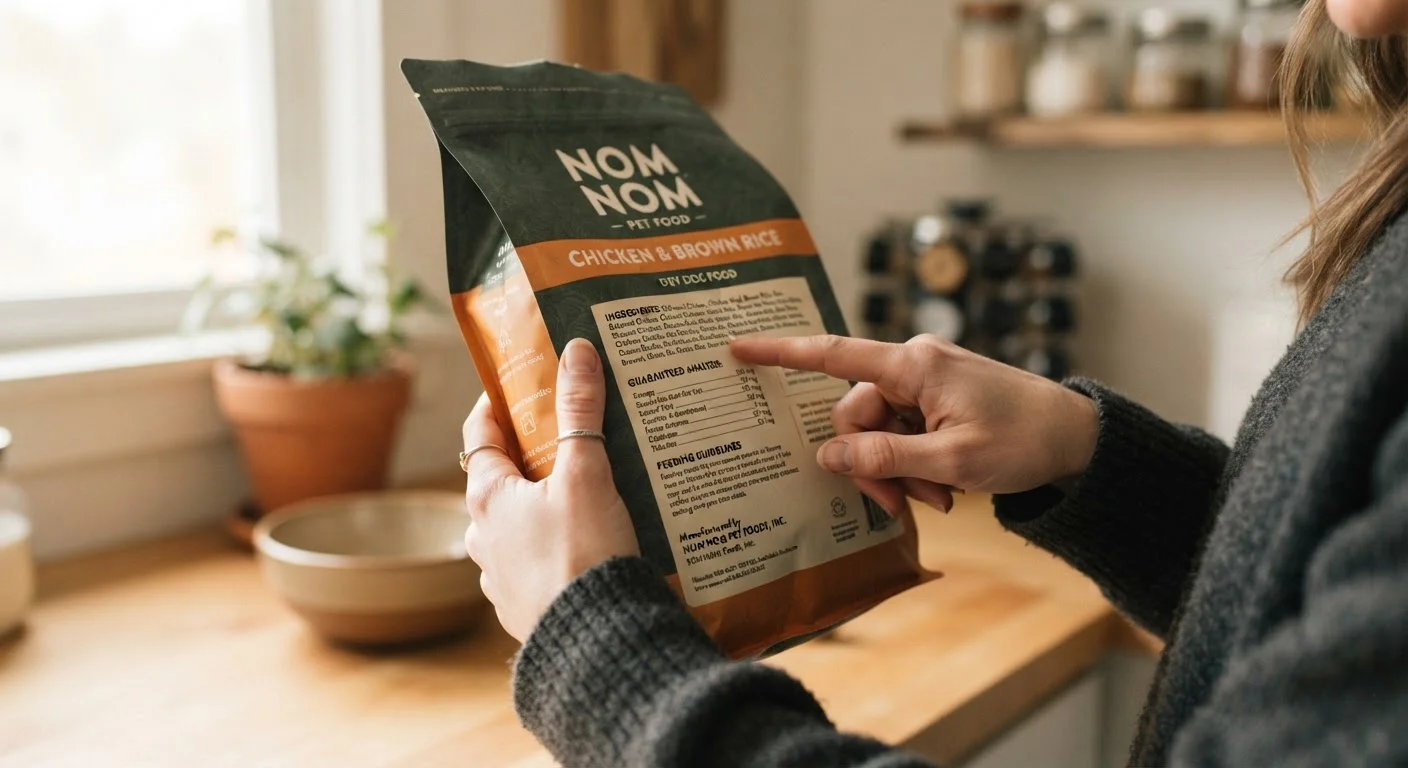
A pet food ingredient label is the regulated list printed on every commercial pet food package that identifies every ingredient used in that product. Ingredients are listed in descending order by weight before processing, meaning the heaviest ingredient appears first. This list is governed in the U.S. by AAFCO (the Association of American Feed Control Officials) and enforced at the state level.
Ingredient weights are measured before cooking or extrusion, which significantly affects how protein sources appear in rankings - particularly for moisture-heavy fresh meats versus dry meals.
Why the Ingredient List Is Only Part of the Picture
Most pet owners flip straight to the ingredient list when evaluating a food - understandably so. But the ingredient list alone won't tell you whether a food is nutritionally balanced. It lists what went in, not how much of each nutrient survived processing or how bioavailable those nutrients are for your dog or cat.
The ingredient list works best when read alongside the guaranteed analysis panel, which reports minimum crude protein and fat percentages and maximum crude fiber and moisture. Together, these two panels give you a more complete picture. For a broader breakdown of how these numbers fit into overall pet nutrition, see our complete guide to pet nutrition.
The most important statement on any label is the AAFCO nutritional adequacy statement - a declaration that the food either meets established nutrient profiles or was tested through feeding trials for a specific life stage. This small block of text carries more weight than most front-of-bag claims.
How the Order of Ingredients Can Mislead You
Ingredients are listed by weight before processing. Fresh meats like chicken or salmon contain up to 70% water, inflating their pre-cooking weight. After the moisture is cooked out, the actual protein contribution shrinks. This is why a bag that leads with "chicken" may still be predominantly grain-based in its final dry composition.
~70%
Water content in fresh chicken before cooking
This high moisture level explains why whole meats rank first on ingredient lists but may contribute less dry protein to the finished food than their position implies.
~300%
Higher protein concentration in chicken meal vs. fresh chicken
Because moisture is removed during rendering, dry meat meals can contain roughly three times more protein by weight than equivalent fresh meat, according to veterinary nutrition references.
2 types
AAFCO nutritional adequacy methods
A pet food can meet AAFCO standards either by being formulated to meet a nutrient profile or by passing live animal feeding trials - both are disclosed on the label.
One tactic to watch for is ingredient splitting: listing the same base ingredient in multiple forms so that each version appears lower on the list. For example, a food might list chicken first, followed by ground corn, corn gluten meal, and corn bran as three separate entries. Combined, those corn fractions may exceed the chicken by weight. This practice is legal and widespread, so scanning for repeated ingredient bases matters.
For a deeper look at how marketing language shapes your perception before you even reach the ingredient list, reading a pet food label without getting lost in marketing language is a useful companion read.
Decoding Common Ingredient Terms
Several terms appear on nearly every pet food label, and their meanings are more specific than they appear.
- Meat meal (e.g., chicken meal, salmon meal): Rendered and dried protein with most moisture removed. Because it is already dry, it delivers more concentrated protein per unit weight than fresh meat. Named meals are preferable to generic ones like "poultry meal" or "meat and bone meal," which may come from less consistent sources.
- By-products: Regulated organ meats and secondary animal parts. AAFCO definitions specifically exclude hair, horns, hooves, and feathers. Named by-products ("chicken by-products") are more traceable than unnamed ones.
- Natural flavors: Derived from animal or plant sources to enhance palatability. The term is regulated but broad.
- Preserved with mixed tocopherols: A natural form of vitamin E used as a preservative, commonly seen as an alternative to synthetic options like BHA or BHT.
Understanding these terms reduces the guesswork. For a detailed look at front-of-bag marketing language - "grain-free," "holistic," "natural" - see pet food claims demystified.
What a Good Ingredient List Looks Like - and Its Limits
A well-formulated food typically leads with a named protein source (whole or meal), followed by digestible carbohydrates, healthy fats, and then a range of vitamins and minerals toward the end of the list. The presence of many synthetic vitamins and minerals near the bottom is not a red flag - it often reflects careful nutritional balancing.
Focus on the AAFCO Statement First
Before scanning the ingredient list, find the AAFCO nutritional adequacy statement. It tells you whether the food is complete and balanced for your pet's life stage. A food without this statement - or one labeled 'for supplemental feeding only' - is not designed to serve as a standalone diet.
That said, no ingredient list can tell you about ingredient sourcing, manufacturing quality controls, or how consistently the formula is produced. These factors matter but aren't visible on any label. The Pet Health hub covers how to evaluate food quality in a broader context, including when to involve your veterinarian.
If you're also evaluating homemade or alternative diets, understand that ingredient transparency there requires even more scrutiny - see what a nutritionally complete homemade meal actually requires before making any major diet changes.
This article is for general informational purposes only and is not a substitute for professional veterinary advice. Always consult your veterinarian before making significant changes to your pet's diet.