

Key Takeaways
Start here
Why a Morning Routine Is Different From Any Other
Next
The Four Essentials Every Beginner Needs
Then
Applying Your Products in the Right Order
Watch out for
Common First-Timer Mistakes to Sidestep
Finish strong
Building the Habit That Actually Sticks
Why a Morning Routine Is Different From Any Other
Your skin doesn't need the same things at 7 a.m. that it needs at 10 p.m. During the day, it faces UV exposure, environmental pollution, and friction from touching your face. That means a morning routine is fundamentally about protection - shielding skin from what the day throws at it - rather than the deep repair work your skin does overnight.
This distinction matters because it shapes every product choice you make. Unlike an evening routine focused on treatments and recovery (explored in our nighttime skincare guide), your morning lineup should be clean, efficient, and above all, end with SPF. Keep that framing and decisions become a lot easier.
Skin barrier
The outermost layer of your skin that keeps moisture in and irritants out. A healthy barrier is the foundation of all skincare.
Broad-spectrum SPF
A sunscreen that protects against both UVA rays (aging) and UVB rays (burning). The 'broad-spectrum' label means both are covered.
pH balance
A measure of how acidic or alkaline your skin's surface is. Healthy skin is slightly acidic, and some products can temporarily shift this.
Patch test
Applying a small amount of a new product to a discreet area of skin to check for sensitivity or reactions before using it on your whole face.
Toner
A lightweight liquid applied after cleansing to help restore skin's pH and prep it for the next skincare steps.
The Four Essentials Every Beginner Needs
Good news: you don't need a shelf full of products. Most beginners do well with four straightforward steps.
- Gentle cleanser - Removes overnight product residue and oil buildup without stripping your skin barrier. Look for formulas described as non-stripping or mild. Want to understand what cleansing actually accomplishes? Our beginner's guide to what each step does breaks it down clearly.
- Toner (optional) - Helps balance pH and prep skin for what follows. It's genuinely optional for many beginners, especially those with normal or dry skin.
- Moisturizer - Seals in hydration and supports your skin's natural barrier. Even oily skin types benefit; look for lightweight or gel-based options.
- Sunscreen - Not optional. Broad-spectrum SPF 30 or higher every single morning is the most evidence-backed step in any routine. Apply it as the final layer before makeup or heading out the door.
Start With Just Three Products
If even four steps feels like too much, begin with cleanser, moisturizer, and sunscreen only. That trio alone covers the most important bases. You can add a toner or serum later once the habit feels natural.
Applying Your Products in the Right Order
Sequence isn't just a formality - layering products in the wrong order can reduce how well they absorb and work. The golden rule: go thinnest to thickest.
- Cleanser → rinse thoroughly
- Toner → pat gently onto skin (if using)
- Lightweight serum → press in with fingertips (if using)
- Moisturizer → smooth over the face and neck
- Sunscreen → last step, applied generously
For a deeper look at why this logic holds, our piece on skincare product order covers the science behind each layer. Letting each product settle for about 30 to 60 seconds before applying the next one gives the formula time to absorb rather than sit on top of the next layer.
Common First-Timer Mistakes to Sidestep
Starting a routine is exciting - and that enthusiasm can backfire. Here are the pitfalls that trip up most beginners.
Don't Mix Too Many New Products at Once
Introducing multiple new products simultaneously is one of the most common beginner mistakes. If your skin reacts with redness, breakouts, or irritation, you won't know which product is the cause. Introduce products one at a time, spaced at least a week apart.
- Doing too much too fast
- Introducing five new products in a week makes it impossible to know what's helping or causing a reaction. Add one product at a time and give it at least a week before adding another.
- Skipping the patch test
- Before applying anything new all over your face, test it on a small area (like behind your ear or on your inner wrist) for 24 to 48 hours. This simple step catches sensitivities early.
- Applying sunscreen too sparingly
- Most people use far less than the amount needed for the labeled SPF to work. Dermatologists typically describe two finger-lengths of product as a general guideline for the face and neck.
- Judging a routine too quickly
- Skin takes time to adjust. Give any new routine at least three to four weeks before deciding it's not working for you.
Building the Habit That Actually Sticks
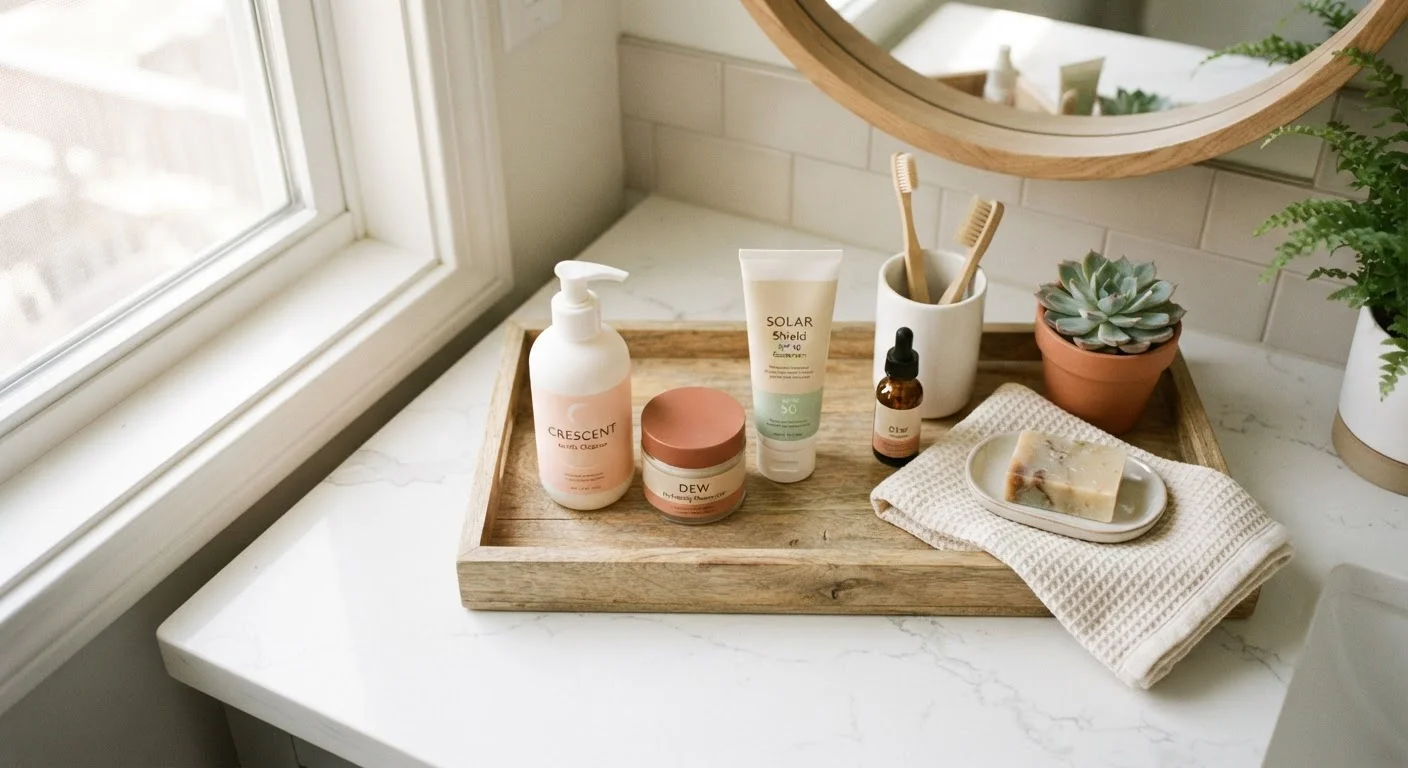
The most effective morning routine is the one you'll actually do every day. Consistency matters more than the sophistication of your lineup. Keep products visible on your counter so they become a natural part of getting ready - not a chore hidden in a drawer.
Once this four-step foundation feels effortless, you can thoughtfully layer in extras like a targeted serum or eye cream. The same principle of starting simple before adding complexity applies to a lot of self-care habits - much like building a weekly exercise routine: establish the baseline before you optimise.
If you ever notice persistent irritation, breakouts, or unexpected skin changes, it's always worth checking in with a dermatologist. General skincare information is a helpful starting point, but a professional can give guidance tailored to your specific skin - something no article can replicate.
This article is for general informational purposes only and is not a substitute for advice from a qualified dermatologist or healthcare professional.