

Key Takeaways
Why Sequence Actually Matters
Skincare products aren't magic in a bottle - they're delivery systems. Each formula is engineered to reach a specific layer of skin and deliver its ingredients there. When you apply them out of order, you're not just being slightly inefficient; in some cases, you're actively preventing the product from working at all.
Think of it this way: a rich moisturizer creates a semi-occlusive layer on the skin's surface. If your vitamin C serum goes on after that cream, it's sitting on top of the moisturizer - not your skin. The chemistry simply doesn't have a clear path in.
The sequencing logic isn't arbitrary. It follows two reliable principles: thinnest to thickest (so lighter formulas always go first) and most active to most protective (so ingredients designed to treat the skin go on before ingredients designed to seal or shield it). Understanding these two rules makes almost any routine make sense - including ones you build from scratch. For a full step-by-step framework, our guide on building a morning routine from scratch is a helpful starting point.
The Recommended Application Order
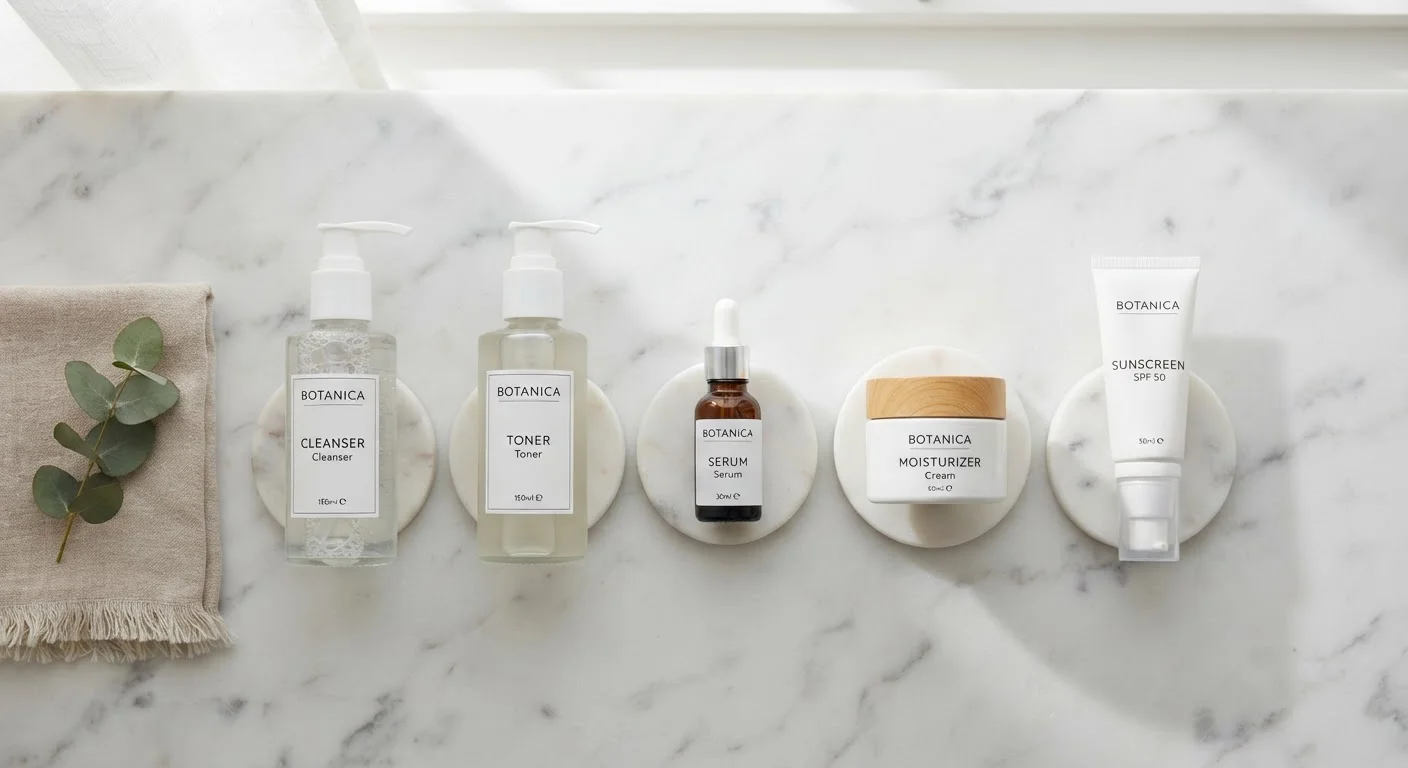
While individual routines vary based on skin needs and the products you use, most dermatologists and estheticians follow a general order that holds up across skin types:
- Cleanser - removes the physical barrier between products and skin
- Toner or essence - balances pH and adds initial hydration
- Targeted serums - actives like vitamin C, niacinamide, or hyaluronic acid go here
- Eye cream - applied before heavier textures that could weigh down the delicate eye area
- Moisturizer - locks in hydration and supports the skin barrier
- Face oil (if used) - oils seal everything below; they go over, not under, water-based products
- SPF (AM only) - always last; nothing should disrupt its protective layer
If you're curious about what each of these steps is actually accomplishing, our beginner's guide to skincare steps breaks down the purpose behind each one.
Always start with a clean canvas - cleanse before anything else.
Applying active serums or moisturizers over makeup, sunscreen residue, or daily buildup creates a physical barrier that prevents absorption. Cleansing ensures your skin is actually ready to receive what comes next.
Layer products from thinnest consistency to thickest.
Thicker, occlusive formulas form a seal over the skin surface. If you apply a rich cream before a water-based serum, that serum can't get through - and you've essentially wasted it. Thin-to-thick is the universal sequencing principle that keeps your routine working as intended.
Apply targeted actives - like vitamin C or niacinamide - directly onto freshly cleansed skin, before moisturizer.
Actives need close contact with skin cells to do their job. Placing a moisturizer underneath creates a dilution effect, reducing how much of the active ingredient actually reaches its target.
Use retinoids after moisturizer if you experience sensitivity.
While retinoids are traditionally applied to clean, bare skin for maximum effect, applying moisturizer first (the 'sandwich method') can reduce irritation for those new to the ingredient - a reasonable trade-off while your skin builds tolerance.
Sunscreen is always the final skincare step in your morning routine.
Chemical sunscreens work by absorbing UV rays through a chemical reaction in the upper skin layer; physical (mineral) sunscreens deflect UV light from the skin's surface. Both mechanisms are disrupted when products are layered on top, reducing actual protection.
Give each layer a brief moment to settle before applying the next.
Rushing through your routine and layering products on top of one another before they've had any time to begin absorbing can cause pilling - that frustrating balling-up of product on your face - and can dilute active formulas.
Common Sequencing Mistakes - and How to Fix Them
Even experienced skincare users make sequencing errors without realizing it. Here are the most frequent missteps:
- Applying SPF before moisturizer: This is one of the most common mistakes. Moisturizer goes under sunscreen - not over it - so that the SPF layer remains intact on the skin surface.
- Using face oil before serum: Oils are occlusive, meaning they sit on top of the skin and create a seal. A water-based serum applied after an oil simply can't penetrate. Always sequence oils after water-based products.
- Stacking multiple actives without considering interactions: Certain combinations - like vitamin C with certain forms of niacinamide, or AHAs with retinol - can cause irritation or reduce efficacy when used in the wrong order or at the same time. Our guide to reading skincare ingredient lists can help you understand what you're working with.
AM vs. PM Routines Differ Slightly
Morning routines typically end with SPF; evening routines skip sunscreen and may include retinoids or heavier overnight treatments instead. The thin-to-thick sequencing principle applies to both, but the specific products - and some ingredient combinations - change after dark. For a deeper look at what shifts in your evening routine, see our guide on nighttime skincare.
Not Sure What Skin Type You're Working With?
Sequencing matters, but it only gets you so far if you're using the wrong products to begin with. Before dialing in your routine order, it's worth understanding what your skin actually needs. Our guide on skin type vs. skin condition explains why these two concepts are often confused - and how getting it right changes your entire approach.
If you're curious about how exfoliating products fit into your routine, our overview of chemical exfoliants vs. physical scrubs covers when and how to add them without disrupting your existing steps.