

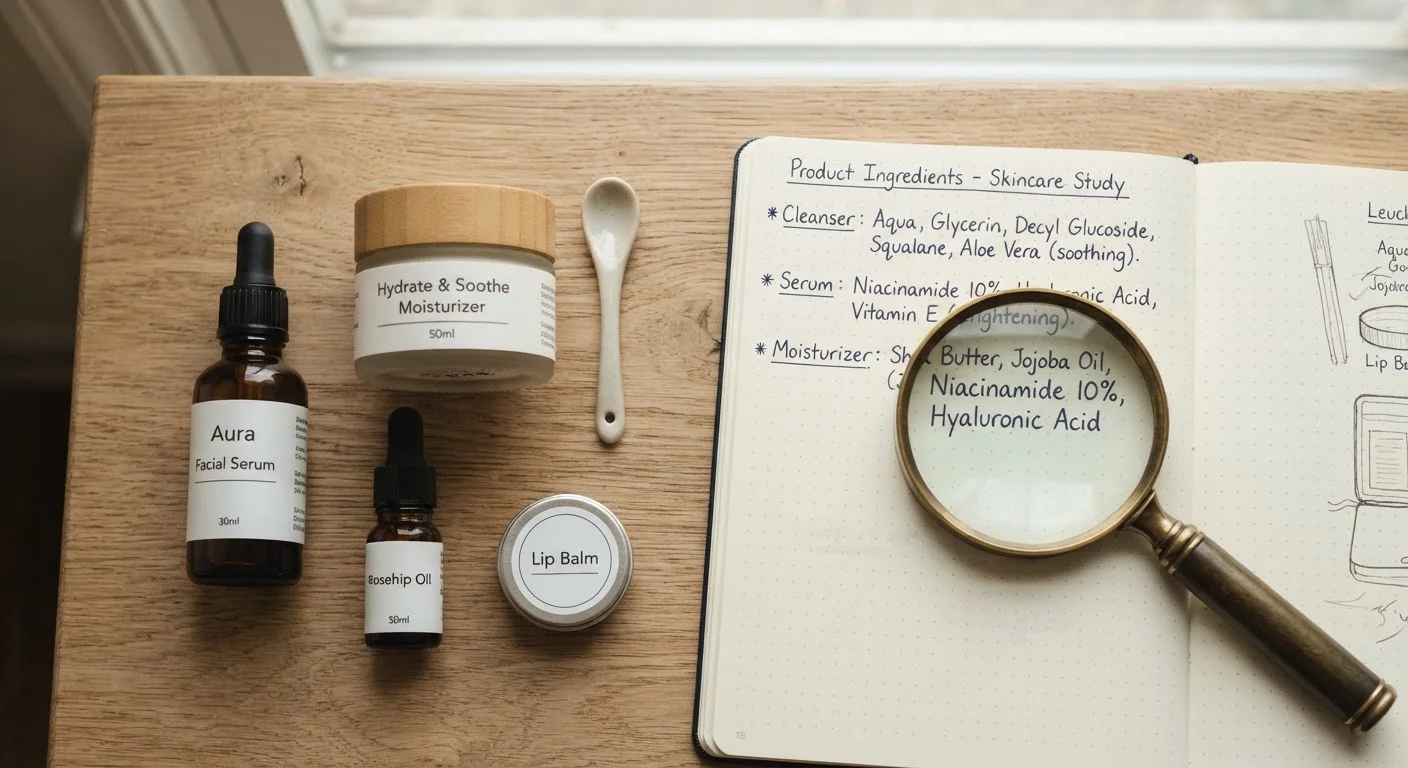
Key Takeaways
Why Ingredient Lists Feel So Overwhelming
Skincare packaging is a masterclass in small fonts and big claims. The front of a bottle might promise 'radiant, youthful skin,' while the back lists forty ingredients in six-point type. For most shoppers, that back panel gets a quick glance - if it gets one at all. But ingredient lists are actually one of the most reliable tools you have for understanding what a product does and whether it suits your skin.
The good news: you don't need a chemistry degree to read one. You need a handful of reliable rules, a willingness to look up the unfamiliar, and the confidence to ignore front-label marketing. If you're also figuring out how to layer products together, our guide to skincare application order pairs well with this one.
What you will need
How to Read the Ingredient List Step by Step
The steps below walk you through a practical, repeatable method for decoding any skincare ingredient list - whether you're evaluating a new moisturizer or trying to figure out what's been causing a reaction.
Ingredient Lists Are Regulated, Claims Are Not
In the U.S., the FDA requires cosmetic ingredient lists to follow INCI (International Nomenclature of Cosmetic Ingredients) naming standards, so ingredient names are standardized. However, front-of-label claims like 'brightening,' 'anti-aging,' or 'clean' are marketing terms with no strict legal definition. Always read the actual ingredient list rather than relying on label claims to judge a product.
Locate the full INCI ingredient list
Flip the product over and find the section labeled "Ingredients" - not the front-panel claims. U.S. cosmetics regulated by the FDA must list ingredients using standardized INCI names, so what you see is a controlled, consistent format. On very small packaging, the list may appear on an outer box or an attached leaflet. If the label is too small to read comfortably, use your phone's camera to zoom in.
Understand the concentration order
Ingredients are listed in descending order by concentration, down to 1%. Below the 1% threshold, brands may list ingredients in any order they choose. This means the first five or six ingredients typically make up the bulk of the formula. Water (Aqua) or aloe vera often tops the list in hydrating products - that's normal and expected, not a sign of a diluted formula.
Decode Latin and chemical-sounding names
Many ingredients sound intimidating simply because INCI uses Latin botanical names and chemical nomenclature. Butyrospermum Parkii is shea butter. Tocopherol is vitamin E. Sodium Ascorbyl Phosphate is a stable form of vitamin C. If a name throws you, resist the instinct to assume it's harmful - search it in a reputable ingredient database to get the plain-language translation before drawing conclusions.
Identify the actives and their placement
Actives - ingredients like retinol, niacinamide, hyaluronic acid, and peptides - are often found further down the list because they're effective at low concentrations. A serum listing Retinol near the bottom isn't necessarily weak; retinol is typically used at concentrations well below 1%. What matters is the percentage used, which brands sometimes disclose voluntarily. For a deeper look at what each active does, see our plain-language guide to skincare actives.
Spot potential irritants and allergens
Certain ingredient categories appear frequently in products and are also common culprits behind skin irritation. These include:
- Fragrance / Parfum: A catch-all term that can contain dozens of undisclosed chemicals; a common trigger for sensitive skin.
- Essential oils: Natural but potentially irritating, especially in high concentrations.
- Certain preservatives: Such as methylisothiazolinone (MI), which has been associated with contact allergy in some individuals.
- Alcohol denat. (denatured alcohol): Can be drying and disruptive to the skin barrier at high concentrations.
If you have a history of sensitivity, flag these and check where they appear in the list. Being near the bottom means lower concentration - though even trace amounts can trigger reactions in highly sensitive individuals.
Cross-reference with a trusted database
Once you've read through the list, paste or type key ingredients into a reputable INCI database. Look for information on each ingredient's function (humectant, emollient, preservative, active), common skin concerns it addresses, and any flagged safety notes. This step turns a wall of text into a working understanding of what the product is actually designed to do - and whether it aligns with your skin's needs.
Use a Free Ingredient Database
Websites and apps that decode INCI names can translate unfamiliar terms into plain English within seconds. Look for databases that flag common allergens, comedogenic ingredients, and known irritants. Cross-referencing takes about two minutes and can save a lot of guesswork - and potential skin trouble.
Patch Test Before Committing to a New Product
Even if an ingredient list looks clean, individual reactions vary widely. Apply a small amount to the inner arm or jawline and wait 24-48 hours before using a product across your full face. This is especially important if you have sensitive skin or a history of contact dermatitis.
Once you're comfortable reading individual products, it's worth understanding how different actives interact when you layer them. Our article on common skin irritation mistakes covers the most frequent missteps - including mixing incompatible ingredients - in plain, actionable terms. And if you're newer to skincare in general, our beginner's guide explains the purpose behind each routine step so nothing feels arbitrary.