

| Most misunderstood dress code | Business Casual |
| Most flexible option | Smart Casual |
| Key factor across all dress codes | Fit and garment condition |
| Safe all-purpose layer | A well-fitted blazer |
| Dress codes vary by | Industry, region, and company culture |
Why Dress Code Labels Cause So Much Confusion
"Business casual." "Smart casual." "Cocktail attire." These phrases show up on invitations, employee handbooks, and event pages all the time - and yet two people reading the same label can show up in wildly different outfits and both feel they dressed appropriately. That's because dress codes are cultural shorthand, not precise specifications. They shift by industry, region, and even company culture.
The good news: once you understand what each label is trying to communicate, making the right call gets much easier. Use this as your plain-language reference anytime you're staring down an unfamiliar dress code.
| Most misunderstood dress code | Business Casual |
| Most flexible option | Smart Casual |
| Key factor across all dress codes | Fit and garment condition |
| Safe all-purpose layer | A well-fitted blazer |
| Dress codes vary by | Industry, region, and company culture |
The Most Common Dress Codes, Defined
Business Formal - The most structured end of the spectrum. Think a tailored suit in a neutral color, a dress shirt and tie for men, and a blazer with dress trousers or a formal dress or skirt suit for women. Polished leather shoes are standard. You'll see this at law firms, formal presentations, and corporate executive settings.
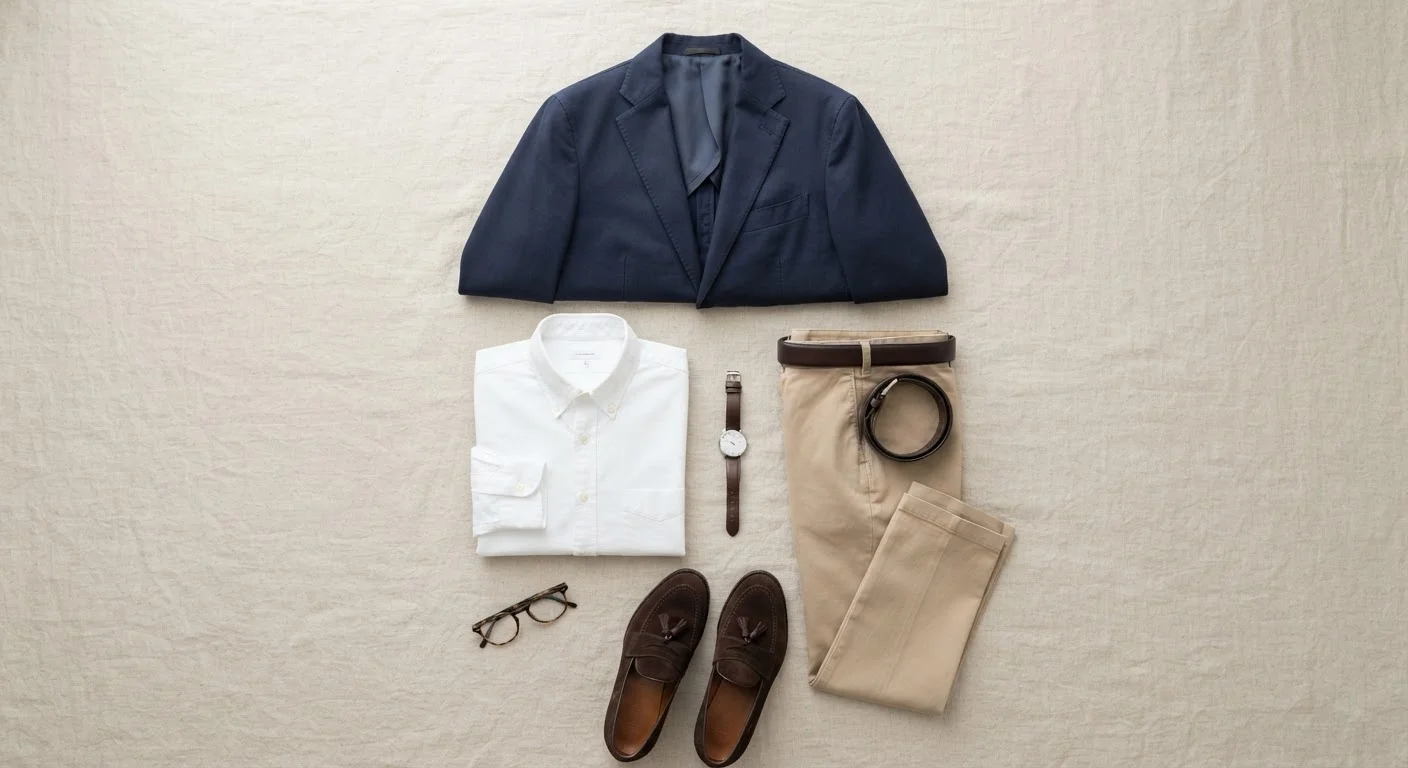
Business Casual - The most misunderstood label in professional life. It signals a relaxed step down from formal wear, but still requires polished, put-together clothing. Chinos or dress trousers, a button-down shirt (no tie required), and leather or clean suede shoes work well. Jeans and sneakers are typically not business casual unless the company culture explicitly says so. If you're navigating a hybrid schedule, this guide on dressing for part-time office days breaks down how to build looks that flex between settings.
Smart Casual - More relaxed than business casual, but more intentional than everyday wear. Well-fitted dark jeans, a neat blouse or collared shirt, and clean footwear (loafers, ankle boots, simple leather sneakers) hit the mark. The goal is to look like you made a considered effort - not like you grabbed whatever was nearby.
Casual - Usually means comfort-forward clothing is welcome, but "casual" rarely means sloppy. Clean, well-maintained clothes without visible wear or distressing are a safe baseline.
Cocktail Attire - Semi-formal dressing for evening events. Knee-length dresses, tailored jumpsuits, dark suits, or dress separates in richer fabrics all fit this category. Avoid overly casual fabrics like jersey or linen blends that wrinkle easily.
Black Tie - Formal evening wear. Floor-length gowns or formal cocktail dresses, and a tuxedo or dark formal suit. When an invitation says "black tie optional," a well-tailored dark suit is acceptable for men; a formal dress or elegant separates work for women.
Business Formal
The most structured professional dress standard, typically involving a full suit, dress shirt, and polished dress shoes. Common in law, finance, and executive settings.
Business Casual
A step down from formal business wear that still looks polished. Chinos, dress trousers, and button-down shirts are standard; jeans and casual sneakers are usually excluded unless workplace norms say otherwise.
Smart Casual
A relaxed but intentional style that sits between business casual and everyday wear. Think well-fitted dark jeans, a neat top, and clean footwear - put-together without being formal.
Cocktail Attire
Semi-formal evening wear appropriate for events like weddings, galas, and company parties. Knee-length or midi dresses, jumpsuits, or tailored separates in richer fabrics all work.
Black Tie
The most formal standard in social dressing. Requires floor-length gowns or formal dresses and a tuxedo or dark formal suit for evening events.
Black Tie Optional
A variation of black tie that permits slightly less formal attire. A well-tailored dark suit is typically acceptable for men; formal dresses or elegant separates for women.
How to Read a Dress Code When the Label Isn't Clear
When you're unsure, start by considering the context: Is this a job interview, a client dinner, a company picnic, or a wedding? The event type tells you a lot about the intent behind the label.
Next, look at the industry and culture. A tech startup's "business casual" may mean neat joggers and a blazer. A financial firm's version likely means dress trousers and a pressed shirt - even without a tie. When in doubt, err on the side of slightly more polished rather than slightly more casual. A well-fitted blazer over a simple outfit is almost universally appropriate and easy to remove if you're overdressed.
Pay attention to fit and condition. A wrinkled, ill-fitting item signals less care than a clean, well-tailored piece regardless of formality level. Getting key pieces tailored - even just a hem or sleeve adjustment - can transform how a look reads. And if the vocabulary around style still trips you up, separating fashion myths from practical reality can make the whole process feel far less loaded.
When the Dress Code Isn't Stated
If no dress code is listed for a professional event or interview, treat it as business casual at minimum. For social events, consider the venue and time of day - a weekend brunch suggests smart casual, while a Saturday evening event typically calls for cocktail attire. When genuinely unsure, reaching out to the host or HR contact is a perfectly reasonable move.
Building the right wardrobe for these occasions doesn't have to cost a lot. A practical work wardrobe on a modest budget is very achievable with the right strategy.