

Key Takeaways
Where These Rules Come From
Most fashion "rules" entered the cultural conversation through magazines, retail marketing, or social media - not through research into what actually helps people dress well or feel confident. That origin matters because it means many of these rules were designed to sell products or generate content, not to serve the person standing in front of their closet at 7 a.m.
The result is a widespread sense that getting dressed is a test you can fail. It isn't. Understanding where the myths come from is the first step to ignoring the ones that cost you time, money, or confidence.
Myth
You should never repeat an outfit - people will notice and judge you for it.
Fact
Research in social psychology consistently shows people notice and remember others' clothing far less than the wearer expects.
This gap between how much we think others observe us and how much they actually do is sometimes called the spotlight effect - a well-documented cognitive bias. In practical terms, wearing the same combination twice in a week is almost never noticed by colleagues or acquaintances. Outfit repetition is also more sustainable and significantly easier on your wallet. The real costs of a large wardrobe often outweigh the perceived variety benefit.
Myth
You need to dress for your body type - certain shapes are flattering; others aren't.
Fact
Body-type dressing systems are largely subjective frameworks, not science. What feels comfortable and fits well is a more reliable guide.
The body-type framework (pear, apple, hourglass, etc.) has been commercially popular for decades, but it rests on the idea that certain silhouettes need to be minimized or corrected - a framing that many style educators now consider limiting rather than helpful. Clothing that fits your actual dimensions and suits your lifestyle will serve you better than any formula. If your body has changed and your clothes no longer sit right, understanding what's actually shifted is more actionable than re-sorting yourself into a shape category.
Myth
Spending more money on clothes means better quality and longer wear.
Fact
Price is an inconsistent indicator of garment quality. Construction, fabric content, and care habits are better predictors of longevity.
Luxury pricing reflects brand positioning, materials sourcing, and marketing as much as durability. A mid-range garment with strong seams, quality stitching, and an appropriate fabric weight can outlast an expensive piece that's poorly cared for. Reading fabric content labels, checking seam allowances, and following care instructions - including knowing when NOT to wash an item - will extend any garment's life more reliably than a higher price tag will.
Myth
More clothes equals more outfit options and less stress getting dressed.
Fact
A larger wardrobe often increases decision fatigue and makes it harder to build coherent outfits, not easier.
When everything competes for attention, nothing combines easily. Closets with many loosely related pieces can feel simultaneously full and frustrating - the sensation of having nothing to wear despite owning a lot. A focused, intentional wardrobe built around pieces that work together tends to reduce friction. Fewer total items can mean meaningfully more usable combinations.
Myth
Certain colors are simply off-limits - navy and black can't be worn together, for example.
Fact
Color combination 'rules' are style conventions, not universal truths. Context, contrast, and personal preference are more useful guides.
The navy-and-black rule was largely a print-era convention tied to how colors reproduced in photographs. In real life, the pairing works well in many contexts. Rather than memorizing forbidden combinations, a more practical approach is to notice whether colors in an outfit share a similar undertone (warm or cool) or create a deliberate contrast - both can work. Dress code expectations, not color superstitions, are the more meaningful guideline in professional settings.
What Actually Makes Getting Dressed Easier
Once you set aside inherited rules that don't apply to your life, a few genuinely useful principles emerge. The biggest one: fit matters more than almost any other factor. A well-fitted garment at any price point will almost always look more intentional than an expensive piece that doesn't suit your proportions.
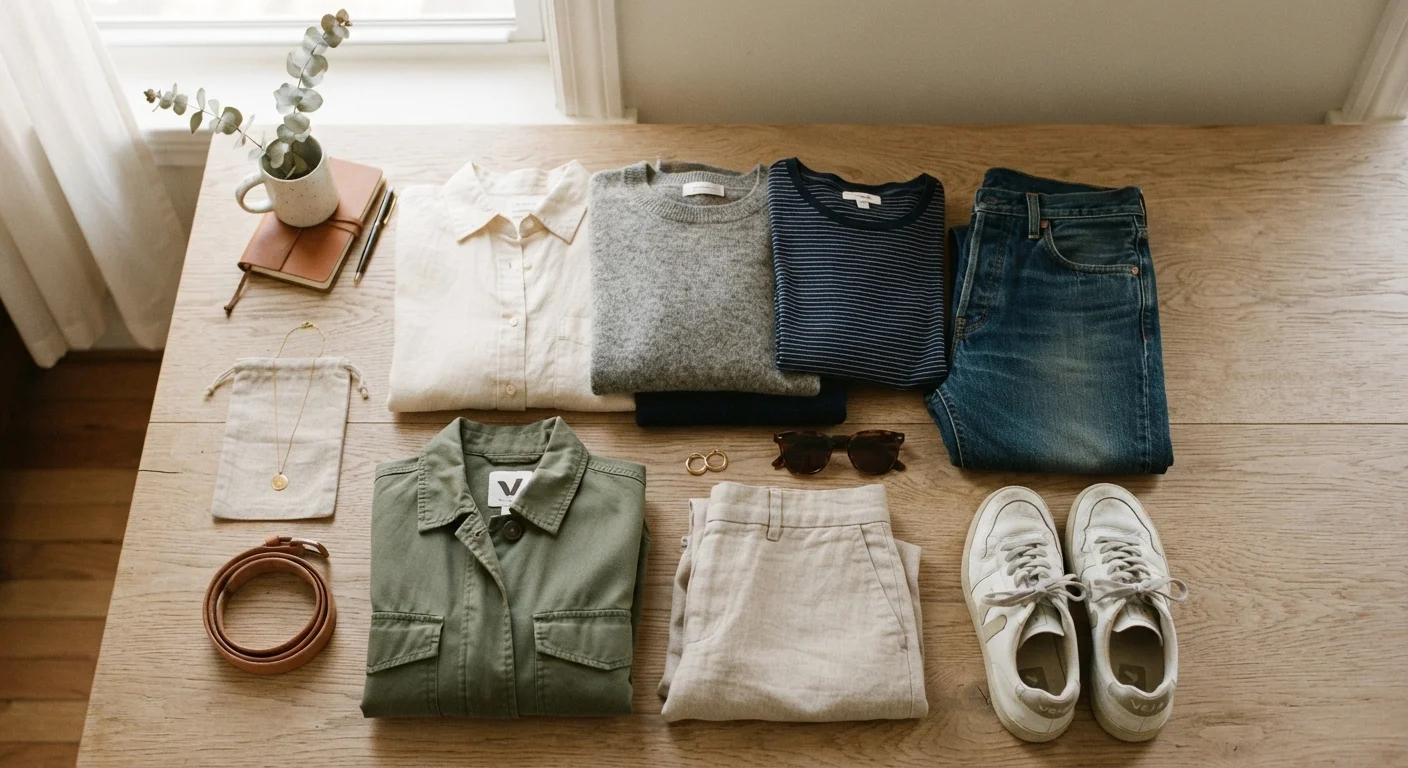
Consistency also helps. A smaller, intentional closet tends to produce less decision fatigue than a packed one. If that idea appeals to you, the capsule wardrobe concept is worth understanding - though it's not a one-size-fits-all solution.
Style 'Rules' Can Become Costly Habits
Following rules like 'never repeat' or 'update every season' can quietly drive spending that adds no real value to your wardrobe or daily experience. Before buying something to comply with a style convention, it's worth asking whether the rule reflects your actual life - or someone else's agenda.
And if shopping itself feels like an obstacle, strategies built around minimal shopping effort can reduce how often you need to engage with it at all.
~3 sec
Time people spend noticing others' clothing
Behavioral research on the spotlight effect suggests people significantly overestimate how much attention others pay to their appearance in any given social interaction.
30%
Of wardrobe items regularly worn by average owner
Wardrobe audits commonly find that most people regularly wear a small fraction of what they own, suggesting volume rarely translates to utility.