

Key Takeaways
Our Verdict
Leave-in conditioner and hair masks are complementary, not competing - each fills a different role in a healthy hair routine. Leave-ins provide everyday protection and hydration, while masks deliver the deep, periodic restoration that daily products simply can't match. Using both strategically, based on what your hair is asking for in the moment, gets you further than choosing one over the other.
| Best for | Recommended |
|---|---|
| Daily hydration, detangling, and heat or environmental protection | Leave-in conditioner |
| Restoring heavily dry, damaged, or chemically treated hair | Hair mask |
| Maintaining softness and manageability on wash days | Leave-in conditioner |
| Periodic deep treatment once or twice a month | Hair mask |
What Each Product Is Actually Doing
Despite both products sitting in the conditioner aisle, a leave-in and a hair mask work through entirely different mechanisms - and at different depths.
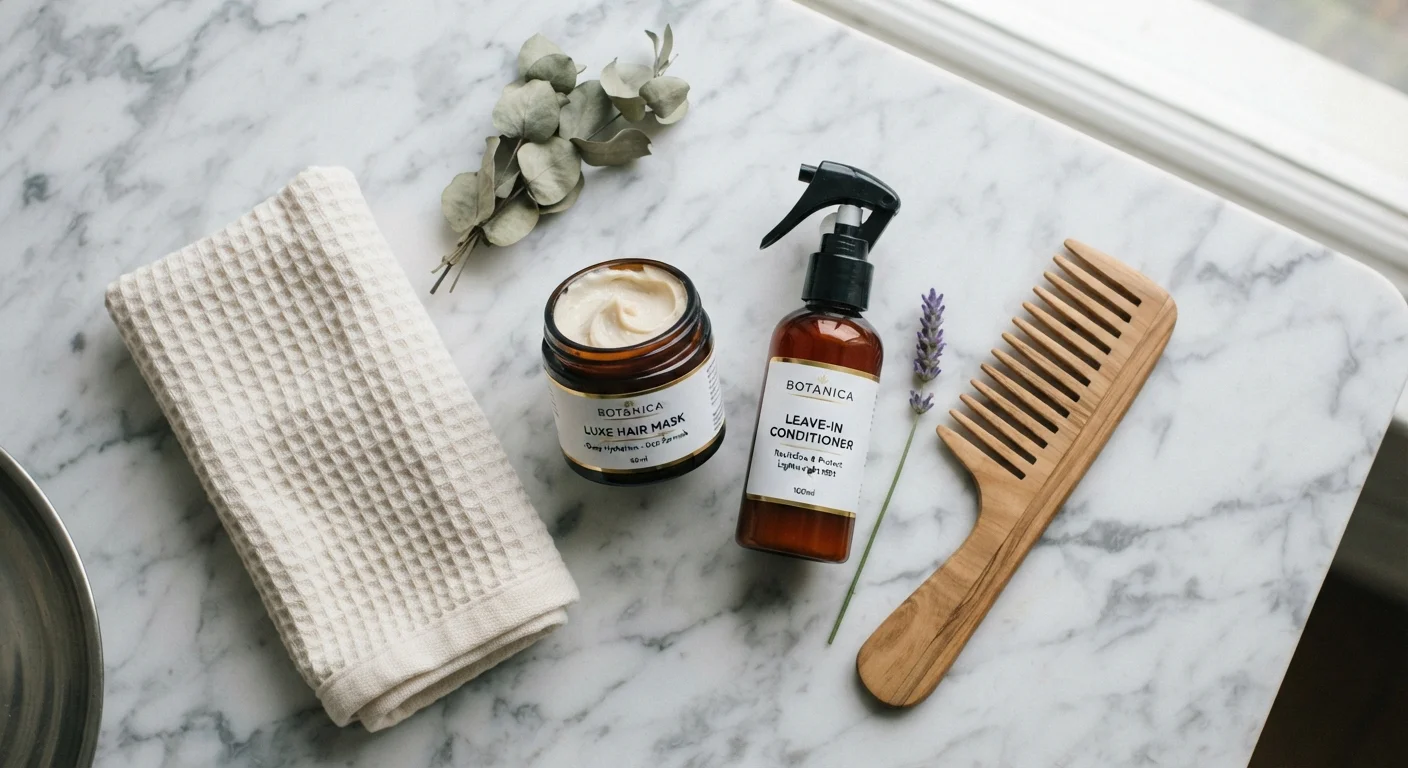
A leave-in conditioner is a lightweight, no-rinse formula designed to coat the outer layer of each strand. It smooths the cuticle, adds slip for detangling, and provides a light buffer against friction, humidity, and - depending on the formula - heat. Because it's left on the hair, it keeps working throughout the day. It's a maintenance product: consistent, gentle, cumulative.
A hair mask (sometimes called a deep conditioner) is a heavier, richer formula that works by temporarily penetrating deeper into the hair shaft. Masks are designed to sit on the hair for an extended period - typically 5 to 30 minutes - so active ingredients like humectants, proteins, or fatty acids have enough contact time to actually make a difference. The goal is restoration, not maintenance.
Understanding your hair's porosity and structure matters here: high-porosity hair tends to absorb products quickly but loses moisture fast, making both a mask and a leave-in especially useful; low-porosity hair may find heavy masks sit on top rather than absorb effectively.
| Leave-In Conditioner | Hair Mask | |
|---|---|---|
| Primary purpose | Daily moisture and protection | Intensive restoration |
| Application frequency | Several times per week | Once every 1-2 weeks |
| Time to work | Applied and left in | 5-30 minutes, then rinsed |
| Texture / weight | Lightweight mist or cream | Rich, dense cream or butter |
| Best for | Detangling, frizz control, heat prep | Dryness, breakage, chemical damage |
| Used in the same routine? | Yes - applied after rinsing mask | Yes - before applying leave-in |
When to Reach for Each One
The most common mistake people make is treating one product as a substitute for the other. They're not interchangeable - but they are stackable.
Use a leave-in conditioner when:
- You're styling on a wash day and want to lock in post-shower moisture before air drying or heat styling
- Your hair is prone to frizz or tangles and needs daily softening
- You live in a dry climate or spend time in air conditioning
- You're prepping for heat tools - a leave-in adds a protective layer between your hair and the heat source
For more on protecting your strands before you reach for a styling tool, see our guide on heat styling without damage.
Use a hair mask when:
- Your hair feels rough, brittle, or straw-like - especially after color, relaxers, or a perm
- You've had a stretch of heavy heat styling or outdoor exposure
- Your regular conditioner isn't cutting it on a given wash day
- You want to do a focused monthly reset on your hair's overall texture and health
If chemical treatments are part of your routine, it's worth understanding what those processes do to your hair's structure - masks become particularly important for maintenance afterward.
Timing Your Mask for Better Absorption
Applying a hair mask after you shampoo - rather than before - gives it the best chance of absorbing well. Shampoo removes buildup that would otherwise block the mask's active ingredients. For an extra boost, a heat cap or warm towel wrap during processing can help ingredients penetrate more effectively, particularly for low-porosity hair that tends to resist absorption.
How to Layer Them Without Overdoing It
You can use both in the same routine - in fact, many hair care professionals recommend it. The key is sequencing them correctly so neither product undercuts the other.
On a wash day that includes a mask: shampoo first, then apply your mask to damp (not soaking wet) hair. Leave it on per the product's instructions, rinse thoroughly, then apply your leave-in once you've gently towel-blotted excess water. The mask does the deep work; the leave-in seals in that benefit and preps hair for styling.
On a regular wash day without a mask: shampoo, rinse-out conditioner, then leave-in. Simple, effective, and most people's default routine.
One thing worth flagging: if your rinse-out conditioner isn't performing well on its own, a leave-in might mask (no pun intended) the underlying issue rather than solve it. Check whether your rinse-out conditioner is actually doing its job before adding more steps.
Too Much of a Good Thing
Over-masking, especially with protein-heavy formulas, can leave hair feeling stiff, brittle, or paradoxically more prone to breakage - a phenomenon sometimes called protein overload. If your hair starts feeling hard or snapping more after you added masks to your routine, cut back frequency or switch to a moisture-focused formula without added protein.
The routine that works is the one you'll actually stick to - don't overcomplicate it.
Reading Your Hair's Signals
Rather than following a rigid schedule, let your hair guide you. Hair communicates clearly when you know what to look for.
Signs your hair is asking for a mask: It feels rough to the touch, looks dull even after washing, breaks easily when you detangle, or has been through a lot of chemical or heat stress lately.
A useful parallel: just as diagnosing skin type vs. skin condition changes how you build a skincare routine, distinguishing your hair's baseline type from its current condition changes which products will actually help. A bad hair week might call for a mask even if your hair is generally healthy.
Signs your leave-in is doing the job: Hair feels manageable, soft, and easy to detangle after washing. Frizz stays calm through the day. If your leave-in is consistently falling short, it may be the wrong weight for your hair - fine hair often does better with mist-style leave-ins, while thick or coily hair may need a cream formula.
Neither product replaces a good foundational routine, but both go a long way toward making every wash day feel less like damage control and more like genuine care.