

Key Takeaways
Hair Properties
Hair properties are the measurable physical characteristics of your hair - specifically porosity, curl pattern, and density - that determine how your strands absorb moisture, hold style, and respond to products. Understanding these properties helps you decode why certain techniques work brilliantly on one person and fall completely flat on another. They're the foundation of a routine that's actually built for your hair.
Porosity is determined by the structure of the hair's cuticle layer; curl pattern is classified by shape from straight (Type 1) through coily (Type 4); density refers to the number of individual strands per square inch of scalp.
Porosity: The Real Moisture Gatekeeper
Of the three core hair properties, porosity has the most direct influence on your day-to-day routine. It describes how readily your hair's cuticle - the outermost layer of each strand - allows moisture and product to pass in and out.
Low porosity hair has tightly sealed cuticles. Water beads up on the surface rather than absorbing quickly, and products can sit on top of strands instead of penetrating. Lightweight, water-based formulas work better here, and applying products to damp (not soaking wet) hair improves uptake. A little gentle heat - like a warm towel or steamer - can help open the cuticle temporarily.
High porosity hair, whether from genetics or cumulative damage, has more open cuticles that absorb moisture fast but lose it just as quickly. Richer, sealing products - butters, heavier creams, oils used as a finishing layer - help lock in what you put in. This is also where your conditioner choice matters enormously. If you've ever felt like your conditioner isn't doing much, porosity may be why - the full breakdown of why conditioner underperforms is worth reading alongside this.
Test Your Porosity Before Buying Anything New
Before investing in a new product line, spend two minutes on a porosity float test using a strand collected from your brush. It costs nothing and immediately narrows down which product weights and formulas are worth exploring. Knowing whether you're working with low, medium, or high porosity makes every subsequent product decision more intentional.
Medium porosity sits in between and is generally the most forgiving - it holds style well and responds to a wide range of products without extreme adjustment.
Curl Pattern: Shape Matters, But It's Not the Whole Story
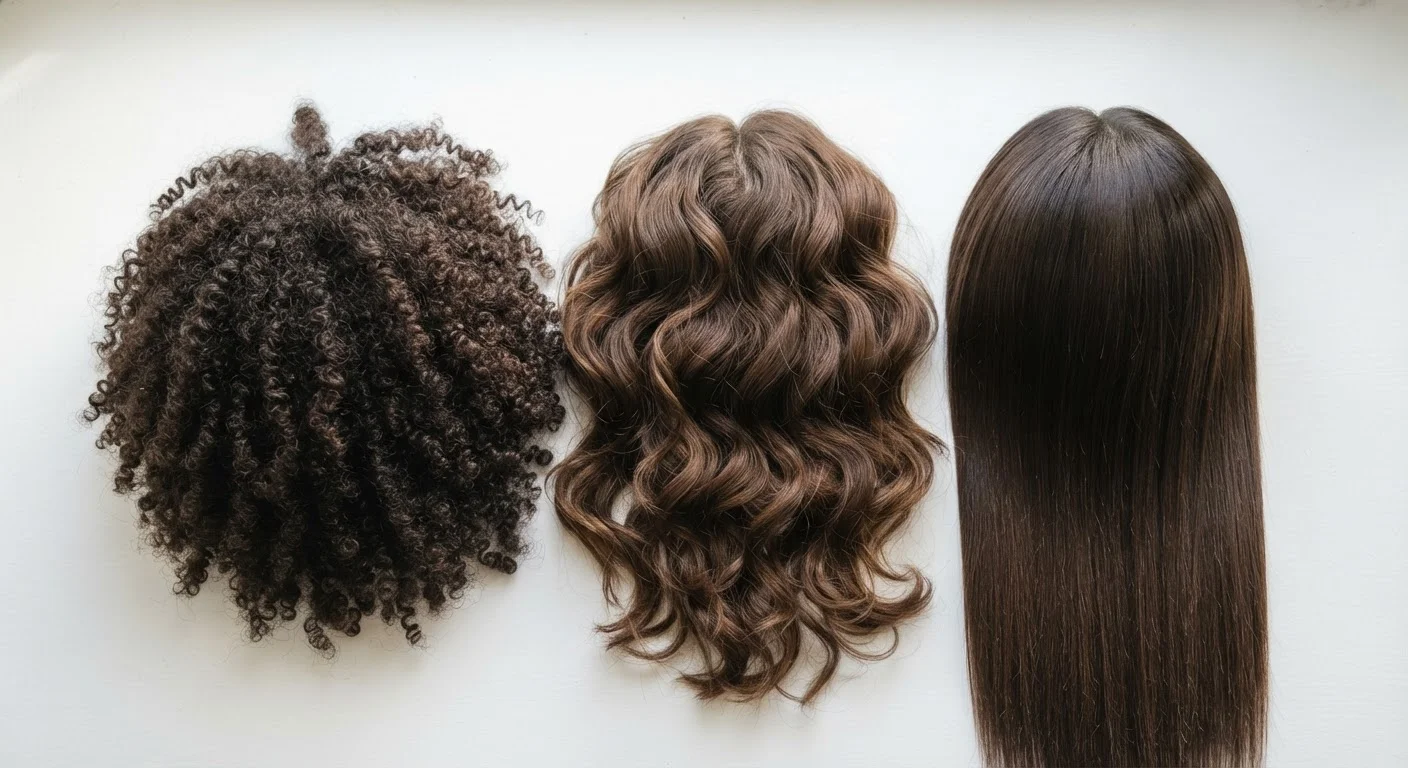
The widely used Type 1-4 system classifies hair by its natural shape: Type 1 is straight, Type 2 is wavy, Type 3 is curly, and Type 4 is coily or kinky. Each type includes sub-categories (A, B, C) that capture finer distinctions in tightness and definition.
Curl pattern is genuinely useful for understanding shrinkage, defining techniques, and styling approaches. Tighter curl patterns (3C, 4A-4C) experience more shrinkage, benefit from stretch styling methods, and often require more moisture to maintain definition. Looser patterns (2A-2C) can be weighed down by heavy products that work perfectly for a Type 4 strand.
Curl Pattern Can Vary Across Your Head
It's completely normal to have different curl patterns in different sections - many people find their nape curls tighter than their crown, or their temples wavier than the back. This isn't a problem to solve; it's just useful information. Applying technique or product adjustments by section, rather than treating the whole head identically, can noticeably improve your results.
That said, curl pattern alone doesn't tell you how to moisturize or which products to reach for - that's porosity's job. Think of curl pattern as the shape blueprint and porosity as the instruction manual for maintenance. For those with coily and kinky textures building a regimen from scratch, the natural hair care starting guide offers a practical foundation.
Density: How Much Hair You're Actually Working With
Density refers to the number of hair strands on your scalp - typically classified as low, medium, or high. It's separate from the thickness of individual strands (that's called strand width or texture), a distinction that confuses a lot of people.
~100,000
Average strands on an adult scalp
This baseline figure varies considerably by individual and hair color; density classifications (low, medium, high) are relative to this general range.
3 properties
Core variables that define a hair routine
Porosity, curl pattern, and density together explain the vast majority of why hair behaves differently from person to person.
2-4 min
Time needed for a basic porosity float test
Drop a clean strand in water and observe whether it sinks or floats - a simple, widely used first step in understanding your hair's needs.
High-density hair means you have a lot of individual strands packed together. This affects everything from how long it takes products to distribute evenly to how long a blowout lasts. People with high-density hair often need to section carefully during application to avoid product sitting only on the surface layer. Low-density hair, on the other hand, can get weighed down easily - lighter products and avoiding heavy layering tend to work better.
Density also influences how long your hair feels healthy between wash days. A high-density scalp can trap more product buildup, which may mean more frequent cleansing. Understanding this variable helps you stop guessing about product amounts and start applying purposefully. For a deeper dive into hair terminology that shows up on product labels and in grooming guides, the hair and grooming glossary is a helpful companion reference.
Putting It Together: Reading Your Hair as a Whole
Most people's hair doesn't fit neatly into a single box. You might have high-porosity, high-density, Type 3A hair - or low-porosity, medium-density, Type 4C hair. Each combination creates a genuinely different set of needs, which is why copy-pasting someone else's routine rarely delivers the same results.
“Understanding your hair's individual characteristics - rather than following a generalized type system - is what allows you to troubleshoot problems and build a routine that's genuinely sustainable.”
— Trichology Education Council, Professional body for scalp and hair science education
Start by identifying your porosity first - it's the most actionable variable and shapes which product formats to reach for. Layer in curl pattern to guide your styling choices, then adjust product quantity and weight based on density. Over time, this framework lets you make informed decisions rather than impulse purchases or internet-recommended routines that were never designed with your specific combination in mind.
Hair properties can also shift - chemical treatments, heat habits, nutrition, and hormonal changes all influence porosity and density across your lifetime. Building this knowledge now means you can adapt your routine as your hair evolves, rather than starting from scratch each time something changes. For context on what influences growth and scalp health alongside these properties, see everything that affects how fast hair grows.