

| Purpose of a clarifying wash | Removes buildup from styling products and hard water minerals |
| Co-washing best suited for | Dry, curly, coily, or color-treated hair types |
| How often to protein treat | Generally every 4-6 weeks, adjusted by hair response |
| Sulfate-free shampoo trade-off | Gentler cleansing but may not fully remove heavy buildup |
| Plopping material | Cotton T-shirt or microfiber towel (terry cloth can cause frizz) |
| LOC vs. LCO choice factor | Hair porosity - high-porosity hair often benefits from LCO |
Why Grooming Vocabulary Matters
Picking up a shampoo bottle or watching a styling tutorial can feel like reading a different language - emollients, porosity, hydrolyzed proteins, the LOC method. This glossary cuts through the confusion so you can read a product label with confidence and actually understand what a tutorial is asking you to do.
Whether you're troubleshooting frizz, exploring co-washing for the first time, or trying to understand why your hair feels dry despite conditioning, the terms below are the building blocks of most product and technique conversations. You can also apply similar label-reading logic to skincare - see our guide to decoding skincare ingredient lists for a parallel walkthrough.
| Purpose of a clarifying wash | Removes buildup from styling products and hard water minerals |
| Co-washing best suited for | Dry, curly, coily, or color-treated hair types |
| How often to protein treat | Generally every 4-6 weeks, adjusted by hair response |
| Sulfate-free shampoo trade-off | Gentler cleansing but may not fully remove heavy buildup |
| Plopping material | Cotton T-shirt or microfiber towel (terry cloth can cause frizz) |
| LOC vs. LCO choice factor | Hair porosity - high-porosity hair often benefits from LCO |
Core Ingredient Categories
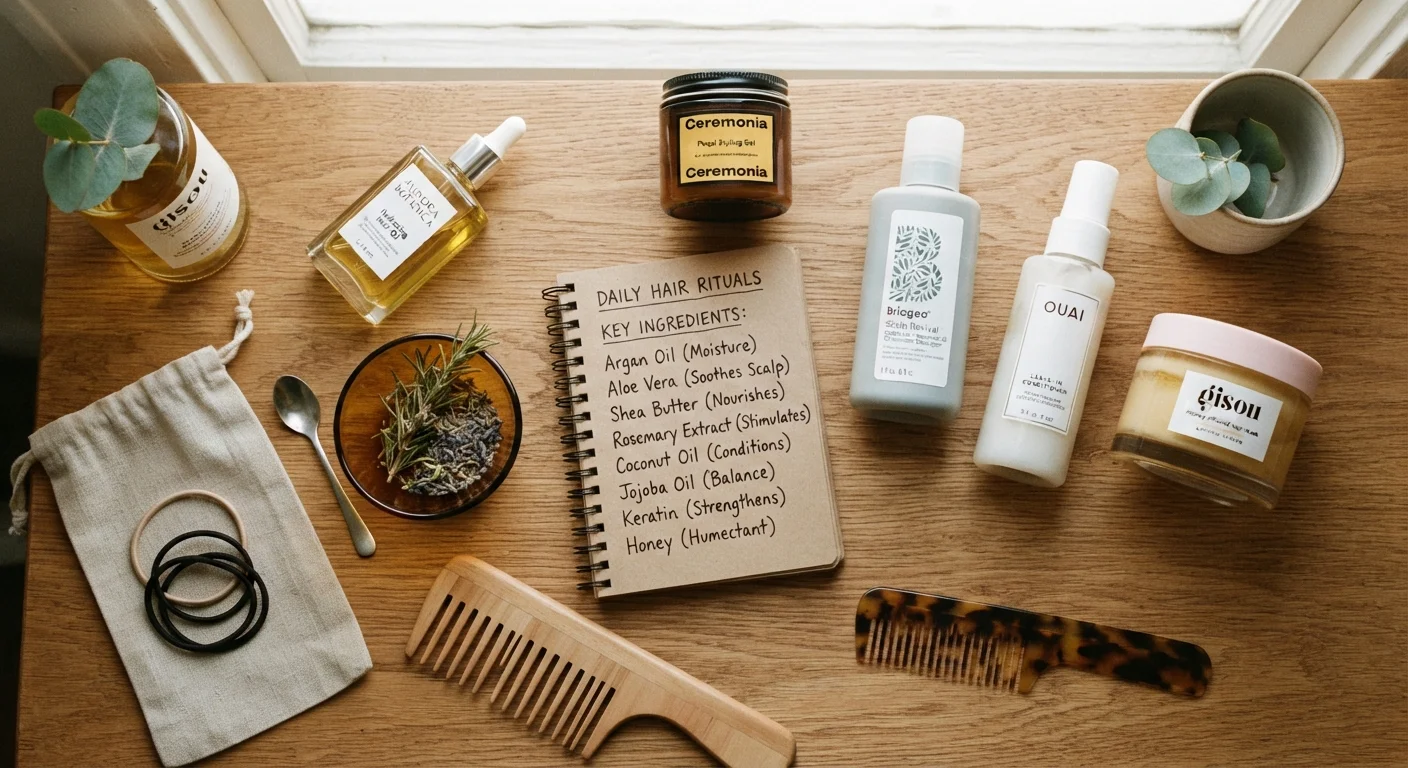
Hair product formulas generally work through three overlapping mechanisms: attracting moisture, softening and coating the strand, or sealing moisture in. Understanding which category an ingredient falls into helps you layer products intelligently.
- Humectants draw water in. Look for glycerin, aloe vera, panthenol, and honey derivatives on the ingredient list.
- Emollients smooth and soften. Oils, butters (shea, mango, kokum), and lighter silicones fall here.
- Occlusants seal the surface. Heavier waxes and silicones create a barrier that slows moisture loss.
Most conditioners and leave-ins blend all three - but the proportions vary widely, which is why the same product can feel deeply moisturizing on one hair type and heavy or greasy on another.
Ingredients Work Differently on Different Hair
A humectant like glycerin can be highly effective in humid climates but may pull moisture out of the hair in very dry environments. Context - including your local climate and your hair's porosity - shapes how any ingredient performs. If you want to go deeper on hair properties, see our guide to porosity, curl pattern, and density.
Proteins are a separate but important category. Hydrolyzed proteins (keratin, wheat, silk) temporarily bond to the hair shaft and restore structural integrity, making them valuable for chemically treated or high-porosity hair. For more on how chemical processes affect hair structure, see our chemical hair treatments breakdown.
Techniques Defined
Technique vocabulary shows up constantly in tutorials but rarely gets explained. Here are the ones worth knowing:
- Co-washing
- Skipping shampoo and using conditioner to cleanse. It retains more natural oils, making it a popular choice for dry and curly hair, though it requires a clarifying wash periodically to prevent buildup.
- Plopping
- After washing, apply your styling products, then lay a cotton T-shirt flat, flip your hair onto the center, and wrap the shirt around your head. The gentle compression encourages curl clumping without frizz-inducing terry cloth friction.
- LOC / LCO Method
- A layering sequence for moisturizing. Apply a Liquid (water or leave-in), then an Oil, then a Cream - or swap the last two for LCO. Higher-porosity hair often seals better with the cream as the final step.
- Diffusing
- Using a diffuser attachment on low heat and low airflow to dry curly or wavy hair without disrupting the curl pattern.
- Clarifying
- Using a clarifying shampoo to strip accumulated product residue, mineral buildup from hard water, and excess sebum. Most stylists recommend this occasionally rather than regularly.
Emollient
An ingredient that softens and smooths hair or skin by filling in gaps in the cuticle or outer layer. Common emollients in hair products include oils, butters, and silicones.
Humectant
A substance that draws moisture from the surrounding air into the hair shaft. Glycerin and aloe vera are classic humectants found in conditioners and styling products.
Protein Treatment
A deep conditioning step that deposits hydrolyzed proteins into the hair shaft to temporarily restore strength and reduce breakage. Overuse can lead to stiffness or brittleness.
Co-washing
Short for 'conditioner-only washing' - cleansing the hair with a conditioner instead of shampoo to retain more moisture. Popular among those with dry, curly, or coily hair types.
Porosity
A measure of how readily the hair cuticle absorbs and retains moisture. Low-porosity hair resists moisture uptake; high-porosity hair absorbs quickly but loses moisture just as fast.
Plopping
A technique where freshly washed curly hair is wrapped in a cotton T-shirt or microfiber towel to encourage curl definition and reduce frizz while drying.
Clarifying Shampoo
A stronger cleansing formula designed to remove product buildup, mineral deposits, and excess oils that regular shampoo may leave behind. Typically used occasionally rather than as a daily wash.
Hydrolyzed Protein
Proteins broken down into smaller molecules so they can penetrate or bond with the hair shaft. Examples include hydrolyzed keratin, wheat protein, and silk amino acids.
Sulfate
A class of cleansing agents (such as sodium lauryl sulfate) that create lather and remove oil effectively. Some people with dry or color-treated hair prefer sulfate-free formulas to reduce moisture stripping.
LOC / LCO Method
Layering techniques for moisturizing hair: LOC stands for Liquid, Oil, Cream; LCO for Liquid, Cream, Oil. The order affects how well moisture is sealed in, and works differently depending on hair porosity.
Occlusant
An ingredient that forms a physical barrier on the hair or skin surface to lock in moisture and prevent water loss. Heavier oils, waxes, and silicones typically serve this function.
Diffuser
A blow-dryer attachment with a wide, perforated bowl that disperses airflow gently. It dries curly or wavy hair with less frizz and disturbance to the curl pattern than a standard nozzle.
Putting It All Together
Grooming knowledge compounds. Once you understand what a humectant does, you can read a conditioner label and immediately identify whether it's moisture-focused. Once you understand porosity, you know why the LOC vs. LCO debate exists - it's not universal preference, it's hair science.
Use this glossary as a living reference. Return to it whenever a product description or tutorial drops a term that doesn't click yet. For a deeper dive into how your hair's specific properties shape every product decision, explore our hair properties guide. And if you find vocabulary glossaries useful across topics, our Beauty Basics hub covers skincare, makeup, and more in the same plain-language approach.