

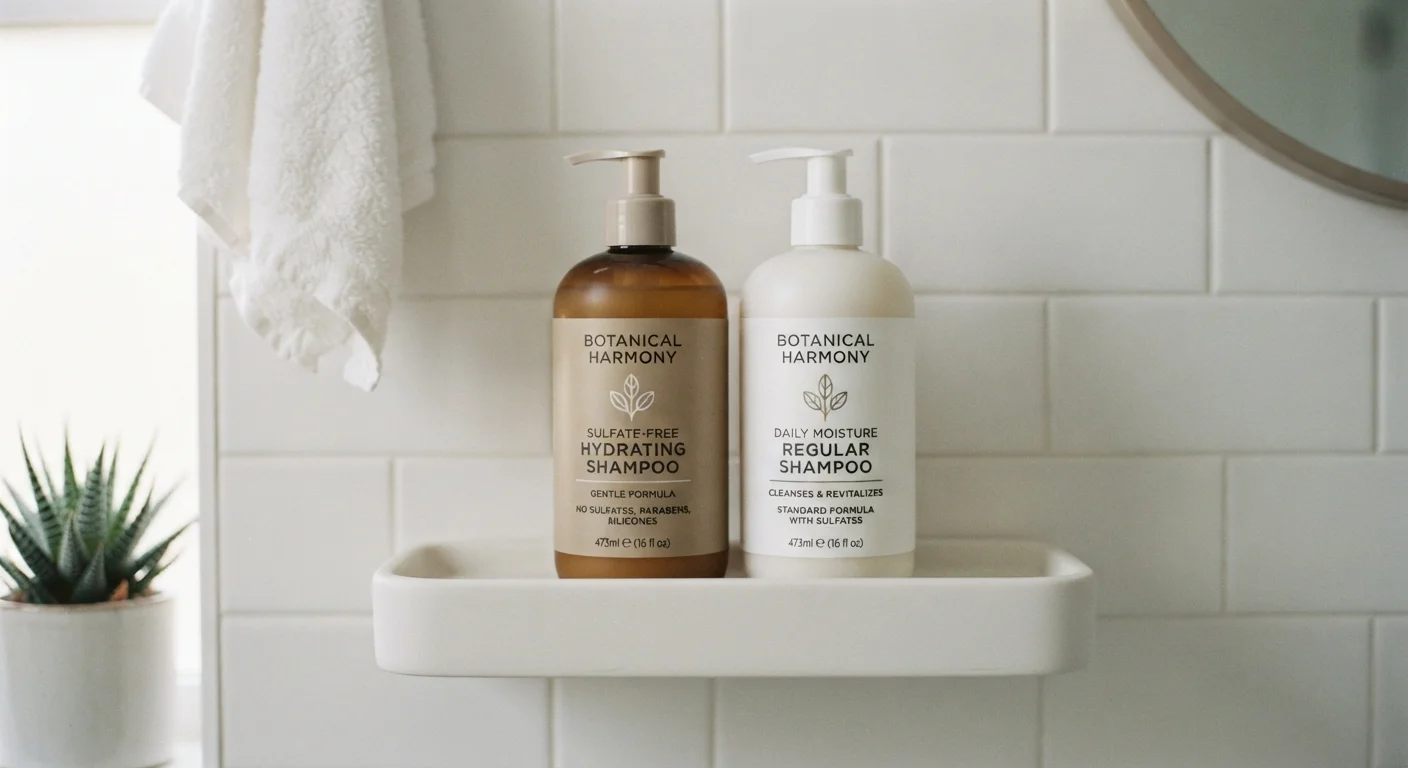
Key Takeaways
Option A
Sulfate-Free Shampoo
The gentler, moisture-preserving cleanse.
Best for: Best for color-treated, dry, curly, or chemically processed hair that needs a mild yet effective clean.
Option B
Regular Shampoo
The classic, high-lather deep clean.
Best for: Best for oily scalps, fine straight hair, or anyone who needs a thorough reset after heavy product use or sweat.
If you have color-treated or chemically processed hair
Sulfate-Free Shampoo
Milder surfactants are less likely to strip hair dye or further weaken chemically altered strands. This helps preserve color vibrancy and structural integrity over time.
If you have an oily scalp or fine, flat hair
Regular Shampoo
Stronger detergents in regular formulas cut through excess sebum more efficiently, leaving fine hair feeling lighter and less weighed down.
If you have dry, curly, or coily hair
Sulfate-Free Shampoo
Curly and coily hair is naturally prone to dryness; a gentler cleanse helps retain essential moisture and reduces frizz without stripping the hair's natural oils.
If you use heavy styling products regularly
Regular Shampoo
Waxes, dry shampoos, and silicone-based products can resist milder surfactants. A traditional formula gives you the deep-clean reset you need.
If you have a sensitive or easily irritated scalp
Sulfate-Free Shampoo
Gentle surfactants are less likely to disturb the scalp's natural barrier, making them a better starting point for people prone to dryness, itching, or irritation.
What Sulfates Actually Do in a Shampoo
Sulfates - most commonly sodium lauryl sulfate (SLS) and sodium laureth sulfate (SLES) - are surfactants, meaning they reduce surface tension between water and oil. That's exactly what creates the rich, satisfying lather most of us associate with a thorough shampoo. They're highly effective at lifting dirt, oil, and product residue from the scalp and hair shaft.
Sulfate-free shampoos swap those detergents for milder surfactants - compounds like cocamidopropyl betaine or sodium cocoyl isethionate - that still cleanse but with a gentler action on the hair's outer cuticle. One notable trade-off: they tend to produce significantly less foam, which can feel unfamiliar at first.
This doesn't mean sulfate-free shampoos are "weak." They absolutely remove everyday grime and oil. The difference lies in how aggressively they work and how much natural moisture gets removed in the process. For more on how your scalp's biology influences what cleanser you should be using, see our piece on why scalp care is distinct from hair care.
| Criterion | Sulfate-Free Shampoo | Regular Shampoo |
|---|---|---|
| Key surfactants | Mild (e.g., cocamidopropyl betaine) | Strong (e.g., SLS, SLES) |
| Lather level | Low to moderate | High |
| Moisture retention | Higher - less stripping | Lower - more stripping |
| Color preservation | Better - gentler on dye | Weaker - can accelerate fade |
| Buildup removal | Moderate | Strong |
| Best hair types | Dry, curly, coily, color-treated | Oily, fine, product-heavy |
| Scalp sensitivity | Gentler on sensitive scalps | May irritate sensitive skin |
What Actually Changes When You Switch
If you swap a regular shampoo for a sulfate-free version, here's what you'll likely notice:
- Less lather - This is purely cosmetic and not a sign the product isn't working.
- A transition period - Your scalp may temporarily overproduce oil if it has been conditioned by stronger cleansing. This usually self-regulates within two to four weeks.
- Improved moisture retention - Particularly noticeable on dry, curly, or coarse hair textures. The hair's cuticle sustains less disruption during each wash.
- Longer color life - Sulfates can accelerate color fading by opening the cuticle during every wash. Milder surfactants are less disruptive to dye molecules, which is why sulfate-free formulas are often recommended after chemical hair treatments like color and relaxers.
~80%
Of conventional shampoos contain sulfates
Sulfates remain among the most widely used surfactants in commercial shampoo formulations, according to cosmetic chemistry literature.
2-4 weeks
Typical scalp adjustment window
Dermatologists and trichologists generally note that scalp oil production can take several weeks to recalibrate after switching cleansing formulas.
What doesn't change: your need to shampoo consistently and condition properly. No formula change eliminates buildup on its own if your overall routine is out of balance. For perspective on that, your shampoo frequency matters just as much as what you're shampooing with.
When Regular Shampoo Still Makes More Sense
Sulfate-free has earned a reputation as the "better" choice, but that framing is too simple. Regular shampoo remains genuinely useful - and sometimes the smarter pick - in these situations:
- Oily scalp types: People whose scalps produce substantial sebum often find sulfate-free formulas leave a residue or greasy feel.
- Heavy product users: Dry shampoos, styling waxes, and silicone-heavy conditioners require stronger detergents for full removal. Buildup from these products can eventually dull hair and irritate the scalp if not fully cleared - something our guide on scalp health warning signs covers in more detail.
- Fine, flat hair: Strong cleansers remove excess oil more efficiently, giving fine strands more volume and lift.
Consider a Rotating Approach
Some hair care professionals suggest alternating between a sulfate-free formula for most washes and a traditional shampoo for a periodic deep clean. This can work well for people who use styling products regularly but also want to protect color or manage dryness. It's worth experimenting to see what keeps your specific scalp and strands in balance.
Neither formula has a monopoly on being "healthy." The best shampoo for you is the one that keeps your scalp balanced and your strands manageable - not the one with the most marketing claims on the bottle. And remember, whatever you shampoo with, your conditioner application technique can make or break the final result.