

Key Takeaways
Tap-to-Pay (NFC Mobile Payment)
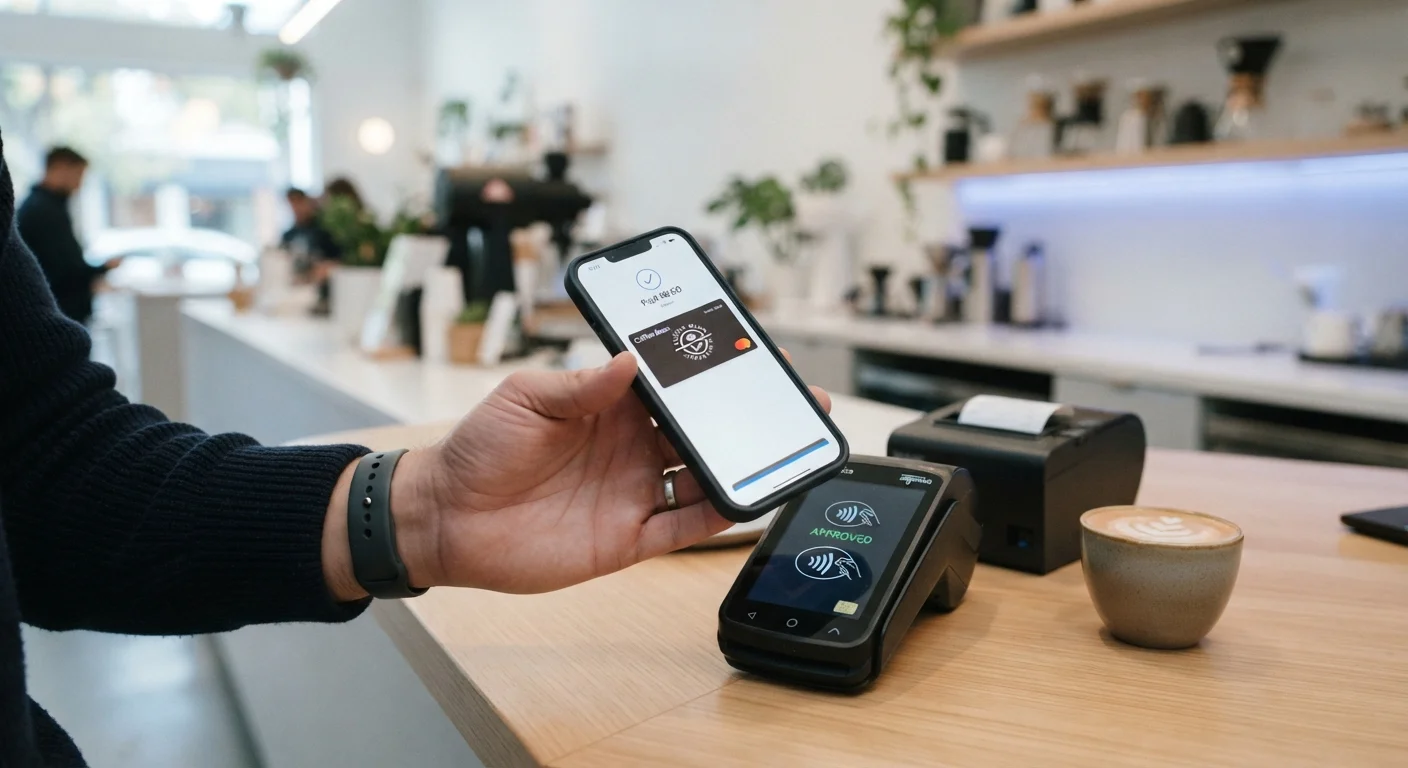
Tap-to-pay is a contactless payment method that lets you hold your smartphone near a payment terminal to complete a purchase - no card swipe or PIN entry required. It works through a short-range wireless technology called NFC (Near Field Communication), combined with multiple security layers built into your phone. The entire exchange happens in under a second.
NFC operates at 13.56 MHz and has an effective range of roughly 4 centimeters, which limits eavesdropping risk. Payment credentials are stored in a dedicated chip called the Secure Element, isolated from the phone's main operating system.
Step One: Authentication Happens on Your Device First
Before any data leaves your phone, your device needs to confirm it's actually you holding it. When you double-click the side button (or open your wallet app, depending on the platform), your phone prompts for Face ID, fingerprint, or a PIN. This step is entirely local - your biometric data never travels to a server or the payment terminal.
Only after successful authentication does the phone's payment system become active. This on-device gate is one of the most important security differences between a tap-to-pay transaction and simply waving a physical card near a reader. A stolen phone cannot complete a payment without passing this check first.
For deeper context on configuring your phone's security settings from the start, see this guide to locking down a new phone.
Always Authenticate Before You Approach the Terminal
Some phone wallets allow you to pre-authenticate - waking the wallet before you step up to the reader. Doing this speeds up the tap and reduces the chance of an authentication timeout. If your phone requires you to re-authenticate mid-transaction, simply complete the biometric check and tap again.
Step Two: NFC Opens a Micro-Channel to the Terminal
Once authenticated, your phone's NFC chip activates. NFC stands for Near Field Communication - a radio technology that creates a tiny, short-range electromagnetic field when two NFC-capable devices are brought within about 4 centimeters of each other. The payment terminal generates this field; your phone detects it and responds.
This handshake takes milliseconds. The terminal and phone negotiate a shared protocol, establishing which type of payment card is being presented and which network (Visa, Mastercard, etc.) will process the transaction. No data meaningful to an attacker is transmitted yet - the channel is simply being opened.
~4 cm
Maximum effective NFC range
NFC's short range is a deliberate design choice that limits the window for passive signal interception during a transaction.
< 1 sec
Typical tap-to-pay transaction time
The full handshake, token exchange, and authorization request typically complete in under one second at the point of sale.
1-use
Payment token validity
Each token generated during a tap-to-pay transaction is valid for that single purchase only, rendering intercepted data useless for future fraud.
Step Three: Tokenization Replaces Your Real Card Number
Here is where the most consequential security step occurs. Instead of transmitting your actual 16-digit card number, your phone's payment system generates a token - a surrogate number that represents your card for this transaction only. This token is produced by the payment network (working with your card issuer) and stored in the phone's Secure Element, a dedicated tamper-resistant chip physically isolated from the main processor and operating system.
The token sent to the terminal is single-use. Even if someone intercepted the NFC signal perfectly, the captured token would be invalid for any future transaction. The terminal never sees your real account number, expiration date, or CVV.
This is why tap-to-pay can be more resistant to certain fraud vectors than a magnetic stripe swipe, where your static card number is read directly. For a broader comparison of payment method trade-offs, comparing cash, credit, and debit covers protections and practical differences.
Step Four: Authorization Travels Through the Payment Network
After the terminal receives the token and transaction amount, it forwards that data through the merchant's payment processor to the card network, which then contacts your bank or card issuer for authorization. The issuer validates the token, checks your available credit or balance, and returns an approval or decline - all within the same second or two you're already pocketing your phone.
Your bank then logs the transaction against your real account number, which it maps to the token internally. You see the charge appear on your statement using your actual card details, even though the terminal never handled them.
Tap-to-Pay Fraud Protections Mirror Your Card
Because the underlying transaction is still processed through your card network, the fraud liability protections of your physical card generally apply. This includes zero-liability policies many major networks offer for unauthorized transactions. The specific terms depend on your card issuer and account agreement - always verify directly with them.
What Could Go Wrong - and What Protections Exist
No payment system is entirely risk-free. Common failure points include terminals with outdated firmware, merchant data breaches (which expose transaction records rather than card numbers), and lost or stolen phones where the owner delays locking the device. The on-device authentication requirement significantly reduces the last risk.
Fraud protections for tap-to-pay transactions are generally the same as those that apply to your underlying card. Zero-liability policies from major card networks cover unauthorized charges, though it is worth confirming the specifics with your issuer. If you're thinking about broader account security practices, setting up two-factor authentication on your key accounts is a related layer worth configuring.
This article provides general educational information about how tap-to-pay technology works. It is not financial, legal, or security advice. For questions about your specific card's fraud protections or coverage, contact your card issuer directly.