

Key Takeaways
Social Engineering Attacks
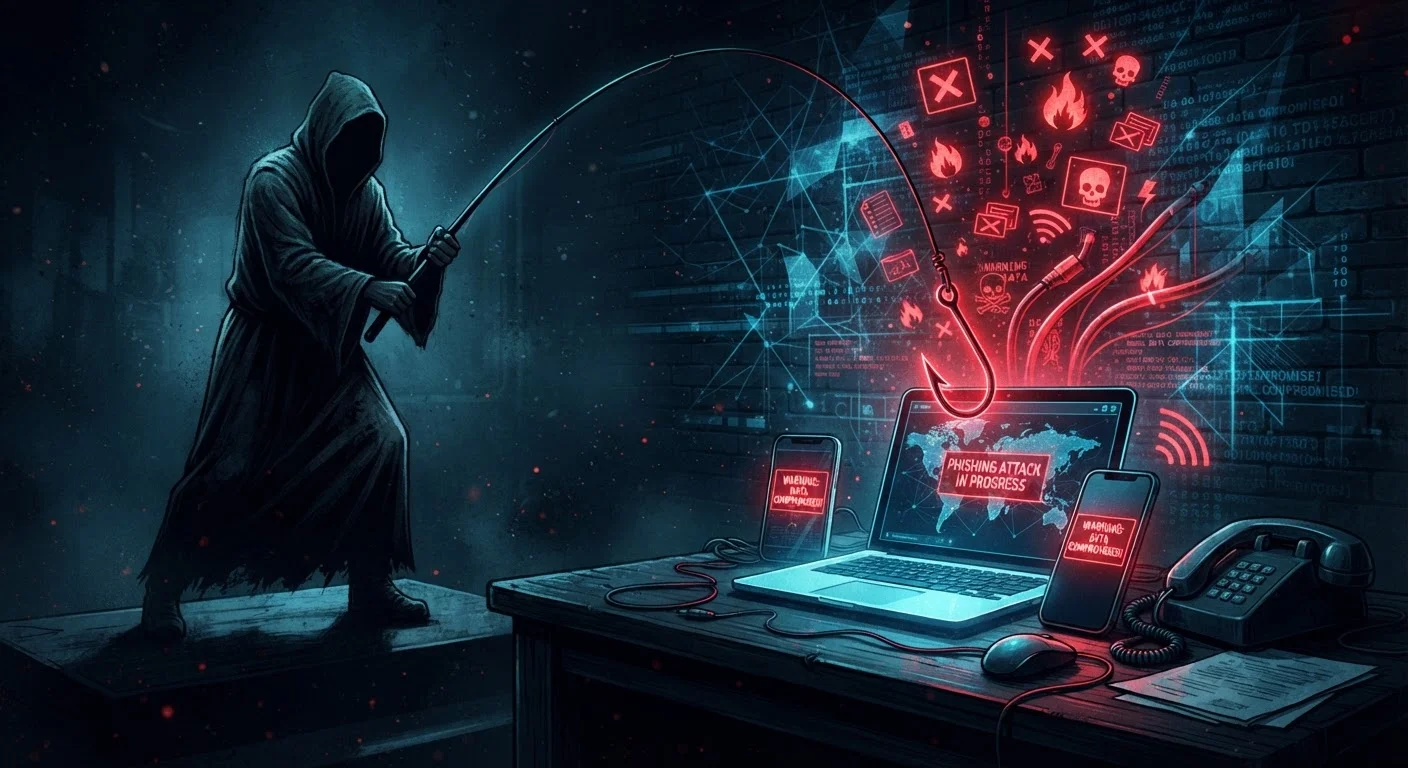
Social engineering attacks are scams that manipulate people into revealing sensitive information - like passwords, account numbers, or Social Security numbers - by impersonating a trusted source. Unlike malware, which attacks software, these attacks exploit human instincts: urgency, trust, and fear. They arrive via email (phishing), text message (smishing), or phone call (vishing).
Social engineering is classified as a non-technical attack vector; it targets cognitive biases rather than system vulnerabilities, making it effective regardless of how strong a victim's technical defenses are.
The Common Thread: Exploiting Human Psychology
Every social engineering attack - regardless of how it arrives - follows the same playbook. Attackers create a believable scenario, inject a sense of urgency or authority, and then push you toward a specific action: clicking a link, calling a number, or handing over information you'd never share under calmer circumstances.
The most common psychological triggers include:
- Urgency: "Your account will be suspended in 24 hours."
- Authority: Impersonating the IRS, Social Security Administration, or a major bank.
- Fear: Claiming fraudulent charges have already been made on your account.
- Reciprocity: Offering a refund or prize in exchange for verification.
Understanding these triggers is itself a defense. When any message provokes a sharp emotional reaction - especially fear or urgency - that's precisely the moment to slow down rather than comply. Attackers count on reflexive responses.
These Attacks Don't Require Technical Skill to Execute
Social engineering is often described as 'hacking humans' rather than systems. Ready-made phishing kits are sold on criminal marketplaces, lowering the barrier for attackers considerably. This means even technically unsophisticated criminals can run convincing campaigns at scale, which is part of why these attacks remain so common.
Phishing: The Original Email Scam
Phishing remains the most prevalent form of social engineering. Attackers send emails that mimic the branding, tone, and formatting of familiar institutions - delivery companies, streaming services, banks, or government agencies. The goal is to get you to click a link that either installs malware or directs you to a fake login page designed to harvest your credentials.
Key warning signs in phishing emails:
- The sender's actual email address doesn't match the organization's real domain (e.g., support@amaz0n-billing.net instead of a verified Amazon domain).
- Generic greetings like "Dear Customer" instead of your name.
- Links that look plausible in the text but point somewhere else when you hover over them.
- Attachments you weren't expecting, especially compressed files or documents requesting macro permissions.
A more targeted form - called spear phishing - uses personal details (your name, employer, or recent purchases) to make the message appear even more credible. These are harder to detect but follow the same pattern. If a link lands you on a login page, check the URL carefully before entering anything. Our guide on how to spot a fake website covers the specific signals to look for.
Smishing: When the Threat Comes by Text
Smishing (SMS phishing) exploits the relatively high trust most people place in text messages. Unlike email inboxes, which many users have trained themselves to treat skeptically, texts feel more personal and immediate - and that's exactly what attackers rely on.
Common smishing scenarios include fake package delivery alerts, bank fraud warnings, and messages claiming you've won a prize. The text typically includes a shortened or disguised URL. Tapping it may take you to a credential-harvesting page or prompt a malicious app download.
One Rule That Stops Most Smishing Attacks
Never tap a link in an unsolicited text message, even if the sender appears to be your bank or a service you use. Instead, open your browser or app directly and navigate to the organization's official site. This single habit eliminates the most common smishing risk entirely.
A notable variant is toll smishing, where texts claim you owe an outstanding toll balance and provide a payment link. The FBI and FTC have both issued warnings about this scheme as it has spread across multiple states.
Because phone numbers can be spoofed, a text appearing to come from your bank's short code is not automatically trustworthy. When in doubt, open your banking app directly - don't tap any link in the message.
~3.4B
Phishing emails sent globally each day
Estimates from cybersecurity researchers suggest billions of phishing emails are distributed daily, making it one of the most widespread forms of cybercrime.
$10B+
Losses from internet crime reported in 2023
According to the FBI's Internet Crime Complaint Center (IC3) 2023 annual report, total reported losses from internet crime exceeded $10 billion, with phishing among the top categories.
98%
Of cyberattacks involve social engineering
Cybersecurity researchers widely cite social engineering as the root cause of the vast majority of successful data breaches, highlighting why human awareness is a critical control.
Vishing: Voice Calls as Attack Vectors
Vishing (voice phishing) uses phone calls or voice messages to impersonate trusted entities. The live, conversational nature of a phone call creates social pressure that written messages can't replicate. Callers may pose as bank fraud departments, Social Security Administration agents, tech support representatives, or even law enforcement.
A particularly disarming tactic: the attacker already knows some of your real information - your name, the last four digits of your account, or your address - which makes the call feel legitimate. This data is often sourced from previous data breaches or purchased from data brokers.
“Vishing attacks are particularly effective because they combine real-time pressure with the illusion of legitimacy. When someone believes they're speaking to their bank's fraud department, they're in a psychologically vulnerable state - and attackers know exactly how to exploit that.”
— Cybersecurity and Infrastructure Security Agency (CISA), U.S. federal agency responsible for cybersecurity guidance and public advisories
Caller ID spoofing lets attackers display a real institution's phone number on your screen, further undermining your instinct to hang up. The safest response to any unsolicited call requesting personal or financial information is to end the call and dial back using the official number printed on your card, statement, or the organization's verified website.
Strong passwords alone won't protect you if an attacker talks you into revealing a one-time verification code - learn more about why passwords get stolen even when they're strong and what additional protections help.
What to Do If You've Already Responded
Realizing you've been deceived is alarming, but quick action limits the damage. The steps differ slightly depending on what information you shared:
- Shared a password: Change it immediately on the affected site and any other account where you use the same password. Enable two-factor authentication if you haven't already.
- Shared financial information: Contact your bank or card issuer directly using the number on the back of your card. Alert them to potential fraud and ask about freezing or monitoring the account.
- Clicked a suspicious link: Run a security scan on your device, change relevant passwords from a different device if possible, and monitor accounts for unusual activity.
- Shared your Social Security number: Place a credit freeze at each of the three major credit bureaus (Equifax, Experian, and TransUnion) and file a report at IdentityTheft.gov.
For a full, ordered response plan, see our guide on what to do when an account gets hacked. Acting quickly and methodically - rather than panicking - is the most effective way to contain the impact.