

Key Takeaways
Option A
Collision Coverage
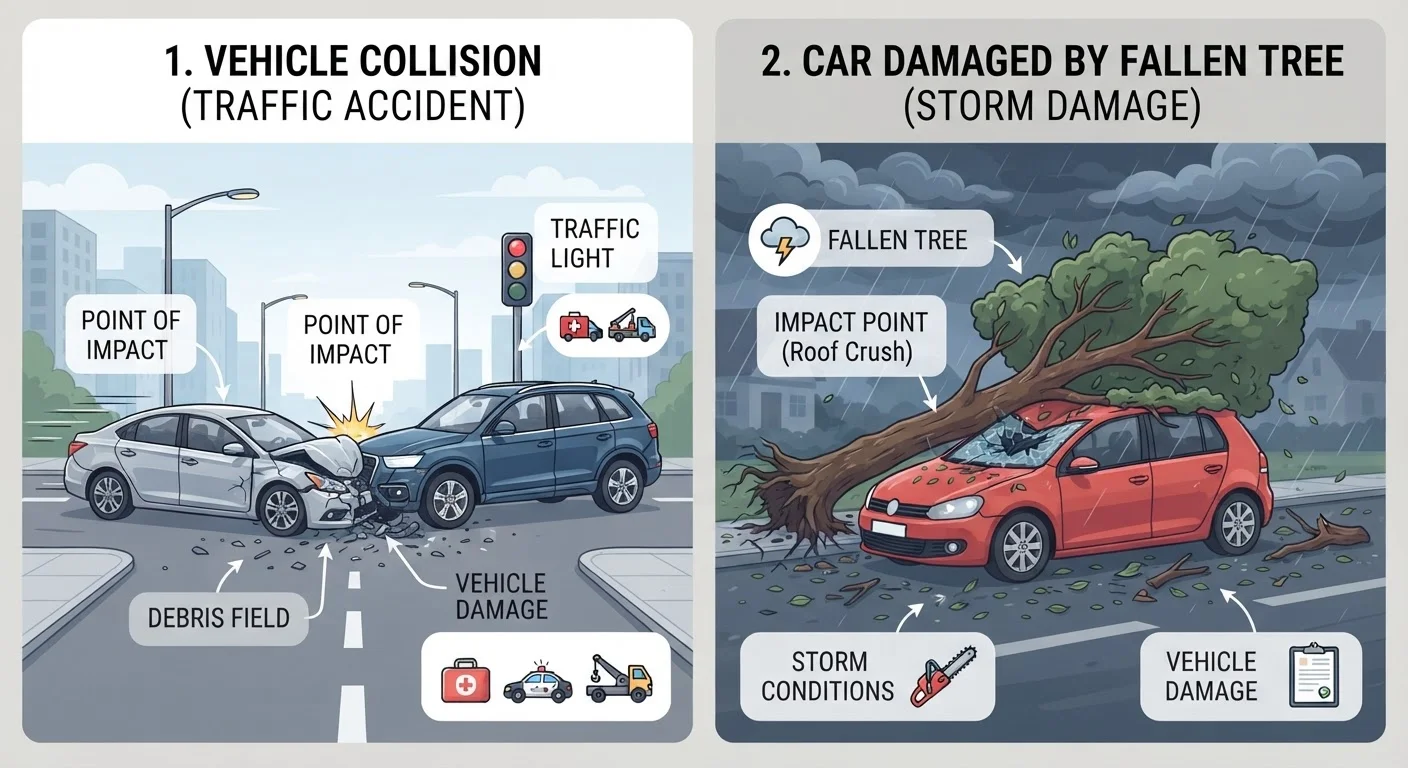
The coverage that responds when your car strikes something.
Best for: Drivers who want protection against repair costs after an at-fault accident or a collision with another vehicle or object.
Option B
Comprehensive Coverage
The coverage that handles damage from events outside your control.
Best for: Drivers seeking financial protection from weather events, theft, animal strikes, and other non-collision incidents.
If you're financing or leasing your vehicle
Both Collision and Comprehensive Coverage
Lenders and lessors typically require both coverages to protect their financial interest in the vehicle. Dropping either is usually not an option while you're still making payments.
If you drive in areas prone to severe weather or wildlife
Comprehensive Coverage
Hailstorms, flooding, and deer strikes are common across many U.S. regions. Comprehensive coverage is designed precisely for these non-collision scenarios.
If your primary concern is at-fault accident costs
Collision Coverage
Collision is the coverage that steps in when you cause an accident or hit a stationary object like a guardrail or parking barrier.
If your vehicle's market value is low relative to your deductible
Neither may be cost-effective
When a car's actual cash value is close to or below your combined deductibles, the maximum payout you'd receive may not justify the added premium cost. Consult a licensed insurance agent to assess your specific situation.
The Core Distinction: What Triggers Each Coverage
Many drivers assume collision and comprehensive are simply two tiers of the same protection. They're not - they respond to fundamentally different types of events, and understanding that distinction is the foundation of reading your policy accurately.
Collision coverage activates when your vehicle makes physical contact with another vehicle or a stationary object - a guardrail, a telephone pole, or another car in a parking lot. It doesn't matter whether you're at fault; if your car is damaged in a crash, collision is the coverage that pays for repairs up to the vehicle's actual cash value, minus your deductible.
Comprehensive coverage applies to damage caused by events that aren't a collision. Insurers sometimes call this "other than collision" coverage, which is a clearer description. It covers losses like theft, vandalism, hailstorms, flooding, fire, falling objects, and striking an animal. If a tree limb crushes your roof during a storm or a deer runs into your door, that's a comprehensive claim.
For a broader look at how these fit into your overall policy, see Liability, Collision, and Comprehensive: The Core Coverage Types Explained.
| Criterion | Collision Coverage | Comprehensive Coverage |
|---|---|---|
| What triggers a claim | Striking a vehicle or object | Theft, weather, animals, fire, vandalism |
| Also known as | Collision | "Other than collision" coverage |
| Deductible applies | Yes | Yes |
| Typical relative cost | Generally higher premium | Generally lower premium |
| Required by lenders/lessors | Typically yes | Typically yes |
| Covers at-fault accidents | Yes | No |
| Covers deer strike | No | Yes |
| Covers hail damage | No | Yes |
Deductibles, Premiums, and the Financial Logic
Both collision and comprehensive come with a deductible - the amount you pay out of pocket before your insurer covers the remainder of a claim. Deductibles are chosen when you set up the policy and typically range from $250 to $2,000. A higher deductible lowers your monthly premium but increases what you owe when you file a claim.
~6M
Annual U.S. auto crashes reported
The National Highway Traffic Safety Administration estimates roughly 6 million police-reported crashes occur on U.S. roads each year, underscoring the frequency of collision-type events.
~1.5M
Vehicle thefts reported annually in the U.S.
According to FBI Uniform Crime Report data, approximately 1 million or more vehicle thefts are reported each year - a loss category covered only by comprehensive, not collision.
Collision coverage generally costs more than comprehensive because at-fault accidents are statistically more frequent than weather events or theft. The exact premium depends on your driving history, vehicle type, location, and the deductible you select.
A common rule of thumb: if your vehicle's actual cash value is only a few thousand dollars, paying premiums for collision or comprehensive coverage may cost more over time than the maximum payout you'd ever receive. This is general guidance - a licensed insurance agent can help you run the numbers for your specific vehicle and situation.
For a plain-language explanation of terms like deductible and actual cash value, Auto Insurance Terminology: A Driver's Reference Glossary is a useful starting point.
When Lenders and Lessors Make the Decision for You
If you're financing or leasing a vehicle, the choice of whether to carry collision and comprehensive coverage is often not yours to make. Most lenders and leasing companies require both as a condition of the loan or lease agreement. This protects their financial interest in the vehicle - if it's totaled or stolen, they need assurance that the loss is covered.
Once you pay off a loan and own the vehicle outright, you regain the option to drop either coverage. At that point, the decision becomes purely a financial one based on the vehicle's current value and your personal risk tolerance.
Gap Insurance: A Related Consideration
If you owe more on your auto loan than the vehicle's current actual cash value, standard collision or comprehensive payouts may not cover the full balance you owe your lender. Gap insurance - short for Guaranteed Asset Protection - is designed to cover that difference. It's a separate add-on, not part of collision or comprehensive coverage, and is worth discussing with your insurer or lender if you're financing a new vehicle.
Understanding how these coverages interact with your broader policy is part of making sound coverage decisions. See State Minimums vs. Full Coverage: What the Difference Really Means for You for context on how collision and comprehensive relate to mandatory minimums.
This article provides general insurance information for educational purposes only and does not constitute personalized insurance or financial advice. Coverage terms, exclusions, and requirements vary by insurer and state. Always review your actual policy documents and consult a licensed insurance agent for guidance specific to your situation.