

Key Takeaways
Our Verdict
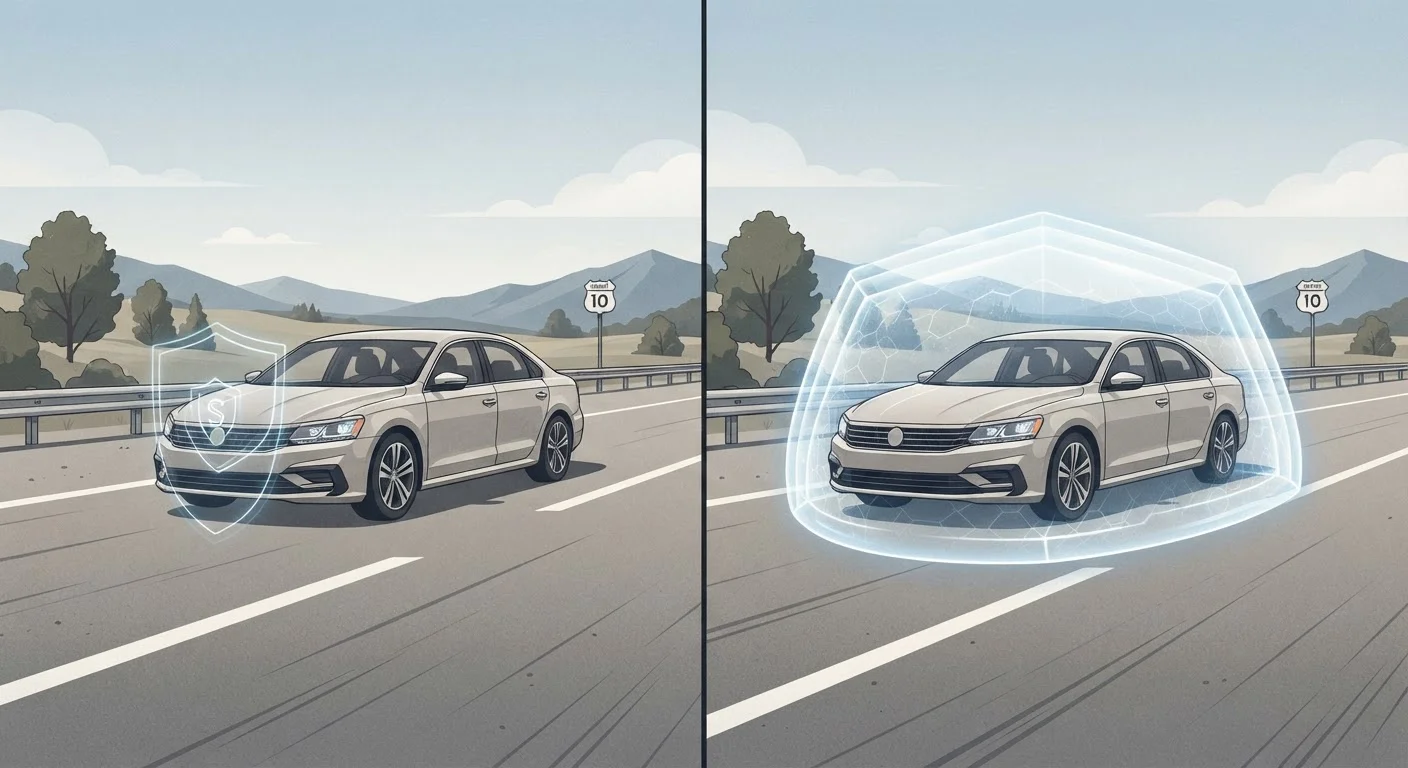
State minimum coverage meets the legal threshold but offers narrow protection - primarily for other people's injuries and property damage, not your own vehicle. Full coverage extends that protection to your car, regardless of fault or event type. Most drivers with a newer or financed vehicle will find the added cost of full coverage justifiable compared to the out-of-pocket risk of going without it.
| Best for | Recommended |
|---|---|
| Drivers with older, low-value vehicles who could absorb a total loss | State Minimums |
| Drivers with financed, leased, or newer vehicles | Full Coverage |
| Drivers with limited savings who could not afford major repair or replacement costs | Full Coverage |
What State Minimums Actually Cover
Every U.S. state - with the narrow exception of New Hampshire, which has financial responsibility rules rather than a traditional mandate - requires drivers to carry a minimum level of auto liability insurance. These minimums are typically expressed as a set of three numbers, such as 25/50/25, representing bodily injury per person, bodily injury per accident, and property damage per accident (all in thousands of dollars).
What those limits actually protect is important to understand: liability coverage pays for other people's injuries and property damage when you are at fault. It does not pay to repair or replace your own vehicle. If you rear-end another driver and total their car, your liability coverage handles their losses up to your limits. Your car sits unprotected.
State minimums also vary considerably. Some states set limits as low as $10,000 for property damage - a figure that may not cover the cost of even a mid-range used vehicle. For a plain-language overview of how these coverage components fit together, see our full auto insurance breakdown.
Minimum Limits Can Be Quickly Exhausted
State minimum liability limits are often set well below the real cost of a serious accident. Medical bills from a multi-person collision can easily reach hundreds of thousands of dollars, and a minimum-limit policy will not cover what's left over. Once your policy limits are exhausted, the injured party can pursue you personally for the remainder. Driving with only minimum coverage is legal, but it does not mean you are fully protected from financial liability.
What Full Coverage Adds to the Picture
"Full coverage" is an informal term - no single policy type carries that name in an insurer's documents. In practice, it refers to a policy that combines liability insurance with both collision and comprehensive coverage.
- Collision coverage pays to repair or replace your vehicle after an accident, regardless of who caused it.
- Comprehensive coverage pays for damage caused by events other than collisions - theft, vandalism, fire, flooding, hail, or hitting an animal.
Together, these two coverages mean your vehicle itself is protected across a broad range of scenarios. To understand exactly how each one works and when it applies, see our guide to collision vs. comprehensive coverage.
Full coverage policies also generally include higher liability limits than the state floor, which matters: if you cause a serious accident and your liability limits are exhausted, you can be personally responsible for the remaining damages. Carrying only minimum limits can expose your savings, wages, and assets to legal judgments.
| State Minimums | Full Coverage | |
|---|---|---|
| Covers others' injuries/property | Yes, up to state-set limits | Yes, typically at higher limits |
| Covers your own vehicle damage | No | Yes (collision + comprehensive) |
| Covers theft or weather damage | No | Yes (comprehensive) |
| Required by lenders/lessors | No | Yes, almost universally |
| Premium cost | Lower | Higher |
| Out-of-pocket risk if your car is damaged | High | Lower (subject to deductible) |
| Best suited for | Older, low-value vehicles | Newer, financed, or higher-value vehicles |
The Financial Case for Each Choice
The decision between minimum and fuller coverage is fundamentally a financial risk calculation. Paying a lower premium for minimum coverage saves money each month - but transfers the risk of a major repair or replacement entirely onto you.
A useful benchmark: if your vehicle's market value is low enough that the annual cost of adding collision and comprehensive coverage exceeds roughly 10% of the car's value, the math starts to favor dropping those add-ons. For a $3,000 car, paying $400 or more per year for collision and comprehensive may not be cost-effective. For a $22,000 car, that same premium represents a much smaller fraction of what you'd lose in a total loss.
Your deductible also plays a role here - raising it lowers your premium but increases what you pay out of pocket when you file a claim. Understanding that trade-off before adjusting your policy is worthwhile. And if you're financing or leasing, the decision is typically made for you: lenders almost universally require collision and comprehensive coverage as a condition of the loan or lease. Gap insurance is often worth considering alongside full coverage in that scenario.
Use Your Car's Value as a Guide
Check your vehicle's current market value using a reputable valuation resource before deciding whether to carry collision and comprehensive coverage. If the annual cost of those coverages represents a significant percentage of what your car is actually worth, it may be time to reassess. Revisit this calculation each year, since vehicle values depreciate and the math can shift.
Coverage Gaps Worth Knowing About
Neither minimum nor full coverage is truly exhaustive. Even a comprehensive-plus-collision policy may leave gaps that catch drivers off guard.
Uninsured and underinsured motorist coverage is a separate add-on that protects you when the at-fault driver has no insurance or insufficient limits to cover your losses. Roughly one in eight drivers on U.S. roads is uninsured, according to Insurance Research Council estimates - making this coverage more relevant than many drivers realize. See how uninsured motorist coverage works for a full explanation.
Medical payments (MedPay) or personal injury protection (PIP) - required in no-fault states - covers medical expenses for you and your passengers regardless of fault. Roadside assistance, rental reimbursement, and custom equipment coverage are other common add-ons that don't appear in either a minimum policy or a standard full-coverage package automatically.
Your declarations page is the definitive record of what you actually carry. Learning to read it line by line ensures there are no surprises when you need to file a claim.
This article provides general insurance information for educational purposes and does not constitute personalized insurance, legal, or financial advice. Coverage terms, limits, and requirements vary by state and insurer. Consult a licensed insurance agent or adviser for guidance on your specific situation.