

Key Takeaways
Start here
Why Shutoff Knowledge Matters
Next
The Main House Shutoff
Then
Fixture-Level and Appliance Shutoffs
Going further
The Street-Side (Curb Stop) Shutoff
Finish strong
Making a Shutoff Map and Staying Ready
Why Shutoff Knowledge Matters
A burst pipe, a failed supply hose, or a toilet that won't stop running can discharge dozens of gallons of water in minutes. According to the Insurance Information Institute, water damage and freezing are among the most common and costly homeowner insurance claims. The single fastest way to limit that damage is reaching the right shutoff valve quickly - something that is impossible if you have never located it before the emergency happens.
This guide walks you through every shutoff location you are likely to encounter in a typical US home, explains how each one works, and gives you a practical plan for testing and documenting them. New to home maintenance? Our guide for new homeowners covers other high-priority habits that prevent costly oversights.
Main shutoff valve
The single valve that stops all water flowing into your home from the supply line. Closing it cuts water to every fixture and appliance simultaneously.
Fixture shutoff
A small valve located directly at an individual sink, toilet, or appliance that lets you stop water to just that one item without affecting the rest of the house.
Curb stop
A shutoff valve located underground near the street at your property line, usually inside a covered box. It controls water entering your property from the municipal main.
Ball valve
A type of shutoff valve with a lever handle that closes with a simple quarter-turn. It is fast to operate and less prone to seizing than older gate-style valves.
Gate valve
An older style of shutoff valve with a round wheel handle that requires multiple full turns to close. These can corrode and become difficult to operate over time.
Curb key
A long T-handled tool used to operate the curb stop valve underground. It fits the pentagon-shaped nut inside the meter box and is available at most hardware stores.
The Main House Shutoff
The main shutoff controls all water entering your home from the municipal supply or private well. Finding it now - before any crisis - is the single most important thing this article asks you to do.
Where to look
- Basement or utility room: Often on the wall facing the street, close to where the supply pipe enters the foundation.
- Crawl space: Near the access hatch in homes without a full basement.
- Garage or mechanical closet: Common in warmer-climate slab homes.
- Exterior wall: In some sunbelt homes the main shutoff is an outdoor box recessed into the wall.
Types of main shutoff valves
You will find one of two valve types. A ball valve - identified by a lever handle - closes with a simple quarter-turn so the lever runs perpendicular to the pipe. A gate valve - identified by a round wheel handle - requires multiple clockwise turns to close fully. Ball valves are faster and more reliable; if your home has an old gate valve, ask a licensed plumber whether replacement makes sense.
Label Your Main Shutoff Right Now
Once you locate your main shutoff, attach a durable label or tag to the pipe or nearby wall. A bright-colored tag or a piece of flagging tape costs almost nothing and saves critical seconds in a panic. Make sure everyone in your household - including babysitters or house sitters - knows where to look.
Fixture-Level and Appliance Shutoffs
Fixture shutoffs let you isolate one problem area without cutting water to the entire house - a major advantage when a toilet valve fails but you still need the kitchen sink. Locating these is straightforward once you know where to look.
Toilets
Look for an oval or football-shaped valve on the supply line running from the wall or floor into the bottom of the toilet tank. Turn it clockwise to close. If this valve has not moved in years, test it gently - a seized valve should be replaced before it is needed in an emergency.
Sinks and vanities
Open the cabinet under any sink and look for two valves on the supply lines (hot and cold) dropping from the faucet. These are typically small oval or football valves on chrome or braided lines. Turn clockwise to close each one.
Water heater
The cold-water supply line feeding your water heater has a shutoff at the top or side of the tank - usually a ball or gate valve. Closing it stops water from flowing into the heater. This is important if the tank itself leaks. Our water heater overview explains what to know about your type of unit.
Dishwasher and washing machine
Dishwashers typically draw from the hot-water valve under the kitchen sink. Washing machines have dedicated hot and cold supply valves on the wall behind the unit - turn both clockwise to isolate the appliance.
Old Fixture Valves Can Fail When Forced
Shutoff valves under sinks and behind toilets in older homes may not have been turned in decades. If a valve feels stiff, do not force it with a wrench - the valve stem can snap, turning a simple isolation task into a much bigger problem. Test these valves gently during your annual check, and have a plumber replace any that feel seized or leak when turned.
The Street-Side (Curb Stop) Shutoff
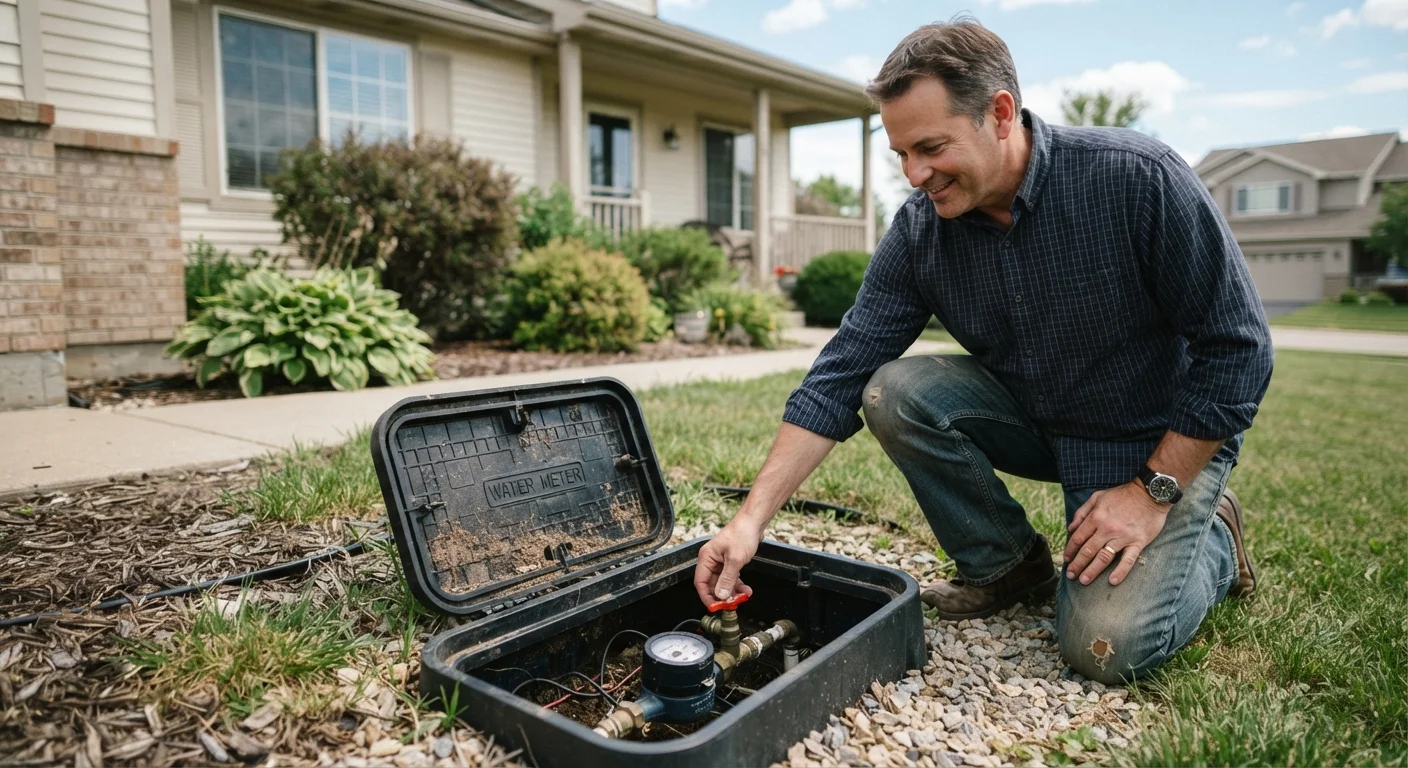
If your main interior shutoff fails or is inaccessible, the curb stop - located near the street at the property line - is the next line of defense. This valve is owned by the utility and is typically inside a covered underground box marked Water or Water Meter.
Most curb stops require a curb key (also called a water meter key), a long T-handled tool that fits the pentagon-shaped nut on the valve. These tools are inexpensive and available at hardware stores. Keep one in your garage or utility area so it is accessible immediately.
In a true emergency where you cannot operate any interior shutoff and do not have a curb key, contact your water utility's emergency line - many municipalities can dispatch a crew to close the curb stop. Know that number before you need it.
Note that operating the curb stop on the municipal side of the meter may require utility authorization in some jurisdictions. Verify your local rules, and always contact a licensed plumber for ongoing valve issues rather than relying solely on curb-stop shutoffs as a long-term solution.
Making a Shutoff Map and Staying Ready
Documentation turns the knowledge in this article into a durable household asset. A simple shutoff map - even a hand-drawn floor plan with labeled valve locations - gives every member of your household the information they need to act fast.
What to include on your map
- Main interior shutoff location and valve type
- Curb stop location and whether you have a curb key
- Each fixture shutoff by room (toilet, sink, tub/shower supply if accessible)
- Appliance shutoffs (dishwasher, washing machine, refrigerator ice maker)
- Water heater shutoff
Annual valve test
Once a year - a home maintenance reminder on your calendar works well - turn each shutoff valve off and back on. This prevents mineral deposits from seizing valves in place. If any valve feels stiff, grinds, or won't seat fully closed, schedule a plumber visit before the next season.
Moisture problems extend beyond pipe failures. Keeping water where it belongs inside walls and wet areas is equally important - see our article on grout and caulk in wet areas for practical guidance on bathroom and kitchen sealing.
Finally, store your shutoff map somewhere every household member knows - a kitchen drawer, the inside of a utility closet door, or a shared note on your phone. The best emergency plan is one that does not require you to remember everything under stress.