

Key Takeaways
Annual Wellness Exam
An annual wellness exam is a scheduled, head-to-tail physical evaluation performed by a licensed veterinarian on an apparently healthy pet. Unlike a sick visit, its purpose is prevention and early detection - catching developing problems before symptoms appear. It typically includes a physical assessment, a review of the pet's history and lifestyle, and a discussion of vaccines, parasite prevention, and nutrition.
Veterinarians use the term 'wellness visit' to distinguish these appointments from diagnostic or treatment visits; the clinical goal is establishing a baseline and identifying subclinical disease - conditions present but not yet causing visible signs.
More Than a Quick Checkup
Many pet owners assume the annual vet visit is mostly about vaccines. In reality, a thorough wellness exam is a systematic physical assessment that gives your veterinarian a current snapshot of your pet's health - and a baseline against which future visits are compared. Understanding what's being evaluated helps you become a more informed partner in your pet's care.
If you've recently brought home a new animal, our new pet health checklist walks through the key health steps for the first 30 days, including scheduling that initial exam.
1 in 3
Pets with a disease found at wellness exams
According to the American Veterinary Medical Association, roughly one in three apparently healthy pets examined at wellness visits has a condition requiring follow-up.
70%
Adult pets with dental disease by age 3
The American Veterinary Dental College estimates that the majority of dogs and cats show signs of periodontal disease by their third birthday.
56%
U.S. dogs classified as overweight or obese
The Association for Pet Obesity Prevention's surveys have consistently found that more than half of U.S. dogs fall into an overweight or obese body condition category.
The Head-to-Tail Physical: What Vets Are Assessing
The physical exam follows a methodical sequence. Vets are trained to notice subtle changes that owners may not spot at home - and many findings happen in silence, before your pet shows any obvious signs.
- Eyes and ears: Checked for discharge, cloudiness, redness, or signs of infection or pressure changes that can indicate systemic disease.
- Mouth and teeth: Dental disease is among the most common conditions in adult pets. Vets assess gum color, tartar buildup, and the condition of the teeth. Dental health in dogs and cats carries risks well beyond the mouth - including effects on the heart and kidneys.
- Lymph nodes: Palpated for swelling, which can signal infection or, less commonly, underlying disease.
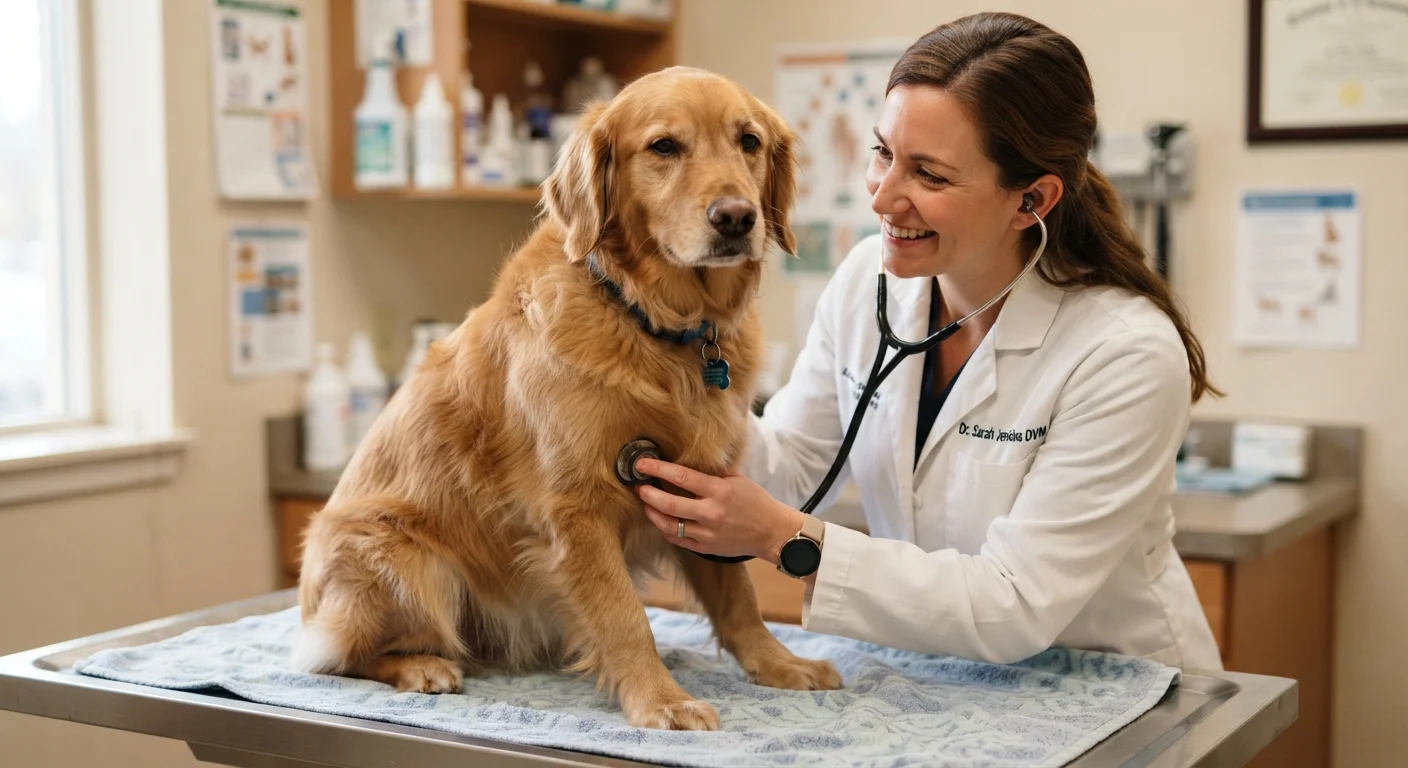
- Heart and lungs: Listened to with a stethoscope for irregular rhythms, murmurs, or abnormal breath sounds.
- Abdomen: Gently pressed to assess organ size and detect any masses, fluid, or pain responses.
- Skin and coat: Examined for parasites, lumps, hair loss, or signs of allergic or hormonal conditions.
- Musculoskeletal system: Joints and gait are assessed for stiffness, swelling, or discomfort - especially important in older or large-breed dogs.
- Weight and body condition: Your vet uses a standardized body condition score - not just a number on the scale - to assess whether your pet is at a healthy weight. Excess weight is a leading health concern; our article on pet obesity explains how it's assessed and managed.
Tell Your Vet About Behavioral Changes
Changes in sleep patterns, social behavior, appetite, or litter box habits can be early indicators of medical conditions - not just 'personality quirks.' Before your appointment, jot down anything that has shifted in the past year, even if it seems unrelated to physical health. This information is genuinely useful clinical data.
Vaccines, Parasites, and Lab Work
After the physical exam, your vet will review your pet's vaccination status and parasite prevention needs. Not every pet needs the same vaccines - schedules are tailored by age, lifestyle, and regional disease risk. Core vaccines protect against widely prevalent, serious diseases; others depend on exposure risk. For a detailed breakdown, see our overview of core and optional vaccines.
Parasite prevention - covering fleas, ticks, and heartworm - is also reviewed at this visit. Your vet will assess your pet's specific risk based on geography and lifestyle. Our guide to parasite prevention covers how these preventives work and what to discuss with your vet.
Depending on your pet's age and history, your vet may recommend bloodwork, a urinalysis, or fecal parasite testing. These diagnostics can reveal kidney and liver function, blood cell counts, thyroid levels, and intestinal parasites - none of which are visible during a physical exam alone.
Lab Work Isn't Always Routine - But Often Worthwhile
Not every wellness visit automatically includes bloodwork or urinalysis. Your vet will recommend diagnostics based on your pet's age, breed, prior history, and physical exam findings. For pets entering their senior years, baseline bloodwork is often strongly encouraged because it helps identify trends over time - even when individual values appear within normal range.
Your Role in the Exam Room
A wellness exam works best as a two-way conversation. Before your appointment, take note of any changes - in appetite, water intake, energy, bathroom habits, or behavior - even if they seem minor. These observations are clinical data that your vet cannot access without you.
Come prepared to discuss your pet's current diet and feeding schedule. Nutrition directly affects weight, coat quality, energy, and organ health. For feeding guidance between visits, our pet nutrition hub offers practical, research-grounded resources.
This is also the right time to ask about anything that's been worrying you - unusual lumps, changes in thirst, mobility concerns, or behavior shifts. There are no trivial questions in a wellness context. Your vet would always rather know.
This article is for general informational purposes only and does not constitute veterinary advice. Always consult a licensed veterinarian for guidance specific to your pet's health needs.