

| Most common toxic food call to poison control | Chocolate (ASPCA Animal Poison Control Center) |
| Pets at risk from Allium toxicity | Both dogs and cats (Veterinary toxicology literature) |
| Xylitol risk in dogs | Hypoglycemia and liver failure (ASPCA, FDA consumer guidance) |
| Cooking effect on Allium toxins | Does not neutralize the hazard (Veterinary clinical studies) |
| Grapes: established safe dose for dogs | None - all amounts considered risky (Veterinary toxicology consensus) |
| Primary concern with raw yeast dough | Ethanol production and gastric expansion (Veterinary clinical reports) |
Why Human Food Hits Pets Differently
Dogs and cats metabolize food through entirely different biochemical pathways than humans do. A compound your liver processes without effort may overwhelm a dog's detoxification system or be completely absent from a cat's metabolic toolkit. This isn't a matter of sensitivity or tolerance - it's basic physiology. Understanding which foods cross the line from harmless to hazardous is one of the most practical things a pet owner can do.
For a broader picture of how pets process nutrients, see our complete guide to pet nutrition. This article focuses specifically on foods that are safe for humans yet carry documented risks for household pets.
| Most common toxic food call to poison control | Chocolate (ASPCA Animal Poison Control Center) |
| Pets at risk from Allium toxicity | Both dogs and cats (Veterinary toxicology literature) |
| Xylitol risk in dogs | Hypoglycemia and liver failure (ASPCA, FDA consumer guidance) |
| Cooking effect on Allium toxins | Does not neutralize the hazard (Veterinary clinical studies) |
| Grapes: established safe dose for dogs | None - all amounts considered risky (Veterinary toxicology consensus) |
| Primary concern with raw yeast dough | Ethanol production and gastric expansion (Veterinary clinical reports) |
The High-Risk Foods Every Pet Owner Should Know
The following foods are among the most commonly encountered hazards. Severity ranges from gastrointestinal upset to life-threatening organ failure.
Grapes and Raisins
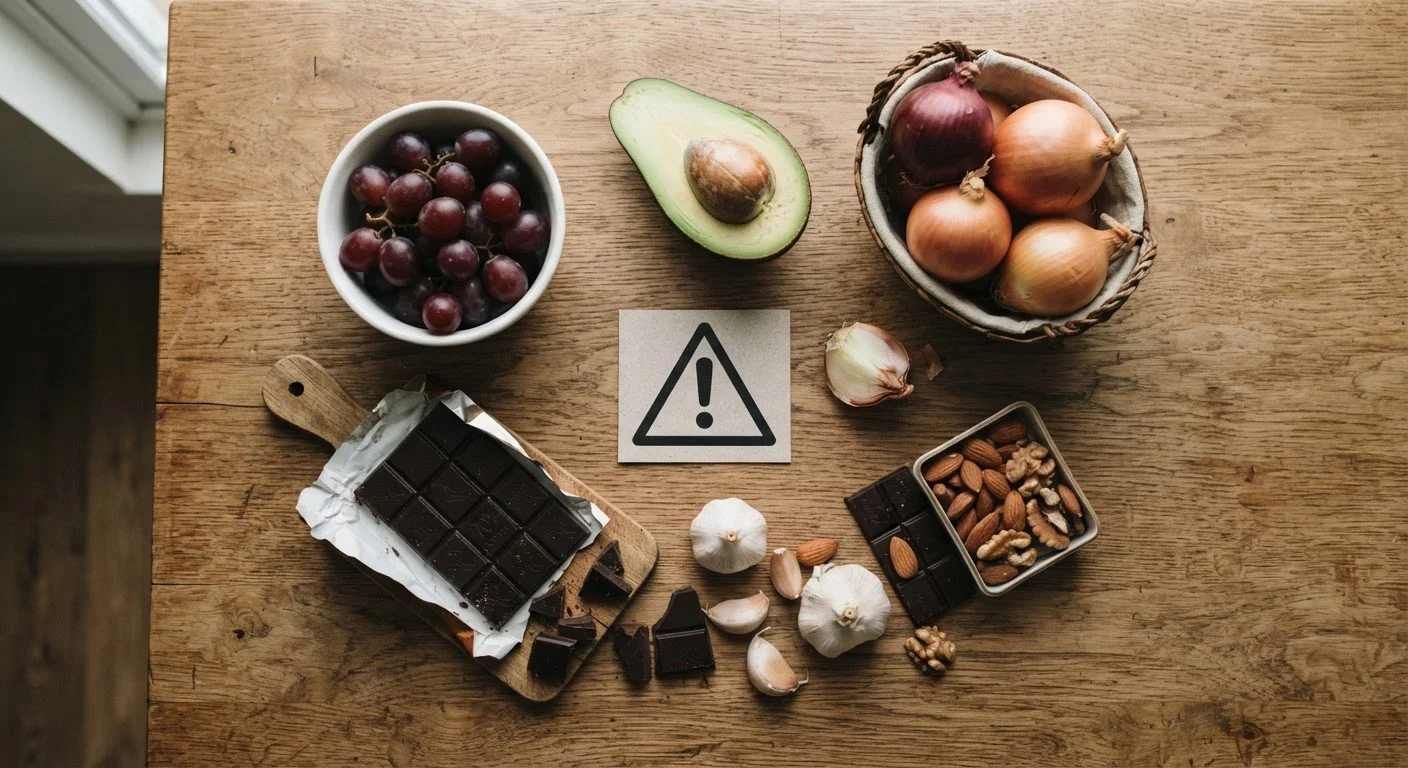
Both grapes and raisins can cause acute kidney failure in dogs. The exact toxic compound has not been definitively identified, which means no established safe dose exists. Even small amounts have caused serious illness in some dogs. Cats are susceptible as well, though dogs are more frequently affected due to their tendency to eat human food. Seek veterinary care immediately if ingestion is suspected.
Onions, Garlic, Leeks, and Chives
All members of the Allium family contain compounds called organosulfoxides, which damage red blood cells in both dogs and cats and can lead to hemolytic anemia. Cooking does not neutralize the toxin. Garlic is considered more potent per gram than onion. Cats are particularly sensitive, but dogs are also at risk - especially with repeated small exposures over time.
Xylitol
This sugar alcohol, widely used in sugar-free gum, some peanut butters, baked goods, and certain medications, is highly toxic to dogs. It triggers a rapid release of insulin that can cause severe hypoglycemia (low blood sugar) and, at higher doses, acute liver failure. Always read ingredient labels before sharing any packaged food with a dog. Understanding how to read ingredient labels can help you catch hidden hazards like this one.
Chocolate and Caffeine
Chocolate contains theobromine and caffeine, both methylxanthines that dogs and cats cannot metabolize efficiently. Dark chocolate and baking chocolate carry the highest concentration. Symptoms include vomiting, rapid heart rate, tremors, and seizures. The toxic dose depends on the type of chocolate and the animal's body weight, but no amount should be considered safe.
Macadamia Nuts
Macadamia nuts cause weakness, hyperthermia, vomiting, and tremors in dogs. The mechanism is not fully understood, but clinical cases are well documented. Recovery is generally expected with supportive care, but veterinary evaluation is still warranted.
Avocado
Avocado contains persin, a fungicidal toxin found in the leaves, pit, skin, and flesh. While humans tolerate it easily, birds and rabbits are highly susceptible, and dogs and cats can experience vomiting and diarrhea. The high fat content also raises the risk of pancreatitis in dogs.
Alcohol and Yeast Dough
Even small amounts of alcohol are dangerous to pets. Raw yeast dough is doubly hazardous: it expands in the stomach and produces ethanol as it ferments. Both scenarios can result in disorientation, respiratory distress, and dangerously low blood pressure.
Organosulfoxides
Sulfur-containing compounds found in Allium vegetables like onions and garlic. In dogs and cats, they damage red blood cells and can cause a form of anemia called hemolytic anemia.
Theobromine
A naturally occurring stimulant compound in chocolate and cacao products. Dogs and cats lack the liver enzymes needed to break it down efficiently, leading to toxic accumulation.
Xylitol
A sugar alcohol used as a low-calorie sweetener in many human products. In dogs, it stimulates a dangerous spike in insulin that rapidly lowers blood sugar to life-threatening levels.
Hemolytic anemia
A condition in which red blood cells are destroyed faster than the body can replace them. In pets, Allium toxicity is a known cause, resulting in weakness, pale gums, and lethargy.
Persin
A natural fungicidal compound in avocado plants. While harmless to humans in normal amounts, it can cause vomiting, diarrhea, and cardiovascular stress in susceptible animals.
What to Do If Your Pet Ingests a Toxic Food
Time is a critical variable in toxic ingestion. If you believe your pet has eaten any of the foods listed above, contact your veterinarian or a veterinary poison control hotline immediately - do not wait for symptoms to appear. Provide the animal's weight, the food involved, and an estimate of the quantity consumed.
Do not induce vomiting unless explicitly directed by a veterinary professional. Some substances cause more damage on the way back up, and the window for safe emesis induction is narrow.
When to Contact a Poison Control Hotline
Veterinary poison control services - such as the ASPCA Animal Poison Control Center - operate around the clock and can advise on specific substances, quantities, and next steps. A consultation fee may apply. Always have your pet's weight and the product's ingredient list ready when you call. Your regular veterinarian should still be contacted even if you speak with a hotline first.
Good feeding habits extend beyond avoiding toxins. Feeding mistakes that quietly undermine a healthy diet are worth reviewing as part of a complete approach to pet nutrition. And if you've heard conflicting claims about which human foods are truly dangerous versus merely overhyped as risks, separating myth from fact on feeding pets human food provides useful context.
This article provides general educational information about pet nutrition and food safety. It is not a substitute for professional veterinary advice, diagnosis, or treatment. Always consult a licensed veterinarian if you have concerns about your pet's health or if you suspect your pet has ingested a harmful substance.