

Key Takeaways
Summary
18 items · 15-30 minutes
Why Most Starter Kits Feel Like Too Much
Walk into any beauty aisle or scroll through a makeup tutorial and it can feel like you need a studio's worth of products just to leave the house looking put-together. The reality? A genuinely useful everyday makeup kit is compact, purposeful, and built around products that earn their place.
The key shift is moving from collecting to curating. Instead of asking "what should I own?" start by asking "what do I actually want my makeup to do for me?" Whether that's evening out your skin tone, adding a little definition, or just a polished finishing touch, your answer shapes everything else.
If you're also building out your skincare foundation - which makes makeup sit better and last longer - check out building a morning skincare routine from scratch for a solid starting point.
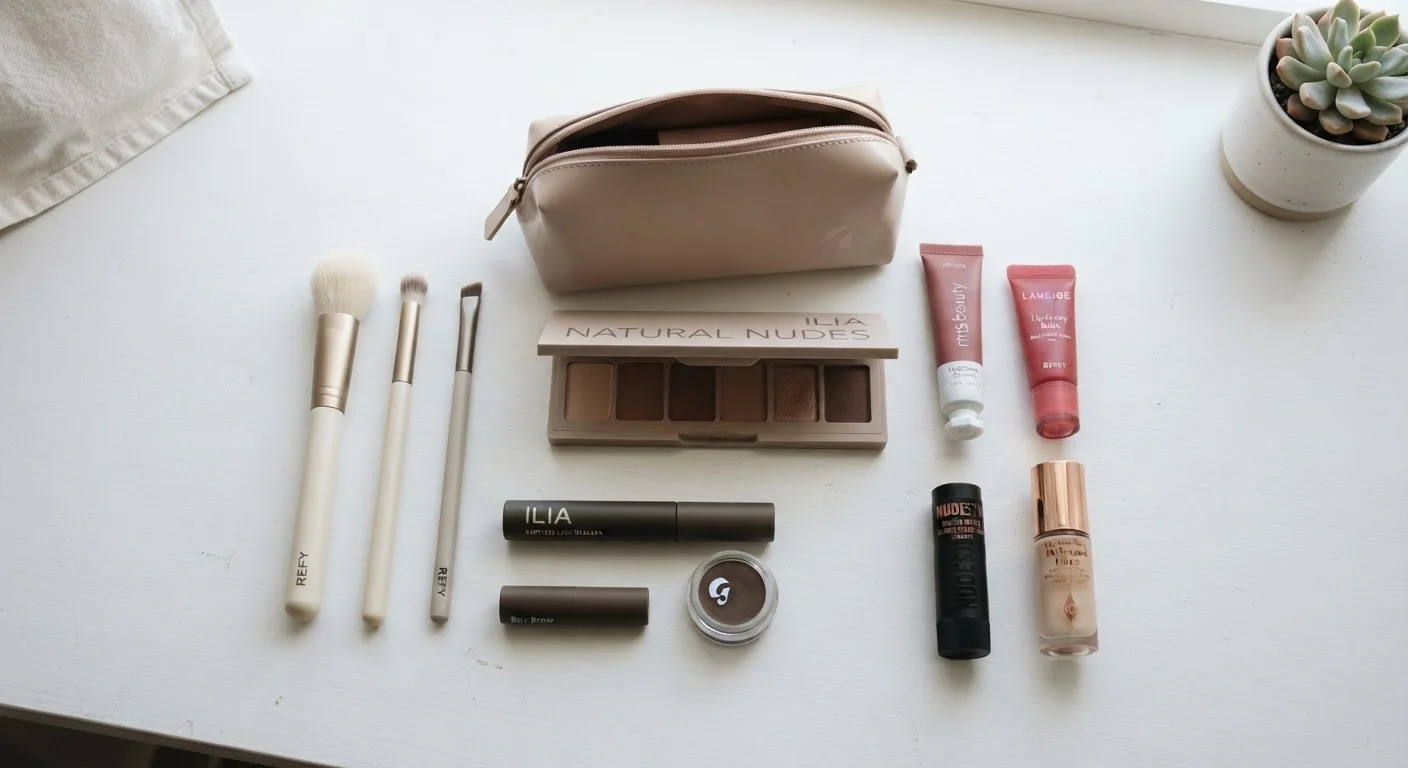
Makeup sponge or blending brush
Blends complexion products like tinted moisturizer or foundation for a seamless, natural finish.
Fluffy powder brush
Applies loose or pressed powder and blush smoothly across larger areas of the face.
Eyeshadow brush set (flat + blending)
Allows controlled application and diffusion of eyeshadow for more polished eye looks.
Makeup bag or zip pouch
Keeps products organized, protected, and portable - extends the life of packaging and products.
Brush cleansing spray or gentle soap
Used to clean brushes and sponges regularly, maintaining hygiene and product performance.
The Checklist: What Belongs in a Basic Kit
The items below are organized by purpose, not by trend. Each one has a clear job to do. Work through this as an audit if you already have products, or as a first-time shopping guide if you're starting from zero.
Skin Prep (Before Makeup)
Complexion Products
Eyes
Lips and Cheeks
Application Tools
Kit Maintenance
Don't Skip the Hygiene Basics
Old or unclean makeup tools are a common source of skin irritation and breakouts. Sponges and brushes should be cleaned weekly at minimum, and products like mascara and liquid liner should be replaced every three months. If a product smells off, has changed texture, or has passed its period-after-opening date (usually shown as a jar symbol with a number on the packaging), it's time to let it go.
Putting It Together Without the Pressure
You don't need to acquire everything at once. Starting with your skin-prep and complexion items - then layering in eye and lip products as you get comfortable - is a perfectly smart approach. Think of your kit as something that evolves with your routine, not a one-time all-or-nothing purchase.
The same thoughtful-building philosophy applies across your style choices: just like wardrobe basics every adult should own, the most useful items in your makeup kit are the ones that work across many situations and hold up over time.
If you want to go deeper on understanding what's actually in the products you're choosing, reading a skincare ingredient list without the confusion is a helpful companion read.
Patch-Test New Products When Possible
If you have sensitive skin or a history of reactions to cosmetic products, applying a small amount of a new product to the inside of your wrist or behind your ear before full use is a reasonable precaution. Cosmetic formulations vary widely, and reactions - while not common - can occur. If you experience persistent redness, itching, or irritation from a makeup product, discontinue use and consult a dermatologist or healthcare provider.